Choosing the right USB-C power bank involves understanding key specifications like wattage and capacity to match your devices’ needs. A USB-C power bank is a portable charger that uses the versatile USB-C port, offering high-speed data transfer and significant power delivery (PD) for fast charging a wide range of devices, from smartphones to laptops. This guide from pvhao.com will help you select the ideal power companion.
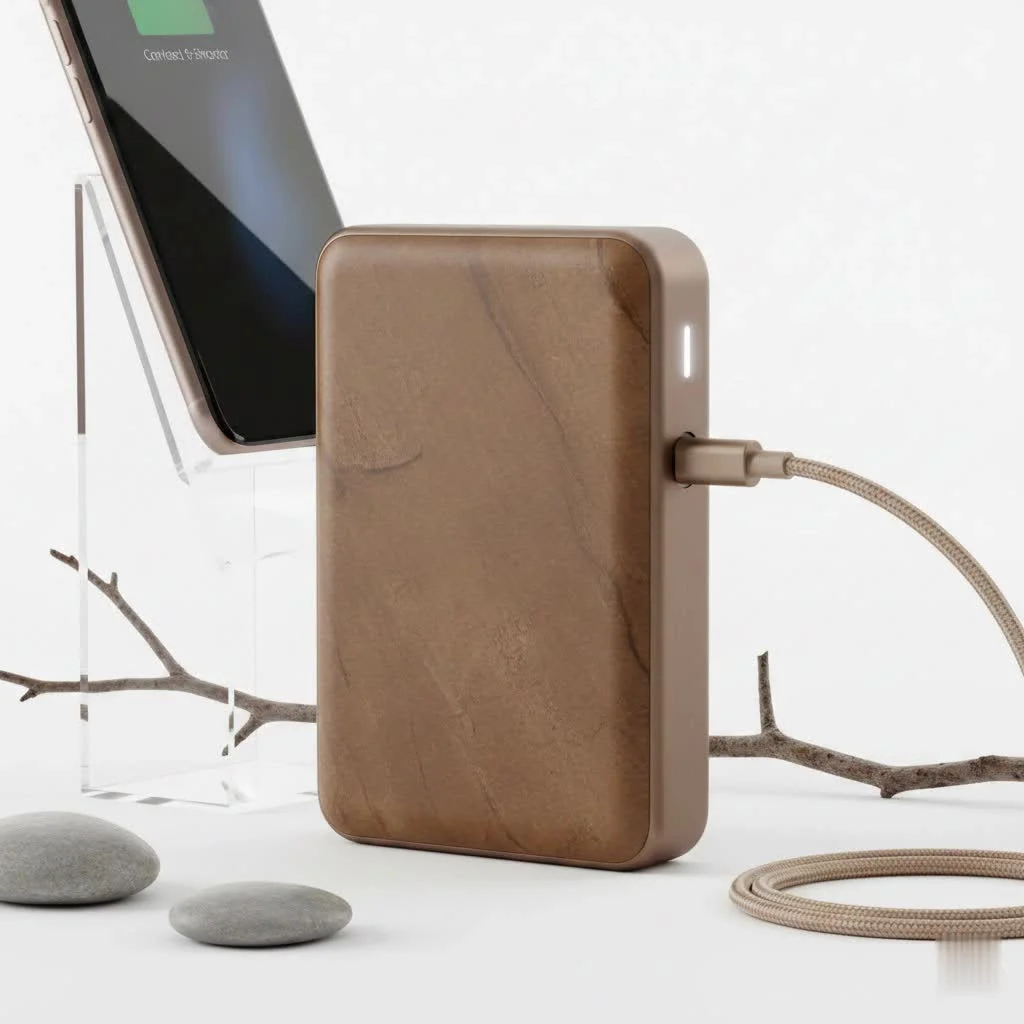
What Makes a USB-C Power Bank a Game Changer?
For years, we fumbled with the rectangular USB-A port, trying to plug it in the right way. USB-C solves that with a symmetrical, reversible design, but its true power lies within. Unlike older USB ports that offered minimal power, USB-C is an all-in-one solution for high-speed data transfer and, most importantly, high-power delivery. This means a single USB C power bank can potentially charge everything from your wireless earbuds to your high-performance laptop, something that was unthinkable just a few years ago. It’s the universal standard we’ve been waiting for, simplifying our lives by reducing cable clutter. For complete portable power library on this site.
The Magic of Power Delivery (PD): Not Just Charging, but Fast Charging
The secret sauce behind USB-C’s charging prowess is a protocol called USB Power Delivery, or PD. Think of it as a smart conversation between your power bank and your device.
What is USB Power Delivery?
USB Power Delivery is an intelligent charging technology that negotiates the fastest and safest power level for your specific device. When you plug in a PD-compatible gadget, it communicates with the USB C power bank to determine the optimal voltage and current. This prevents overcharging, improves efficiency, and delivers significantly faster charging speeds. A standard USB-A port might trickle charge your phone at 5 watts, while a PD-enabled USB-C port can blast it with 20, 30, or even more watts, often getting your battery to 50% in just 30 minutes.
How Much Power (Watts) Do You Actually Need?
Wattage (W) is the measure of charging speed. Choosing the right wattage is crucial; too little, and your device will charge slowly or not at all, especially if you’re using it.
- Smartphones (e.g., iPhone 15, Samsung Galaxy S24): Look for a minimum of 20W. Most modern phones can take advantage of 20-30W for optimal fast charging.
- Tablets and Handheld Gaming (e.g., iPad Pro, Steam Deck): These need a bit more muscle. Aim for 30W to 45W to ensure they charge steadily, even while in use.
- Laptops (e.g., MacBook Air, Dell XPS): This is where high-wattage PD is essential. A small ultrabook might manage with 45W, but for most, 65W is the sweet spot. Power-hungry machines like a MacBook Pro will require 100W or even more to charge at full speed.
As electronics engineer Dr. Alistair Finch puts it, “Matching the power bank’s wattage to your primary device’s needs is the single most important factor for user satisfaction. A 100W laptop won’t get the performance it needs from a 30W charger; it’s like trying to fill a swimming pool with a garden hose.”
Always check the output specifications on the power bank. A quality product will clearly state its PD wattage. Some advanced models also support PPS (Programmable Power Supply), a protocol that offers even finer-tuned charging for compatible devices like modern Samsung phones, which helps with battery health.
Choosing the Right Capacity (mAh): How Much Juice is Enough?
After wattage, the next critical spec is capacity, measured in milliamp-hours (mAh). This number tells you how much energy the power bank can store. More mAh means more recharges, but it also means a larger and heavier unit.
Understanding Milliamp-Hours
|
Our Picks for the Best Power Bank in 2026
As an Amazon Associate I earn from qualifying purchases.
|
||
| Num | Product | Action |
|---|---|---|
| 1 | Emergency Radio&22000mAh Solar Power Bank, FM NOAA Weather Radio, Portable Hand Crank Bluetooth Radio, 20W Fast Charge Wireless Phone Charger, SOS Flashlight for Emergency/Home |

|
| 2 | INIU Power Bank, 25000mAh 100W USB C Laptop Portable Charger, PD QC Fast Charging 3-Output Battery Pack, Travel Charger for Laptop MacBook iPad Tablet Steam Deck iPhone 17 16 15 14 Pro Samsung S25 etc |
|
| 3 | Anker Laptop Power Bank, 25,000mAh Portable Charger with Triple 100W USB-C Ports, Built-in Retractable Cables, Flight-Approved for Travel, iPhone 17/16 Series, MacBook, Samsung, and More |
|
| 4 | INIU Portable Charger, Smallest 22.5W 10000mAh Power Bank, USB C in/Output Fast Charging 3-Output Mini Battery Pack Charger with Phone Holder for iPhone 17 16 15 14 Air Samsung S23 Google iPad Tablet |
|
| 5 | Anker Laptop Power Bank, 25,000mAh Portable Charger with Triple 100W USB-C Ports, Built-in Retractable Cables, Flight-Approved for Travel, iPhone 17/16 Series, MacBook, Samsung, and More |
|
| 6 | UGREEN Power Bank 25,000mAh 145W Laptop Portable Charger, Nexode 3-Port USB C PD Battery Pack, for MacBook Pro/Air, Dell XPS, iPhone 17/16/15/14, Galaxy S24, Steam Deck, iPad, and More |
|
| 7 | UGREEN Nexode Power Bank 20000mAh 165W with Built-in USB C Cable Laptop Travel Portable Charger, 100W Input, Fast Charging for MacBook Pro/Air/iPhone 17/16/iPad Pro/Galaxy S25 Ultra/Dell/HP and More |
|
| 8 | Energizer Power Bank 20000mAh - USB-C 20W Outputs Fast Charging Battery Pack, USB-A 18W with 4 Outputs & LCD Screen for Android/iPhone 15 16 Plus Pro Max/iPad Tablet and etc_UE20063PQ |
|
| 9 | INIU Portable Charger, Slimmest Fast Charging 10000mAh USB C in/Out Power Bank, 22.5W PD3.0 QC4+ Battery Pack, Portable Phone Charger for iPhone 16 15 14 13 12 Pro Samsung S22 S21 Google AirPods iPad |
|
| 10 | 90000mAh High Capacity Power Bank, 30W Fast Charging Portable Charger PD&QC 3.0, 5 Output 2 Input Large Powerbank with LED Display USB C Battery Pack Charger Portable for Outdoor Camping Travel |
|
A common misconception is that a 10,000mAh power bank will charge a 5,000mAh phone battery exactly twice. Unfortunately, it’s not that simple. Energy is lost during the voltage conversion process and as heat. A good rule of thumb is to expect about 70-80% efficiency. So, a 10,000mAh power bank realistically delivers around 7,000-8,000mAh of usable charge.
Match the Capacity to Your Lifestyle
- The Daily Commuter (5,000mAh – 10,000mAh): If you just need a safety net to top off your phone during a long day, a slim, pocket-friendly 10,000mAh unit is perfect. It provides about two full phone charges and is easy to carry.
- The Weekend Traveler (10,000mAh – 20,000mAh): For short trips where you’re charging a phone and perhaps a tablet or headphones, a 20,000mAh power bank strikes a great balance between power and portability. It can keep your devices alive for a full weekend away from an outlet.
- The Digital Nomad or Power User (20,000mAh+): If you plan to charge a laptop or multiple devices over several days, you’ll need a high-capacity model. A 20,000mAh to 27,000mAh USB C power bank is typically the largest size allowed on airplanes and has enough juice to fully charge a MacBook Air or give a larger laptop a significant boost.
Key Features to Look For in a Modern USB-C Power Bank
Beyond the core specs of wattage and capacity, several other features separate a great power bank from a mediocre one.
- Multiple Ports: The best models offer flexibility. A common and highly useful configuration is one high-wattage USB-C PD port and one or two additional USB-A ports for legacy devices. For power users, dual USB-C ports are becoming more common, allowing you to fast-charge two devices at once.
- Pass-Through Charging: This handy feature allows you to charge the power bank itself while it’s simultaneously charging another device. It’s perfect for overnight charging on a trip when outlets are scarce.
- High-Speed Recharging: A massive 20,000mAh power bank is useless if it takes 12 hours to recharge. Look for a model with a high-wattage USB-C input (at least 30W) to ensure it can be refilled quickly.
- Safety Certifications: Never compromise on safety. Reputable brands include multiple safety systems to protect against overcharging, overheating, and short circuits. Look for certifications like UL, CE, and FCC.
- Build Quality and Portability: Consider the materials, size, and weight. A durable aluminum casing might be better for rugged travel, while a compact plastic design could be ideal for your everyday bag. Some models even incorporate low-power modes for safely charging delicate devices like earbuds.
Frequently Asked Questions (FAQ)
Can I charge my older micro-USB or Lightning devices with a USB C power bank?
Yes, absolutely. Most USB-C power banks also include at least one USB-A port. You can use this port with your existing cables (USB-A to micro-USB or USB-A to Lightning) to charge older devices.
Can I bring my USB C power bank on an airplane?
Yes, but there are restrictions. Most airlines limit power bank capacity to 100 watt-hours (Wh), which is roughly 27,000mAh. Anything larger may require airline approval. Always carry power banks in your carry-on luggage, not in checked bags.
Will a high-wattage power bank damage my phone?
No. Thanks to the smart negotiation of USB Power Delivery (PD), the power bank will only supply the amount of power your device requests. Using a 100W laptop charger for your phone is perfectly safe; your phone will simply draw the 20W or so that it’s designed for.
Do I need a special cable for fast charging?
Yes, the cable matters. To take full advantage of high-wattage charging (especially above 60W), you need a USB-C to USB-C cable that is rated for that power level. A cheap, unrated cable can be a bottleneck, slowing down charging speeds.
What is GaN technology in a power bank?
GaN, or Gallium Nitride, is a newer semiconductor material that is more efficient than traditional silicon. GaN power banks can be significantly smaller, lighter, and run cooler than their silicon-based counterparts with the same power output, making them excellent for travel.
The Final Word
Choosing the right USB C power bank is an investment in convenience and peace of mind. By moving beyond just the capacity and understanding the critical role of wattage and Power Delivery, you can make a truly informed decision. Think about what you need to charge—is it just your phone for emergencies, or do you need a workhorse to power your laptop on the go? Match the wattage to your most demanding device and the capacity to your typical time away from a wall outlet. With the right portable charger in your bag, you’ll be empowered to stay connected, productive, and entertained, no matter where you are.
Frequently Asked Questions
Can I charge older micro-USB or Lightning devices with a USB-C power bank?
Yes, most USB-C power banks include at least one USB-A port. You can use this port with your existing USB-A to micro-USB or USB-A to Lightning cables to charge older devices effectively.
What are the airline restrictions for bringing a USB-C power bank on a flight?
Most airlines limit power bank capacity to 100 watt-hours (Wh), which is approximately 27,000mAh. Larger capacities may require airline approval, and all power banks must be carried in your carry-on luggage, not checked bags.
Will a high-wattage power bank damage my smartphone battery?
No, a high-wattage power bank will not damage your phone. USB Power Delivery (PD) technology allows the power bank to intelligently negotiate and supply only the specific amount of power your device requests, ensuring safe charging.
Is a special cable necessary to achieve fast charging speeds?
Yes, a special cable is necessary for fast charging. To fully utilize high-wattage charging, especially above 60W, you need a USB-C to USB-C cable specifically rated for that power level to avoid bottlenecks.
What is GaN technology and how does it benefit power banks?
GaN (Gallium Nitride) is an advanced semiconductor material that makes power banks significantly smaller, lighter, and cooler-running than traditional silicon-based chargers. This efficiency makes GaN power banks excellent for travel and portability.
Get our weekly buyer guide
Practical specs, not advice. Unsubscribe anytime.
I appreciated the breakdown of wattage and capacity. It really helped me understand what I needed for my specific devices. I went with a smaller 10,000mAh unit for my phone and tablet, and it works great. The reversible USB-C design is so much better than the old USB-A ports, no more fumbling around in the dark.
The information on power delivery was good, but I wish there was more emphasis on the weight of some of the higher capacity banks. I got a 25,000mAh one for a long camping trip, and while it charges everything, it’s a bit heavier than I expected to carry around all day. Still, it gets the job done for keeping my drone and camera batteries topped up.
Finally, a clear explanation of why USB-C is so much better! I was always confused about the different types. I picked up a power bank specifically for my wireless earbuds and smartphone, and the fast charging is incredible. It’s so convenient to have one portable charger that handles all my smaller gadgets without any issues.
I travel a lot for work and this guide was super helpful. I ended up getting a 20,000mAh USB-C power bank with 60W PD, and it’s been a lifesaver. It charges my laptop and phone so fast, and I don’t have to worry about finding outlets at the airport anymore. Definitely a game changer for staying productive on the go.