Choosing the best mobile power bank involves balancing capacity, charging speed, portability, and features to match your lifestyle. For most users, a 10,000mAh to 20,000mAh power bank offers an ideal balance, providing multiple smartphone charges while remaining portable. Key considerations include Power Delivery (PD) for fast charging, USB-C ports for modern devices, and reputable brands like Anker and UGREEN for safety and reliability.
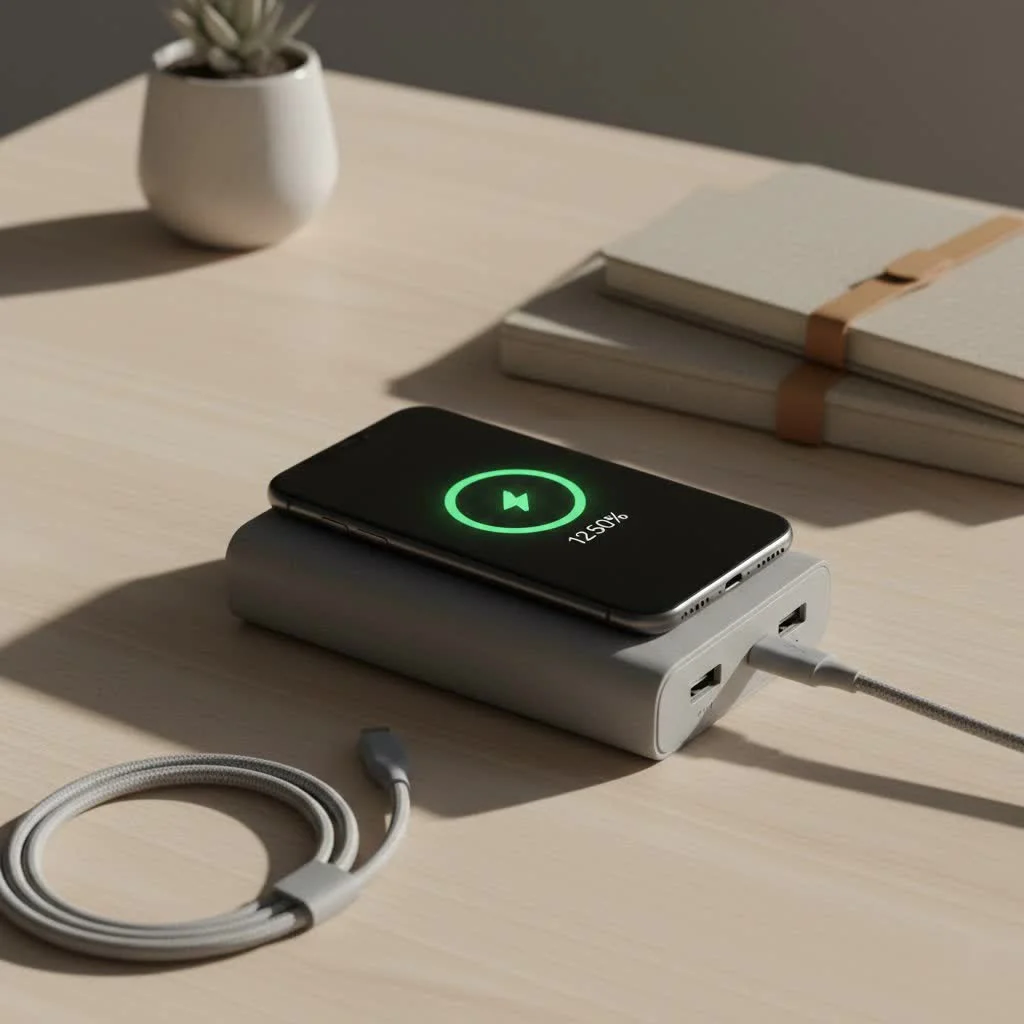
As specialists with over a decade of experience at Pvhao, we’ve tested countless devices to separate the truly powerful from the pretenders. This guide will demystify the specs and help you find the perfect portable charger to keep your digital life running smoothly, no matter where you are. For shop curated portable power on this site.
What Makes a Great Mobile Power Bank?
Choosing the right power bank goes beyond picking the one with the biggest number on the box. It’s about finding the right balance of capacity, speed, portability, and features that fit your lifestyle.
Capacity (mAh): How Much Power Do You Really Need?
Capacity, measured in milliamp-hours (mAh), is the most advertised feature, but bigger isn’t always better. Think of it like a fuel tank: a larger tank holds more energy but is also heavier and bulkier.
- Under 10,000mAh: These are lightweight, pocket-friendly chargers perfect for a full day out. They can typically provide 1.5 to 2 full charges for a standard smartphone like an iPhone 15.
- 10,000mAh – 20,000mAh: This is the sweet spot for most users. A 20,000mAh power bank offers an excellent balance of portability and power, capable of charging a smartphone multiple times or juicing up a tablet. It’s the ideal choice for weekend trips or heavy users.
- Over 20,000mAh: These high-capacity beasts are designed for serious power needs. They can charge laptops, multiple devices simultaneously, and are perfect for long trips, camping, or professional use where outlets are scarce.
Charging Speed (Watts & Protocols): The Need for Speed
A high-capacity power bank is useless if it takes all day to charge your device. Charging speed is determined by wattage (W) and supported protocols like Power Delivery (PD) and Qualcomm Quick Charge (QC).
- Power Delivery (PD): This is the universal standard for fast charging over USB-C. If you have a modern smartphone (iPhone or Android) or a laptop that charges via USB-C, a power bank with a high-wattage PD output (30W or higher) is essential for rapid charging.
- Qualcomm Quick Charge (QC): This is a popular fast-charging protocol for many Android devices. While many devices are moving towards PD, having QC support can be beneficial.
- Standard Charging (5W – 12W): Basic power banks without fast-charging protocols will charge your devices slowly. For modern gadgets, it’s worth investing in a model that supports PD or QC.
Ports and Connectivity: One Size Doesn’t Fit All
|
Our Picks for the Best Power Bank in 2026
As an Amazon Associate I earn from qualifying purchases.
|
||
| Num | Product | Action |
|---|---|---|
| 1 | Anker Laptop Power Bank, 25,000mAh Portable Charger with Triple 100W USB-C Ports, Built-in Retractable Cables, Flight-Approved for Travel, iPhone 17/16 Series, MacBook, Samsung, and More |

|
| 2 | INIU Power Bank, 25000mAh 100W USB C Laptop Portable Charger, PD QC Fast Charging 3-Output Battery Pack, Travel Charger for Laptop MacBook iPad Tablet Steam Deck iPhone 17 16 15 14 Pro Samsung S25 etc |
|
| 3 | INIU Portable Charger, Slimmest Fast Charging 10000mAh USB C in/Out Power Bank, 22.5W PD3.0 QC4+ Battery Pack, Portable Phone Charger for iPhone 16 15 14 13 12 Pro Samsung S22 S21 Google AirPods iPad |
|
| 4 | Energizer Power Bank 20000mAh - USB-C 20W Outputs Fast Charging Battery Pack, USB-A 18W with 4 Outputs & LCD Screen for Android/iPhone 15 16 Plus Pro Max/iPad Tablet and etc_UE20063PQ |
|
| 5 | 90000mAh High Capacity Power Bank, 30W Fast Charging Portable Charger PD&QC 3.0, 5 Output 2 Input Large Powerbank with LED Display USB C Battery Pack Charger Portable for Outdoor Camping Travel |
|
| 6 | Emergency Radio&22000mAh Solar Power Bank, FM NOAA Weather Radio, Portable Hand Crank Bluetooth Radio, 20W Fast Charge Wireless Phone Charger, SOS Flashlight for Emergency/Home |
|
| 7 | INIU Portable Charger, Smallest 22.5W 10000mAh Power Bank, USB C in/Output Fast Charging 3-Output Mini Battery Pack Charger with Phone Holder for iPhone 17 16 15 14 Air Samsung S23 Google iPad Tablet |
|
| 8 | UGREEN Nexode Power Bank 20000mAh 165W with Built-in USB C Cable Laptop Travel Portable Charger, 100W Input, Fast Charging for MacBook Pro/Air/iPhone 17/16/iPad Pro/Galaxy S25 Ultra/Dell/HP and More |
|
| 9 | UGREEN Power Bank 25,000mAh 145W Laptop Portable Charger, Nexode 3-Port USB C PD Battery Pack, for MacBook Pro/Air, Dell XPS, iPhone 17/16/15/14, Galaxy S24, Steam Deck, iPad, and More |
|
| 10 | Anker Laptop Power Bank, 25,000mAh Portable Charger with Triple 100W USB-C Ports, Built-in Retractable Cables, Flight-Approved for Travel, iPhone 17/16 Series, MacBook, Samsung, and More |
|
Consider the devices you need to charge. The best mobile power bank for you will have the right combination of ports.
- USB-C: This is the modern standard. A USB-C port can often be used for both input (charging the power bank itself) and high-wattage output (charging your devices). It is a must-have for fast charging.
- USB-A: The traditional rectangular USB port is still useful for charging older devices and accessories.
- Built-in Cables: Some power banks, like the Anker Nano series, come with integrated USB-C cables, which is incredibly convenient and means one less thing to forget.
Size, Weight, and Portability
A 30,000mAh power bank won’t do you much good if you leave it at home because it’s too heavy. Your daily routine should dictate your choice. For everyday carry in a pocket or small bag, a slim 10,000mAh model is ideal. For travel or professional use where it’s packed in a backpack, a larger 20,000mAh model is more practical.
As our lead technician, Alex Renner, often says, “The best power bank is the one you actually have with you. Don’t get so focused on maximum capacity that you sacrifice the portability you need for daily use.”
The Best Mobile Power Banks of 2025
After extensive testing, here are our top picks that deliver on performance, reliability, and value.
Best Overall: UGREEN Nexode 20,000mAh Power Bank
For the user who wants it all, the UGREEN Nexode is a powerhouse. Its 20,000mAh capacity is airline-friendly and can charge a modern smartphone up to four times. The standout feature is its 130W total output, with a single USB-C port capable of delivering 100W—enough to charge a MacBook Pro at high speed. The smart TFT display provides real-time information on battery levels and charging speed, taking the guesswork out of power management.
Best for Portability: Anker Nano Power Bank (10,000mAh)
The Anker Nano is the champion of convenience. It’s compact, lightweight, and features a built-in USB-C cable that doubles as a carrying loop. Despite its small size, it packs a 10,000mAh capacity and delivers a respectable 30W output, perfect for fast-charging a smartphone. It’s the ultimate grab-and-go solution for daily use.
Best High-Capacity: Anker 737 Power Bank (24,000mAh)
When you need serious power for multiple devices, including a laptop, the Anker 737 delivers. With a massive 24,000mAh capacity and a blazing-fast 140W output from a single USB-C port, this power bank can handle the most demanding devices. Its smart digital display provides detailed stats, and its advanced safety features give you peace of mind. It’s the top choice for digital nomads, photographers, and anyone who can’t afford to run out of juice.
Best for Apple Users: Anker MagGo Power Bank
Designed for the Apple ecosystem, the Anker MagGo series offers seamless magnetic attachment for iPhones with MagSafe. It supports the new Qi2 wireless charging standard, delivering up to 15W of wireless power. Many models also include a built-in foldable stand, making it perfect for watching videos or taking FaceTime calls while you charge. It’s a stylish and incredibly practical accessory for any iPhone user.
Common Mistakes to Avoid When Buying a Power Bank
- Ignoring Output Wattage: Buying a 20,000mAh power bank with only a 12W output will be painfully slow for modern devices. Always match the power bank’s output to your device’s fast-charging capabilities.
- Forgetting Input Speed: A huge power bank is great, but not if it takes 12 hours to recharge. Look for models with high-speed input (usually via USB-C PD) to ensure you can refill it quickly.
- Buying from Un reputable Brands: Cheap, uncertified power banks can be dangerous. They pose a risk of overcharging, short-circuiting, and can even damage your expensive devices. Stick to trusted brands like Anker, UGREEN, Baseus, and Belkin that invest in safety technology.
Frequently Asked Questions (FAQ)
What is the difference between mAh and Wh?
mAh (milliamp-hours) measures charge capacity, while Wh (watt-hours) measures energy capacity. Wh is often more accurate as it accounts for voltage. Airlines use Wh to determine legality—the limit is typically 100Wh without special permission.
Can I take a mobile power bank on an airplane?
Yes, but they must be in your carry-on luggage, not checked bags. The capacity must generally be under 100Wh (around 27,000mAh), though some airlines may permit up to 160Wh with prior approval.
How many times can a 20,000mAh power bank charge my phone?
This depends on your phone’s battery size and charging efficiency. Due to power loss during transfer (as heat), you won’t get 100% of the advertised capacity. A 20,000mAh power bank can typically charge a standard smartphone (with a ~4,500mAh battery) about 3 to 4 times.
How long will a power bank last?
A quality power bank should last for 300-500 charge cycles. With average use, this translates to several years of reliable service before the battery’s capacity starts to degrade noticeably.
Is it safe to leave my phone charging from a power bank overnight?
Yes, modern power banks from reputable brands have built-in safety features that prevent overcharging. They will automatically stop providing power once your device’s battery is full.
The Final Charge
Choosing the best mobile power bank is a crucial decision for staying powered and productive. By focusing on your personal needs for capacity, speed, and portability, you can select a device that serves as a reliable digital lifeline. Brands like Anker and UGREEN continue to lead the pack with innovative features and dependable performance. Invest in a quality power bank, and you’ll never have to experience the anxiety of a flashing red battery icon again.
Frequently Asked Questions
What is the difference between mAh and Wh in power banks?
mAh (milliamp-hours) measures charge capacity, while Wh (watt-hours) measures energy capacity. Wh is generally more accurate as it accounts for voltage, and airlines typically use Wh to determine legality, with a common limit of 100Wh without special permission.
Can I bring a mobile power bank on an airplane?
Yes, mobile power banks are permitted on airplanes but must be carried in your carry-on luggage, not checked bags. The capacity limit is typically under 100Wh (approximately 27,000mAh), though some airlines may allow up to 160Wh with prior approval.
How many times can a 20,000mAh power bank charge a smartphone?
A 20,000mAh power bank can typically charge a standard smartphone with a 4,500mAh battery about 3 to 4 times. This accounts for power loss during transfer, which means you won't get 100% of the advertised capacity.
What is the expected lifespan of a quality power bank?
A quality power bank should last for 300-500 charge cycles. With average use, this translates to several years of reliable service before the battery's capacity starts to degrade noticeably, ensuring long-term utility.
Is it safe to charge a phone from a power bank overnight?
Yes, it is safe to leave your phone charging from a power bank overnight if it's from a reputable brand. Modern power banks include built-in safety features that prevent overcharging, automatically stopping power delivery once your device's battery is full.
How to Choose the Best Mobile Power Bank
Selecting the ideal mobile power bank involves evaluating capacity, charging speed, port types, and portability to match your specific needs and devices.
Determine the required milliamp-hour (mAh) capacity based on your usage. Under 10,000mAh is suitable for daily smartphone top-ups, 10,000-20,000mAh is ideal for weekend trips, and over 20,000mAh is best for multiple devices or extended travel.
Look for power banks that support fast-charging protocols like Power Delivery (PD) via USB-C, especially if you have modern smartphones or laptops. Aim for 30W or higher output for rapid charging, as standard 5W-12W charging is slow for current devices.
Ensure the power bank has the right combination of ports for your devices. USB-C is crucial for fast charging and often serves as both input and output, while USB-A ports are useful for older accessories. Consider models with built-in cables for added convenience.
Match the power bank's physical size and weight to your daily routine. A slim 10,000mAh model is perfect for pocket carry, whereas a larger 20,000mAh unit is more practical for backpacks during travel or professional use.
Always purchase power banks from trusted brands like Anker, UGREEN, Baseus, or Belkin. These brands invest in safety features to prevent overcharging, short-circuiting, and potential damage to your expensive devices, ensuring reliability and peace of mind.
Get our weekly buyer guide
Practical specs, not advice. Unsubscribe anytime.
I finally upgraded my old power bank after reading about the importance of Power Delivery. My new Anker 20,000mAh model charges my phone and tablet so much faster now, it’s a game-changer. I used to wait forever, but now I can get a significant charge in like 30 minutes. Definitely worth investing in a good brand.
This guide really helped me understand why a 10,000mAh to 20,000mAh range is ideal for most users. I picked up a 12,000mAh power bank and it’s been perfect for multiple smartphone charges throughout the week. The balance of capacity and portability is spot on, exactly what I needed for travel.
The UGREEN power bank I got is pretty good for the price, and the 10,000mAh capacity is perfect for my daily commute. My only gripe is that it feels a bit bulkier than I expected for its capacity. It still fits in my bag, but it’s not as sleek as some of the other options I’ve seen. Charges my phone fine though.
I was looking for something reliable for camping trips and decided on a 15,000mAh unit with USB-C ports. It’s been fantastic for keeping all our devices topped up, from phones to headlamps. The portability is great, and it holds a charge really well even after a few days of use. No complaints so far!