In a world where staying connected is more a necessity than a luxury, running out of battery is a modern-day nightmare. Whether you’re hiking in the mountains, enjoying a day at the beach, or facing an unexpected power outage, a dead phone is more than just an inconvenience. This is where a solar power bank promises to be the ultimate game-changer. It offers the freedom of off-grid power, harnessing the sun’s energy to keep your essential devices alive. But how well does this technology work in the real world? As experts at pvhao.com, we’re here to give you the complete, no-nonsense guide to solar power banks.
How Does a Solar Power Bank Actually Work?
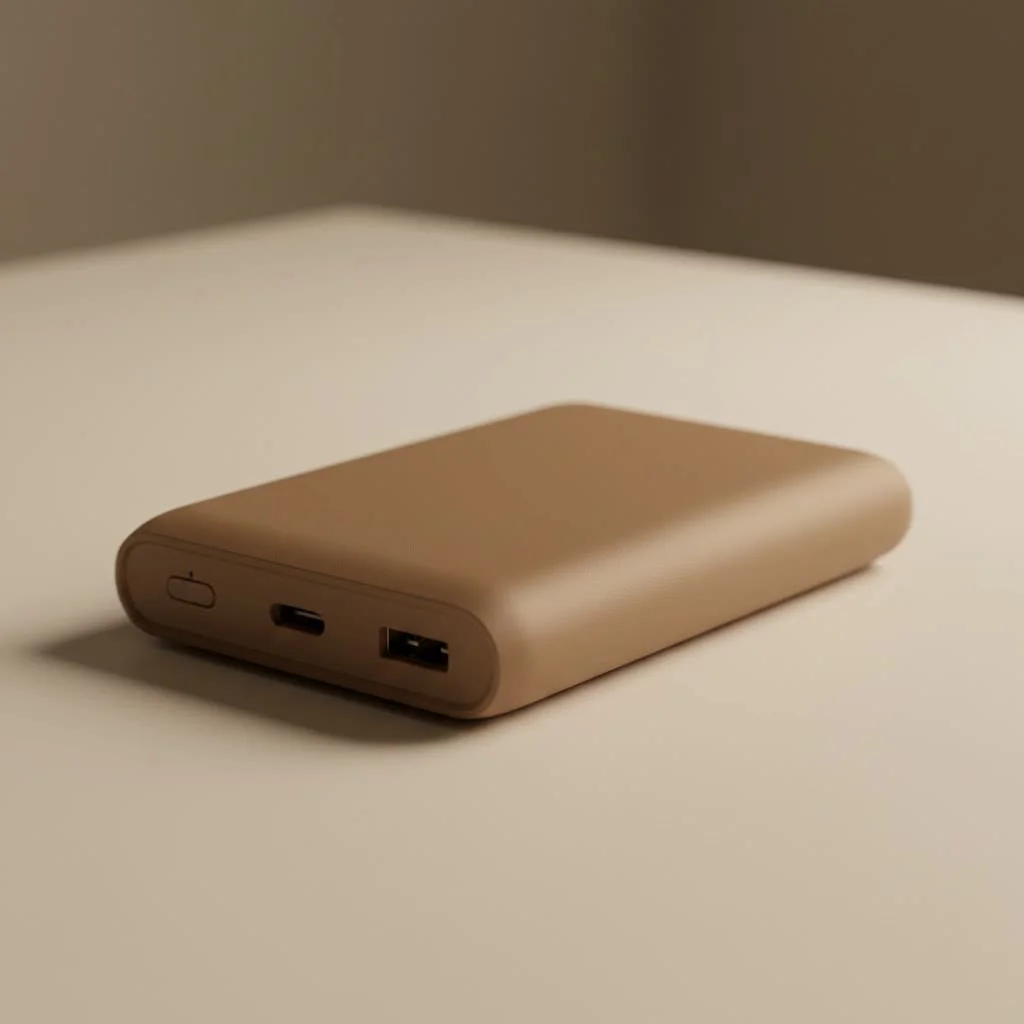
At its core, a solar power bank is a hybrid device. It’s a portable battery pack (like any standard power bank) with a crucial addition: built-in photovoltaic (PV) solar panels. The process seems simple, but it involves a few key steps to turn sunlight into usable power for your devices.
- Capturing Sunlight: The small solar panels on the surface of the device are made of silicon photovoltaic cells. When direct sunlight hits these panels, they excite electrons, generating a flow of direct current (DC) electricity.
- Storing Energy: This raw DC electricity is then managed by an internal control circuit and stored in a rechargeable lithium-ion or lithium-polymer battery. This is the “bank” part of the power bank, holding the energy until you need it.
- Charging Your Devices: When you plug your smartphone, tablet, or GPS into the power bank’s USB ports, the stored energy is released, charging your device just like a regular wall outlet would.
Crucially, every solar power bank also includes a standard input port (usually USB-C or Micro-USB), allowing you to charge it from a wall outlet. This dual-charging capability is its most important feature.
The Big Question: Are Solar Power Banks Worth It?
This is the most common question we get, and the honest answer is: it depends entirely on your expectations. Solar power banks are fantastic for certain situations but can be disappointing if you misunderstand their primary function.
The Advantages
- Eco-Friendly Power: Harnessing solar energy is a clean, renewable way to charge your devices, reducing your carbon footprint one charge at a time.
- True Portability and Freedom: For campers, hikers, and anyone spending time off the grid, a solar power bank provides a vital lifeline for emergency communication and navigation.
- Emergency Preparedness: During a power outage, having a way to slowly trickle-charge your power bank can be invaluable for keeping a phone operational for emergency calls.
The Realistic Limitations
|
Our Picks for the Best Power Bank in 2026
As an Amazon Associate I earn from qualifying purchases.
|
||
| Num | Product | Action |
|---|---|---|
| 1 | Anker Laptop Power Bank, 25,000mAh Portable Charger with Triple 100W USB-C Ports, Built-in Retractable Cables, Flight-Approved for Travel, iPhone 17/16 Series, MacBook, Samsung, and More |

|
| 2 | Energizer Power Bank 20000mAh - USB-C 20W Outputs Fast Charging Battery Pack, USB-A 18W with 4 Outputs & LCD Screen for Android/iPhone 15 16 Plus Pro Max/iPad Tablet and etc_UE20063PQ |
|
| 3 | INIU Power Bank, 25000mAh 100W USB C Laptop Portable Charger, PD QC Fast Charging 3-Output Battery Pack, Travel Charger for Laptop MacBook iPad Tablet Steam Deck iPhone 17 16 15 14 Pro Samsung S25 etc |
|
| 4 | Emergency Radio&22000mAh Solar Power Bank, FM NOAA Weather Radio, Portable Hand Crank Bluetooth Radio, 20W Fast Charge Wireless Phone Charger, SOS Flashlight for Emergency/Home |
|
| 5 | INIU Portable Charger, Smallest 22.5W 10000mAh Power Bank, USB C in/Output Fast Charging 3-Output Mini Battery Pack Charger with Phone Holder for iPhone 17 16 15 14 Air Samsung S23 Google iPad Tablet |
|
| 6 | UGREEN Power Bank 25,000mAh 145W Laptop Portable Charger, Nexode 3-Port USB C PD Battery Pack, for MacBook Pro/Air, Dell XPS, iPhone 17/16/15/14, Galaxy S24, Steam Deck, iPad, and More |
|
| 7 | 90000mAh High Capacity Power Bank, 30W Fast Charging Portable Charger PD&QC 3.0, 5 Output 2 Input Large Powerbank with LED Display USB C Battery Pack Charger Portable for Outdoor Camping Travel |
|
| 8 | Anker Laptop Power Bank, 25,000mAh Portable Charger with Triple 100W USB-C Ports, Built-in Retractable Cables, Flight-Approved for Travel, iPhone 17/16 Series, MacBook, Samsung, and More |
|
| 9 | UGREEN Nexode Power Bank 20000mAh 165W with Built-in USB C Cable Laptop Travel Portable Charger, 100W Input, Fast Charging for MacBook Pro/Air/iPhone 17/16/iPad Pro/Galaxy S25 Ultra/Dell/HP and More |
|
| 10 | INIU Portable Charger, Slimmest Fast Charging 10000mAh USB C in/Out Power Bank, 22.5W PD3.0 QC4+ Battery Pack, Portable Phone Charger for iPhone 16 15 14 13 12 Pro Samsung S22 S21 Google AirPods iPad |
|
- Extremely Slow Solar Charging: This is the most critical point to understand. The small size of the built-in panels means solar charging is incredibly slow. It can take several days of perfect, direct sunlight to fully charge a high-capacity power bank. A single day in the sun might only give you enough power to charge a smartphone by 15-25%.
- Weather Dependency: No sun means no power. Cloudy days, shade, or poor positioning will dramatically reduce charging efficiency to almost nothing.
- The Heat Paradox: Solar panels need direct sunlight to work, but lithium-ion batteries degrade when they get too hot. Leaving your power bank baking in the sun for hours on end to charge it can shorten its overall lifespan.
As our lead technician at pvhao.com, Alex Tran, often says, “Think of the solar panel on your power bank as an emergency trickle charger, not its main fuel source. Charge it fully from the wall before you leave home, and let the sun provide a top-up, not a full refill.”
Key Features to Look for in a Solar Power Bank
When you’re ready to buy, the technical specifications can be confusing. Here’s a breakdown of what really matters.
Battery Capacity (mAh)
Measured in milliamp-hours (mAh), this tells you how much energy the power bank can store. A higher number means more charging capacity.
- 10,000 mAh: Good for 1.5-2 full smartphone charges. A great balance of size and power for daily use.
- 20,000 mAh: Ideal for longer trips or charging multiple devices. Can charge a standard smartphone 3-4 times.
- 30,000+ mAh: Excellent for power users, tablets, or multi-day off-grid adventures, but will be larger and heavier.
Solar Panel Efficiency and Size
Not all solar panels are created equal. Some high-end models use more efficient panels that can convert more sunlight into energy. Models with multiple, foldable panels offer a significantly larger surface area, which can dramatically speed up solar charging times compared to single-panel units.
Durability and Weather Resistance
Since these devices are designed for outdoor use, durability is key. Look for features like:
- Rugged Casing: Shock-absorbent materials like rubber and reinforced corners to protect against drops.
- IP Rating: This stands for “Ingress Protection.” An IP65 rating, for example, means the device is dust-tight and can withstand water jets, making it rainproof and splash-proof.
Ports and Charging Speed
- Output Ports: Look for a mix of USB-A and USB-C ports. USB-C with Power Delivery (PD) is the modern standard and can charge compatible devices much faster.
- Input Port: A USB-C input will allow you to recharge the power bank itself much faster from a wall outlet than older Micro-USB ports.
How Long Does It Really Take to Charge?
Setting realistic expectations is crucial for not being disappointed. Let’s compare charging methods for a typical 20,000 mAh solar power bank.
- Via Wall Outlet (USB-C): 4-6 hours. This is the fastest and most efficient method and should always be your primary way of charging.
- Via Solar Panel (Direct Sunlight): 40-60 hours. This is not a typo. Under ideal, bright, direct sunlight conditions, it could take a full week of daylight hours to charge from empty to full. This underscores the importance of using solar as a backup.
Frequently Asked Questions (FAQ)
Q: Can I charge my solar power bank indoors through a window?
A: You can, but it’s highly inefficient. Window glass can block a significant amount of UV light, drastically reducing the charging speed. For any meaningful charge, it needs to be in direct, unfiltered outdoor sunlight.
Q: Is it safe to leave a solar power bank in a hot car?
A: Absolutely not. The interior of a car can reach extreme temperatures, which can permanently damage the internal lithium-ion battery and even pose a safety risk.
Q: Can a solar power bank charge a laptop?
A: Most standard solar power banks cannot. Laptops require much higher power output. You would need a larger, more specialized “solar generator” or a power bank with a high-wattage USB-C PD output (60W or more) and a very large battery capacity.
Q: How do I know if the solar panel is working?
A: Almost all solar power banks have an LED indicator light that will turn on or change color (often to green) as soon as it detects sufficient sunlight to begin charging.
Q: Does the solar panel charge the power bank while I’m using it to charge my phone?
A: Yes, most models support pass-through charging. However, the power drawn by your phone will likely be much greater than the power being generated by the small solar panel, so the power bank’s battery will still be depleting, just at a slower rate.
Final Thoughts
A solar power bank is an excellent tool for the modern adventurer, the emergency-prepared homeowner, and the eco-conscious individual. Its true value lies in its dual-charging nature: the reliability of a wall charge combined with the freedom of a solar top-up. By understanding its limitations—namely, that the sun is for emergencies, not for primary charging—you can leverage this technology to stay connected wherever your journey takes you. Charge it up before you go, and let the sun keep you going.
Get our weekly buyer guide
Practical specs, not advice. Unsubscribe anytime.