In a world where staying connected is essential, running out of battery is not an option. For outdoor enthusiasts, frequent travelers, and anyone preparing for an emergency, a reliable power source is a must-have. Enter the solar powered power bank, a device that promises the freedom of charging your gadgets using only the power of the sun. But is it the ultimate off-grid solution, or just a sunny gimmick? As an expert with over a decade of experience at pvhao.com, I’m here to give you the unvarnished truth.
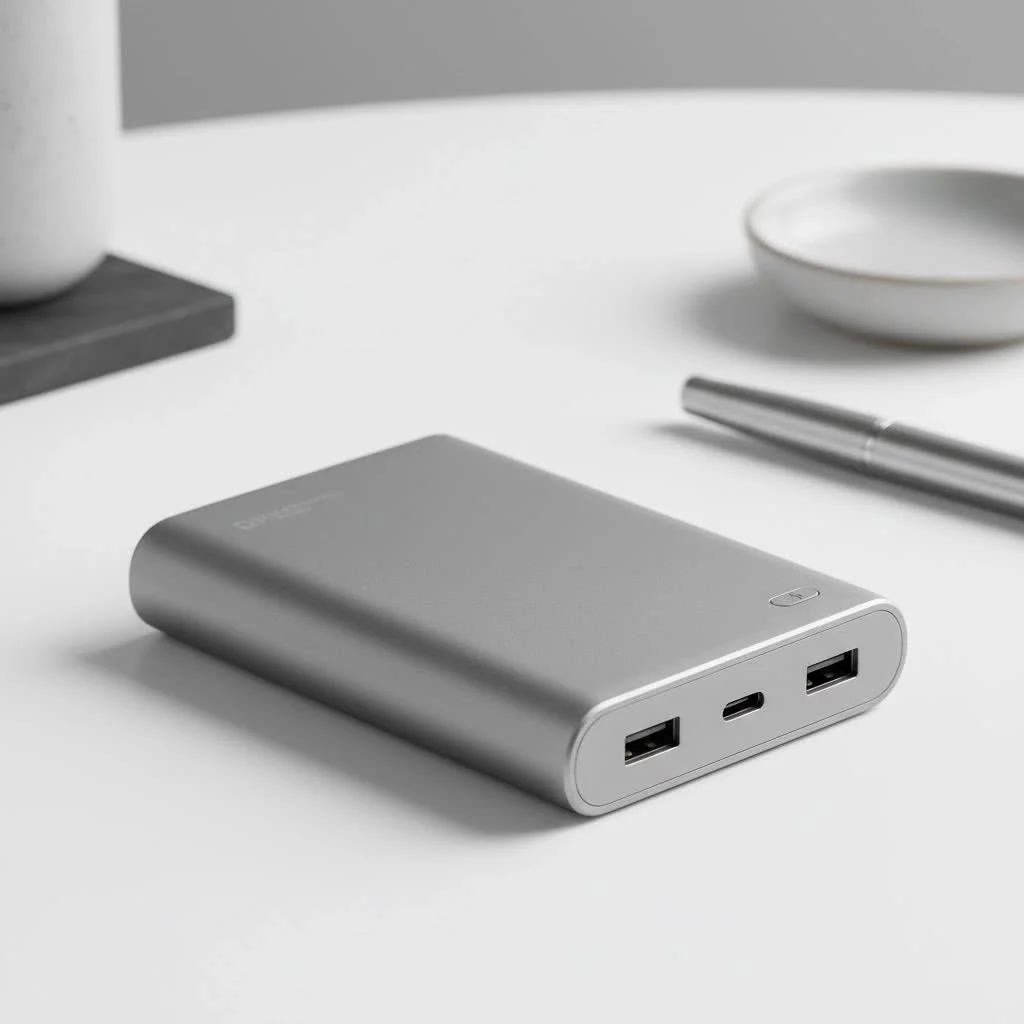
A solar powered power bank is a portable battery pack equipped with small photovoltaic (PV) panels. The concept is simple and appealing: lay the device in the sun, and the panels convert sunlight into electrical energy, storing it in the internal battery. You can then use this stored power to charge your phone, tablet, or other USB-powered devices, day or night. It sounds like the perfect blend of convenience and sustainability. For browse all portable power articles on this site.
How Does a Solar Powered Power Bank Actually Work?
Understanding the mechanics of a solar powered power bank is key to setting realistic expectations. The process is straightforward but heavily dependent on environmental factors.
- Sunlight Absorption: The small solar panel on the surface of the power bank captures photons from sunlight.
- Energy Conversion: When sunlight hits the photovoltaic cells, it creates an electric current.
- Energy Storage: This current is channeled through a charge controller, which regulates the voltage and flow of electricity to safely charge the internal lithium-ion or lithium-polymer battery.
- Device Charging: Once the internal battery has stored enough power, you can plug your devices into its output ports (typically USB-A or USB-C) just like you would with a regular power bank.
Most models also allow you to charge them via a standard wall outlet, which is a crucial feature we’ll discuss next.
The Reality of Solar Charging: What to Expect
Here is the most critical takeaway: the small solar panel on a portable power bank is primarily for emergency top-ups, not for primary charging. The surface area is simply too small to quickly gather a significant amount of energy. Think of it like trying to fill a swimming pool with a teaspoon. It’s possible, but it will take a very, very long time.
On average, it can take several days of direct, bright sunlight to fully charge a high-capacity power bank from 0% using only its solar panel. Weather conditions, time of day, and the angle of the sun all dramatically impact efficiency. Therefore, the best practice is to fully charge your solar power bank from a wall outlet before you leave home and use the sun to trickle-charge it and keep it topped off while you’re off the grid.
As renewable energy engineer David Chen notes, “Consumers should view the solar function as a survival feature. It’s there to give you enough power to make an emergency call or check a map, not to power a weekend-long Netflix binge.”
Key Features to Look for in a Solar Powered Power Bank
When you’re ready to buy, navigating the specifications can be confusing. Here’s a breakdown of what really matters.
Battery Capacity (mAh)
|
Our Picks for the Best Power Bank in 2026
As an Amazon Associate I earn from qualifying purchases.
|
||
| Num | Product | Action |
|---|---|---|
| 1 | UGREEN Nexode Power Bank 20000mAh 165W with Built-in USB C Cable Laptop Travel Portable Charger, 100W Input, Fast Charging for MacBook Pro/Air/iPhone 17/16/iPad Pro/Galaxy S25 Ultra/Dell/HP and More |

|
| 2 | Anker Laptop Power Bank, 25,000mAh Portable Charger with Triple 100W USB-C Ports, Built-in Retractable Cables, Flight-Approved for Travel, iPhone 17/16 Series, MacBook, Samsung, and More |
|
| 3 | INIU Portable Charger, Smallest 22.5W 10000mAh Power Bank, USB C in/Output Fast Charging 3-Output Mini Battery Pack Charger with Phone Holder for iPhone 17 16 15 14 Air Samsung S23 Google iPad Tablet |
|
| 4 | UGREEN Power Bank 25,000mAh 145W Laptop Portable Charger, Nexode 3-Port USB C PD Battery Pack, for MacBook Pro/Air, Dell XPS, iPhone 17/16/15/14, Galaxy S24, Steam Deck, iPad, and More |
|
| 5 | Emergency Radio&22000mAh Solar Power Bank, FM NOAA Weather Radio, Portable Hand Crank Bluetooth Radio, 20W Fast Charge Wireless Phone Charger, SOS Flashlight for Emergency/Home |
|
| 6 | INIU Power Bank, 25000mAh 100W USB C Laptop Portable Charger, PD QC Fast Charging 3-Output Battery Pack, Travel Charger for Laptop MacBook iPad Tablet Steam Deck iPhone 17 16 15 14 Pro Samsung S25 etc |
|
| 7 | Anker Laptop Power Bank, 25,000mAh Portable Charger with Triple 100W USB-C Ports, Built-in Retractable Cables, Flight-Approved for Travel, iPhone 17/16 Series, MacBook, Samsung, and More |
|
| 8 | Energizer Power Bank 20000mAh - USB-C 20W Outputs Fast Charging Battery Pack, USB-A 18W with 4 Outputs & LCD Screen for Android/iPhone 15 16 Plus Pro Max/iPad Tablet and etc_UE20063PQ |
|
| 9 | INIU Portable Charger, Slimmest Fast Charging 10000mAh USB C in/Out Power Bank, 22.5W PD3.0 QC4+ Battery Pack, Portable Phone Charger for iPhone 16 15 14 13 12 Pro Samsung S22 S21 Google AirPods iPad |
|
| 10 | 90000mAh High Capacity Power Bank, 30W Fast Charging Portable Charger PD&QC 3.0, 5 Output 2 Input Large Powerbank with LED Display USB C Battery Pack Charger Portable for Outdoor Camping Travel |
|
Capacity, measured in milliamp-hours (mAh), tells you how much energy the power bank can store. A 10,000mAh unit can typically charge a modern smartphone about two times, while a 20,000mAh or 30,000mAh model offers more charges or can power larger devices. Choose a capacity that matches your needs, remembering that higher capacity also means more weight and longer charging times.
Solar Panel Efficiency and Size
The wattage of the solar panel determines how quickly it can convert sunlight to energy. Most integrated panels are rated between 1.5W and 5W. While a higher wattage is better, some models feature foldable panels that expand to a much larger surface area, significantly speeding up solar charging.
Output Ports and Charging Speed
Look for a power bank with multiple output ports if you need to charge several devices at once. Modern essentials include a USB-C Power Delivery (PD) port for fast-charging compatible phones, tablets, and even some laptops, alongside standard USB-A ports.
Durability and Build Quality
Since these devices are designed for the outdoors, durability is paramount. Look for features like:
- Rugged Casing: Shock-absorbent materials like silicone and ABS plastic protect against drops.
- IP Rating: An IP rating like IP65 or IP67 indicates the device is water and dust-resistant, making it reliable in rain or on a dusty trail.
- Built-in Flashlight: Many models include a multi-mode LED flashlight, which is incredibly useful for camping and emergencies.
Are Solar Power Banks Worth It? The Honest Answer
So, should you buy a solar powered power bank? The answer is a firm “it depends on your use case.”
- For the Avid Camper or Hiker: Absolutely. On a multi-day trip, the ability to slowly add charge to your power bank can be a lifesaver, ensuring your navigation and communication devices stay powered.
- For the Emergency Prepper: Yes. In a power outage, having a self-recharging power source provides peace of mind and a critical link to the outside world.
- For the Everyday Urban User: Probably not. If you are rarely far from a wall outlet, a standard, more compact power bank will serve you better and be more cost-effective. The solar panel adds bulk and cost that you likely won’t use.
Frequently Asked Questions
How long does it really take to charge a solar power bank with the sun?
It can take anywhere from 20 to 50 hours of direct, intense sunlight, depending on the panel size and battery capacity. It’s best to consider it a multi-day process.
Can I charge a solar power bank from a window indoors?
While it might show that it’s charging, window glass can block a significant portion of UV rays, making the process extremely slow and inefficient. For best results, always charge it outside in direct sunlight.
Are solar power banks completely waterproof?
Not all are. You must check the IP (Ingress Protection) rating. An IP67 rating means the device can be submerged in up to one meter of water for 30 minutes, while an IP65 rating means it can withstand jets of water, like heavy rain.
Can a solar power bank charge a laptop?
Most cannot. Charging a laptop requires high power output, typically 45W or more. Only larger, high-capacity solar power banks with a dedicated USB-C PD port offering sufficient wattage can do this. Always check the specifications.
Final Thoughts: A Powerful Backup, Not a Primary Source
A solar powered power bank is a fantastic tool when used correctly. By understanding its limitations and leveraging its strengths, it can be an invaluable companion for any outdoor adventure or emergency kit. Treat it as a battery pack with a built-in emergency recharge feature, and you won’t be disappointed. Charge it fully before you go, use the sun to keep it topped up, and enjoy the peace of mind that comes with having power, no matter where you are.
Get our weekly buyer guide
Practical specs, not advice. Unsubscribe anytime.