In today’s digitally connected world, running out of battery is more than a minor inconvenience; it’s a disconnect from work, friends, and navigation. This is where a power bank 20000mAh becomes an essential piece of gear. It strikes a fantastic balance between high capacity and portability, making it the go-to choice for tech-savvy users, frequent travelers, and anyone who needs reliable power on the move. But what exactly does 20000mAh get you, and how do you choose the right one?
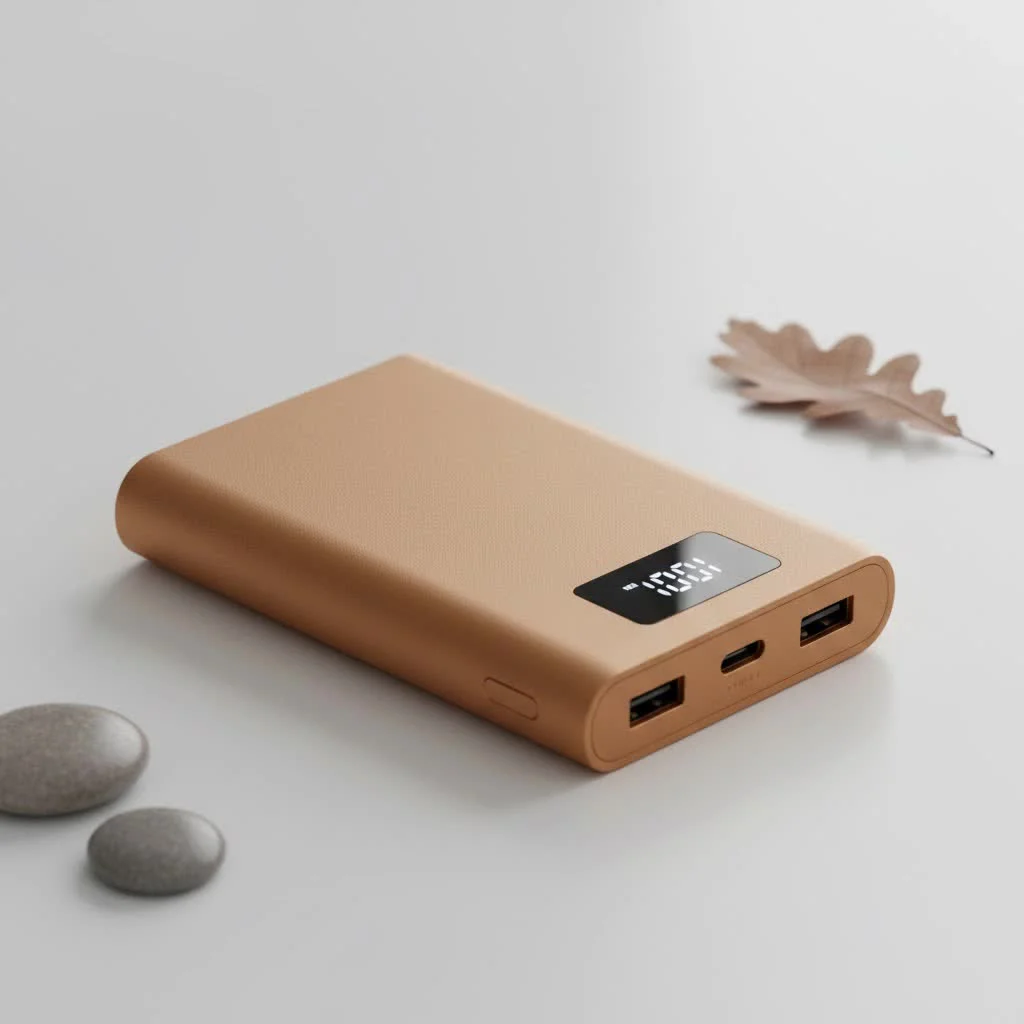
As the team behind Pvhao.com, we’ve spent over a decade testing and analyzing every aspect of portable chargers. This guide will break down everything you need to know, helping you invest in a device that won’t let you down when you need it most.
What Does 20000mAh Actually Mean for Your Devices?
The “mAh” stands for milliampere-hour, a unit that measures electric charge. It essentially tells you how much energy a battery can hold. A 20000mAh power bank holds a substantial amount of power, but it’s not as simple as dividing 20000 by your phone’s battery capacity to see how many charges you’ll get.
Real-World Capacity vs. Advertised Capacity
You’ll always experience some energy loss during the charging process, primarily due to heat and voltage conversion. A quality power bank is typically 80-90% efficient. This means a power bank 20000mAh will realistically deliver about 16,000 to 18,000mAh of usable charge to your devices.
Here’s a quick estimate of how many full charges you can expect for some popular devices:
| Device | Average Battery Size (mAh) | Estimated Full Charges |
|---|---|---|
| Apple iPhone 15 Pro | ~3,274 mAh | 4 to 5 times |
| Samsung Galaxy S24 Ultra | 5,000 mAh | 3 to 3.5 times |
| Google Pixel 8 Pro | 5,050 mAh | 3 to 3.5 times |
| Apple iPad Pro 11″ | ~7,538 mAh | ~2 times |
| Nintendo Switch | 4,310 mAh | 3.5 to 4 times |
This capacity is enough to keep your smartphone alive for nearly a week, making it perfect for long weekends, business trips, or music festivals.
Key Features to Look For in a 20000mAh Power Bank
Not all 20000mAh power banks are created equal. The technology inside determines how quickly and safely it can charge your devices. Here are the critical features to consider.
Fast Charging Technology: PD and QC
Forget the days of slow overnight charging. Modern power banks use advanced protocols to deliver power rapidly.
- USB Power Delivery (PD): This is the universal standard for fast charging over a USB-C connection. It’s used by iPhones, Android devices, and even many laptops. A power bank with USB-C PD can charge a compatible smartphone to 50% in about 30 minutes.
- Qualcomm Quick Charge (QC): This technology is common in Android devices. If your phone supports QC, a power bank with a matching QC port will charge it significantly faster than a standard USB port.
“When choosing a power bank, matching its charging technology to your primary devices is crucial,” notes David Chen, Lead Engineer at Pvhao.com. “Using a Power Delivery power bank with a PD-compatible phone ensures you get the fastest and most efficient charge possible, protecting your device’s battery health in the long run.”
Port Selection: USB-C and USB-A
|
Our Picks for the Best Power Bank in 2026
As an Amazon Associate I earn from qualifying purchases.
|
||
| Num | Product | Action |
|---|---|---|
| 1 | UGREEN Power Bank 25,000mAh 145W Laptop Portable Charger, Nexode 3-Port USB C PD Battery Pack, for MacBook Pro/Air, Dell XPS, iPhone 17/16/15/14, Galaxy S24, Steam Deck, iPad, and More |

|
| 2 | Anker Laptop Power Bank, 25,000mAh Portable Charger with Triple 100W USB-C Ports, Built-in Retractable Cables, Flight-Approved for Travel, iPhone 17/16 Series, MacBook, Samsung, and More |
|
| 3 | Anker Laptop Power Bank, 25,000mAh Portable Charger with Triple 100W USB-C Ports, Built-in Retractable Cables, Flight-Approved for Travel, iPhone 17/16 Series, MacBook, Samsung, and More |
|
| 4 | INIU Portable Charger, Slimmest Fast Charging 10000mAh USB C in/Out Power Bank, 22.5W PD3.0 QC4+ Battery Pack, Portable Phone Charger for iPhone 16 15 14 13 12 Pro Samsung S22 S21 Google AirPods iPad |
|
| 5 | INIU Power Bank, 25000mAh 100W USB C Laptop Portable Charger, PD QC Fast Charging 3-Output Battery Pack, Travel Charger for Laptop MacBook iPad Tablet Steam Deck iPhone 17 16 15 14 Pro Samsung S25 etc |
|
| 6 | Emergency Radio&22000mAh Solar Power Bank, FM NOAA Weather Radio, Portable Hand Crank Bluetooth Radio, 20W Fast Charge Wireless Phone Charger, SOS Flashlight for Emergency/Home |
|
| 7 | INIU Portable Charger, Smallest 22.5W 10000mAh Power Bank, USB C in/Output Fast Charging 3-Output Mini Battery Pack Charger with Phone Holder for iPhone 17 16 15 14 Air Samsung S23 Google iPad Tablet |
|
| 8 | UGREEN Nexode Power Bank 20000mAh 165W with Built-in USB C Cable Laptop Travel Portable Charger, 100W Input, Fast Charging for MacBook Pro/Air/iPhone 17/16/iPad Pro/Galaxy S25 Ultra/Dell/HP and More |
|
| 9 | Energizer Power Bank 20000mAh - USB-C 20W Outputs Fast Charging Battery Pack, USB-A 18W with 4 Outputs & LCD Screen for Android/iPhone 15 16 Plus Pro Max/iPad Tablet and etc_UE20063PQ |
|
| 10 | 90000mAh High Capacity Power Bank, 30W Fast Charging Portable Charger PD&QC 3.0, 5 Output 2 Input Large Powerbank with LED Display USB C Battery Pack Charger Portable for Outdoor Camping Travel |
|
The types and number of ports dictate the power bank’s versatility.
- USB-C Port: This is the most important port. Look for one that supports both input and output, meaning you can use the same port to charge the power bank itself and to charge your devices.
- USB-A Ports: These are still useful for charging older devices or accessories like headphones and smartwatches. Many 20000mAh power banks come with one or two USB-A ports alongside a USB-C port.
Essential Safety Features
A reliable power bank should have a multi-protection safety system. This is non-negotiable. Look for certifications and features that protect against:
- Overcharging
- Short-circuiting
- Over-current and over-voltage
- Extreme temperatures
These protections safeguard both the power bank and your expensive electronics.
Is a 20000mAh Power Bank Allowed on Airplanes?
This is one of the most common questions we get, and the answer is a resounding yes, with one important rule. Airline regulations are based on Watt-hours (Wh), not mAh. The limit for most airlines, including the FAA and TSA in the United States, is 100Wh for carry-on luggage.
Here’s the simple calculation:
(mAh / 1000) x Voltage = Watt-hours
Most power banks operate at a standard voltage of 3.7V. So for a 20000mAh power bank:
(20000 / 1000) x 3.7V = 74Wh
At 74Wh, a 20000mAh power bank is well under the 100Wh limit. However, you must pack it in your carry-on bag. Lithium-ion batteries are prohibited in checked baggage due to fire safety risks.
The Pros and Cons of a 20000mAh Power Bank
This capacity hits the sweet spot for many, but it’s important to understand its trade-offs.
The Advantages
- High Capacity: It provides multiple charges for most devices, offering peace of mind during extended periods away from a wall outlet.
- Versatility: Capable of charging phones, tablets, headphones, and even providing a significant boost to some smaller USB-C laptops.
- Travel-Ready: It’s the highest capacity you can reliably take on any flight without special airline approval.
The Disadvantages
- Size and Weight: They are noticeably larger and heavier than their 10000mAh counterparts. A typical 20000mAh model weighs between 350-500 grams (0.8-1.1 lbs). It’s more suited for a backpack than a pocket.
- Longer Recharging Time: Due to its large capacity, recharging the power bank itself can take time. Using a high-speed wall charger (like a 20W PD adapter) is highly recommended, which can refuel it in 6-8 hours. A standard charger could take over 12 hours.
Frequently Asked Questions (FAQ)
How long does it take to charge a 20000mAh power bank?
This depends entirely on the charger you use. With a 20W or higher USB-C PD wall adapter, it typically takes 6 to 8 hours. Using a standard 5W USB-A charger could take as long as 15-20 hours.
How heavy is a typical 20000mAh power bank?
Most models weigh between 350 and 500 grams (about 0.8 to 1.1 pounds). While portable, they are not exactly lightweight, so consider this for everyday carry.
Can a 20000mAh power bank charge a laptop?
Yes, but with limitations. A power bank with a high-wattage USB-C PD output (45W or higher) can charge ultrabooks like a MacBook Air or Dell XPS 13. It won’t charge as fast as a wall adapter and may only provide a partial charge, but it’s perfect for extending your work session in an emergency.
How long will a 20000mAh power bank last?
The lifespan of a power bank is measured in charge cycles. A quality model should last for 300-500 full charge/discharge cycles. With regular use, this translates to about 2-4 years before you notice a significant degradation in its ability to hold a charge.
Is a 20000mAh Power Bank Right for You?
A power bank 20000mAh is an incredibly useful tool for anyone who relies on their electronic devices throughout the day. If you are a frequent traveler, a remote worker, a student with a long day on campus, or someone who simply wants the security of having ample backup power, it is an excellent investment.
By prioritizing features like Power Delivery, a versatile port selection, and robust safety protections, you can choose a reliable companion that will keep you powered up and connected, no matter where you are.
Get our weekly buyer guide
Practical specs, not advice. Unsubscribe anytime.