In our hyper-connected world, a dead battery can feel like being stranded on a digital island. For years, the standard power bank has been a reliable companion. But what happens when you’re away from a wall outlet for days on end? This is where a portable solar power bank becomes more than a gadget—it becomes a lifeline. As an expert with over a decade of experience in portable power solutions, I’ve seen these devices evolve from a novelty into an essential piece of gear for outdoor enthusiasts, travelers, and emergency preppers.
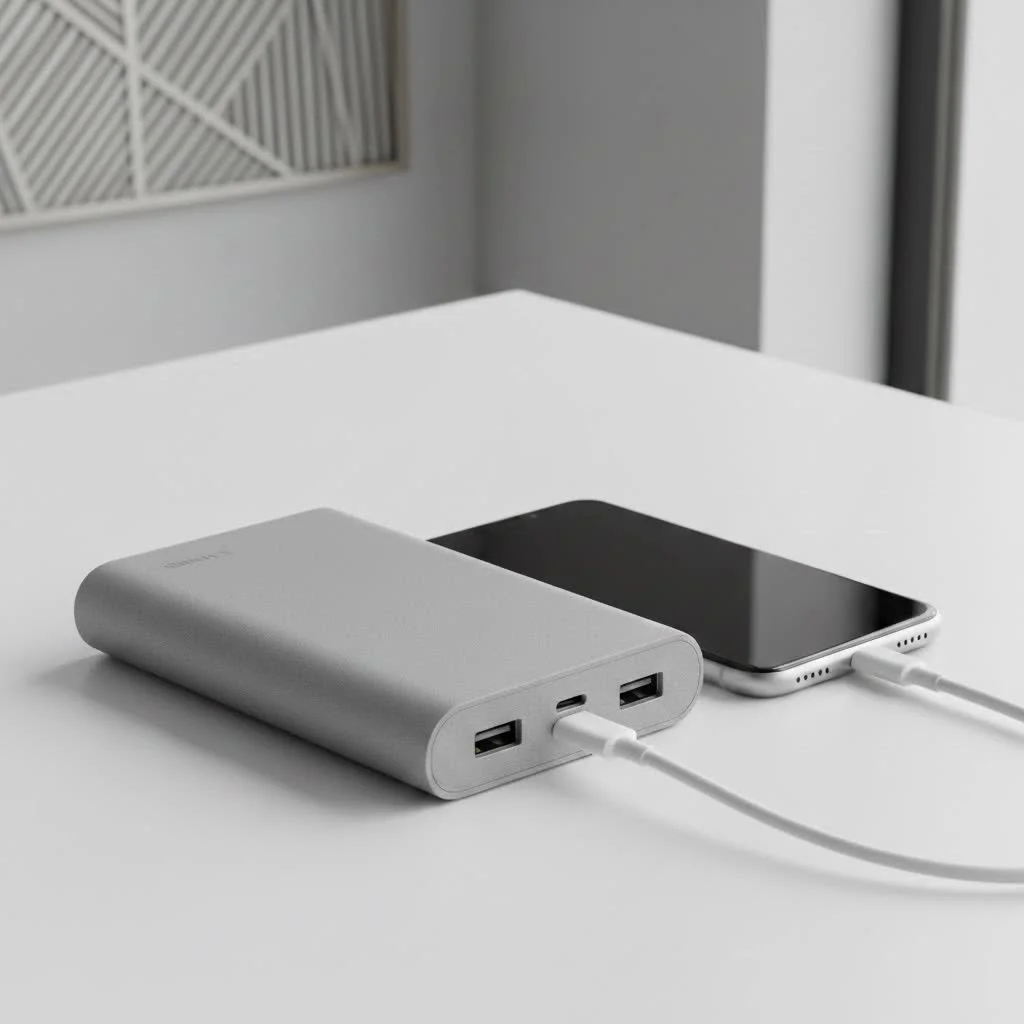
A portable solar power bank is essentially a battery pack with built-in photovoltaic (PV) panels. It allows you to harness the power of the sun to recharge its internal battery, which you can then use to power up your smartphone, tablet, GPS, or other USB-powered devices. It’s your personal, pocket-sized power station, offering true energy independence when you’re off the grid. For expert portable power reviews on this site.
How Do Portable Solar Power Banks Actually Work?
The magic behind a portable solar power bank lies in a simple, yet brilliant, two-step process. Understanding this is key to using them effectively.
First, the small solar panels on the device capture sunlight. These panels are made of photovoltaic cells, which convert photons (light particles) into electrons (direct current, or DC, electricity). This generated electricity is then used to slowly charge the internal lithium-ion or lithium-polymer battery within the power bank.
Second, once the internal battery has stored some power, it acts just like a regular power bank. You can plug your devices into its USB ports, and the stored energy is transferred to your gadgets. The solar panel’s primary job is to recharge the power bank itself, not to directly charge your phone. While some models allow direct charging, it’s highly inefficient. The internal battery acts as a crucial buffer, storing energy for a faster, more stable charge when you need it.
Key Features to Consider Before You Buy
Choosing the right portable solar power bank can feel overwhelming with all the technical jargon out there. Let’s break down the most important features to look for, so you can make an informed decision.
Battery Capacity (mAh)
This is the single most important specification. Measured in milliampere-hours (mAh), capacity tells you how much energy the power bank can store. A higher number means more recharges for your devices.
- 10,000mAh: A great starting point for day trips or casual use. Can typically charge a modern smartphone 2-3 times.
- 20,000mAh: The sweet spot for weekend camping trips or for those who carry multiple devices.
- 30,000mAh and above: Ideal for long expeditions, group use, or powering more demanding gear like tablets and cameras.
Solar Panel Efficiency and Wattage
|
Our Picks for the Best Power Bank in 2026
As an Amazon Associate I earn from qualifying purchases.
|
||
| Num | Product | Action |
|---|---|---|
| 1 | Anker Laptop Power Bank, 25,000mAh Portable Charger with Triple 100W USB-C Ports, Built-in Retractable Cables, Flight-Approved for Travel, iPhone 17/16 Series, MacBook, Samsung, and More |

|
| 2 | 90000mAh High Capacity Power Bank, 30W Fast Charging Portable Charger PD&QC 3.0, 5 Output 2 Input Large Powerbank with LED Display USB C Battery Pack Charger Portable for Outdoor Camping Travel |
|
| 3 | INIU Portable Charger, Smallest 22.5W 10000mAh Power Bank, USB C in/Output Fast Charging 3-Output Mini Battery Pack Charger with Phone Holder for iPhone 17 16 15 14 Air Samsung S23 Google iPad Tablet |
|
| 4 | UGREEN Power Bank 25,000mAh 145W Laptop Portable Charger, Nexode 3-Port USB C PD Battery Pack, for MacBook Pro/Air, Dell XPS, iPhone 17/16/15/14, Galaxy S24, Steam Deck, iPad, and More |
|
| 5 | INIU Portable Charger, Slimmest Fast Charging 10000mAh USB C in/Out Power Bank, 22.5W PD3.0 QC4+ Battery Pack, Portable Phone Charger for iPhone 16 15 14 13 12 Pro Samsung S22 S21 Google AirPods iPad |
|
| 6 | Energizer Power Bank 20000mAh - USB-C 20W Outputs Fast Charging Battery Pack, USB-A 18W with 4 Outputs & LCD Screen for Android/iPhone 15 16 Plus Pro Max/iPad Tablet and etc_UE20063PQ |
|
| 7 | Emergency Radio&22000mAh Solar Power Bank, FM NOAA Weather Radio, Portable Hand Crank Bluetooth Radio, 20W Fast Charge Wireless Phone Charger, SOS Flashlight for Emergency/Home |
|
| 8 | UGREEN Nexode Power Bank 20000mAh 165W with Built-in USB C Cable Laptop Travel Portable Charger, 100W Input, Fast Charging for MacBook Pro/Air/iPhone 17/16/iPad Pro/Galaxy S25 Ultra/Dell/HP and More |
|
| 9 | INIU Power Bank, 25000mAh 100W USB C Laptop Portable Charger, PD QC Fast Charging 3-Output Battery Pack, Travel Charger for Laptop MacBook iPad Tablet Steam Deck iPhone 17 16 15 14 Pro Samsung S25 etc |
|
| 10 | Anker Laptop Power Bank, 25,000mAh Portable Charger with Triple 100W USB-C Ports, Built-in Retractable Cables, Flight-Approved for Travel, iPhone 17/16 Series, MacBook, Samsung, and More |
|
Not all solar panels are created equal. The efficiency (how well it converts sunlight to electricity) and wattage (the power output) of the built-in panels determine how quickly the power bank can recharge itself via the sun. Most compact power banks have panels with an output of 1-5 watts. This means a full solar recharge can take a very long time—often 20-40 hours of direct, peak sunlight.
“Think of the solar panel as a trickle charger for your power bank,” advises David Chen, an off-grid technology specialist. “It’s designed to top off the battery on a multi-day trip, not to be its primary charging source. Always leave home with the power bank fully charged from a wall outlet.”
For faster solar charging, consider models with multiple foldable panels, which significantly increase the surface area and wattage.
Durability and Weather Resistance
If you’re buying a solar power bank, chances are it’s going to see some outdoor action. Look for features that indicate it can handle the elements:
- Rugged Casing: Shock-absorbent materials like rubber and ABS plastic protect against drops.
- IP Rating: The Ingress Protection rating tells you its resistance to dust and water. An IP65 rating, for example, means it’s dust-tight and can withstand water jets, making it perfect for rainy or dusty conditions.
Ports and Outputs
Consider what devices you’ll be charging. Most models come with standard USB-A ports. Newer and more versatile power banks also include:
- USB-C with Power Delivery (PD): For fast-charging modern smartphones, laptops, and other compatible devices.
- Quick Charge (QC): Another fast-charging standard common on Android devices.
- Multiple Outputs: Allows you to charge several devices simultaneously.
The Real-World Pros and Cons of Solar Power Banks
Like any technology, a portable solar power bank comes with its own set of advantages and limitations. It’s important to have realistic expectations.
Pros:
- Energy Independence: Access to power anywhere there’s sunlight, ideal for emergencies and off-grid adventures.
- Eco-Friendly: Utilizes a clean, renewable energy source to reduce your carbon footprint.
- Cost-Effective: After the initial purchase, the energy from the sun is free.
- All-in-One Convenience: Many models come with built-in flashlights and compasses, making them a multi-purpose tool.
Cons:
- Slow Solar Recharging: The small panels mean recharging the power bank itself with solar energy alone is a very slow process.
- Weather Dependent: Effectiveness is completely reliant on the availability and intensity of sunlight. Cloudy days will drastically reduce performance.
- Heavier and Bulkier: The addition of solar panels and rugged casing often makes them larger and heavier than their non-solar counterparts.
Getting the Most Out of Your Device
To maximize the efficiency of your portable solar power bank, follow these best practices:
- Pre-Charge at Home: Always fully charge the power bank using a wall outlet before you head out. Rely on solar as a top-up, not the primary source.
- Position for Peak Sun: Angle the panels directly towards the sun. The best time for charging is typically between 10 a.m. and 4 p.m.
- Keep It Cool: Solar panels lose efficiency when they get too hot. Don’t leave your power bank cooking on a car dashboard. Find a spot with good airflow.
- Strap It to Your Pack: When hiking, attach the power bank to the outside of your backpack with the panels facing up. This allows it to trickle charge as you move.
Frequently Asked Questions (FAQ)
Q: How long does it take to fully charge a portable solar power bank using only the sun?
A: This varies greatly depending on the panel size, sun intensity, and battery capacity. For a typical 20,000mAh power bank with integrated panels, it can take anywhere from 25 to 50 hours of direct, strong sunlight for a full charge.
Q: Can a solar power bank charge a laptop?
A: Most standard solar power banks cannot. To charge a laptop, you’ll need a higher-capacity model (over 25,000mAh) with a USB-C PD port that provides a high enough wattage output (typically 60W or more).
Q: Can I take a portable solar power bank on an airplane?
A: Yes, but with restrictions. Most airlines allow power banks under 100 watt-hours (Wh) in carry-on luggage. A 26,800mAh power bank is typically just under this limit. Always check with your specific airline before flying. They are not allowed in checked baggage.
Q: Will my solar power bank charge on a cloudy day?
A: It will charge, but very, very slowly. The photovoltaic cells can still generate some power from indirect or diffused sunlight, but the output will be significantly lower than on a bright, sunny day.
Q: Is it better to get a power bank with built-in panels or separate, larger panels?
A: For convenience and casual use, a power bank with integrated panels is great. For serious off-grid power needs, a system with a separate, larger foldable solar panel (15W or more) paired with a high-capacity power bank will provide much faster and more reliable solar recharging.
Your Adventure Awaits
A portable solar power bank is a powerful tool that offers freedom and security in an unplugged world. By understanding its capabilities and limitations, you can choose a device that perfectly fits your needs, whether you’re climbing a mountain, relaxing on a remote beach, or simply preparing for the unexpected. Charge up, head out, and stay powered on your next adventure.
Get our weekly buyer guide
Practical specs, not advice. Unsubscribe anytime.