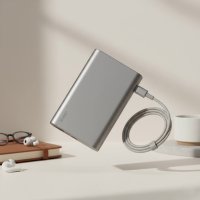
Navigating airport security can be stressful enough without worrying if your essential gadgets will be confiscated. For many of us, a portable charger is a travel lifeline, but the rules around taking a power bank airplane-bound can seem confusing. As an expert with over a decade of experience in portable power, I’m here to demystify the regulations, ensuring you and your devices stay charged and ready for adventure without any hassle.
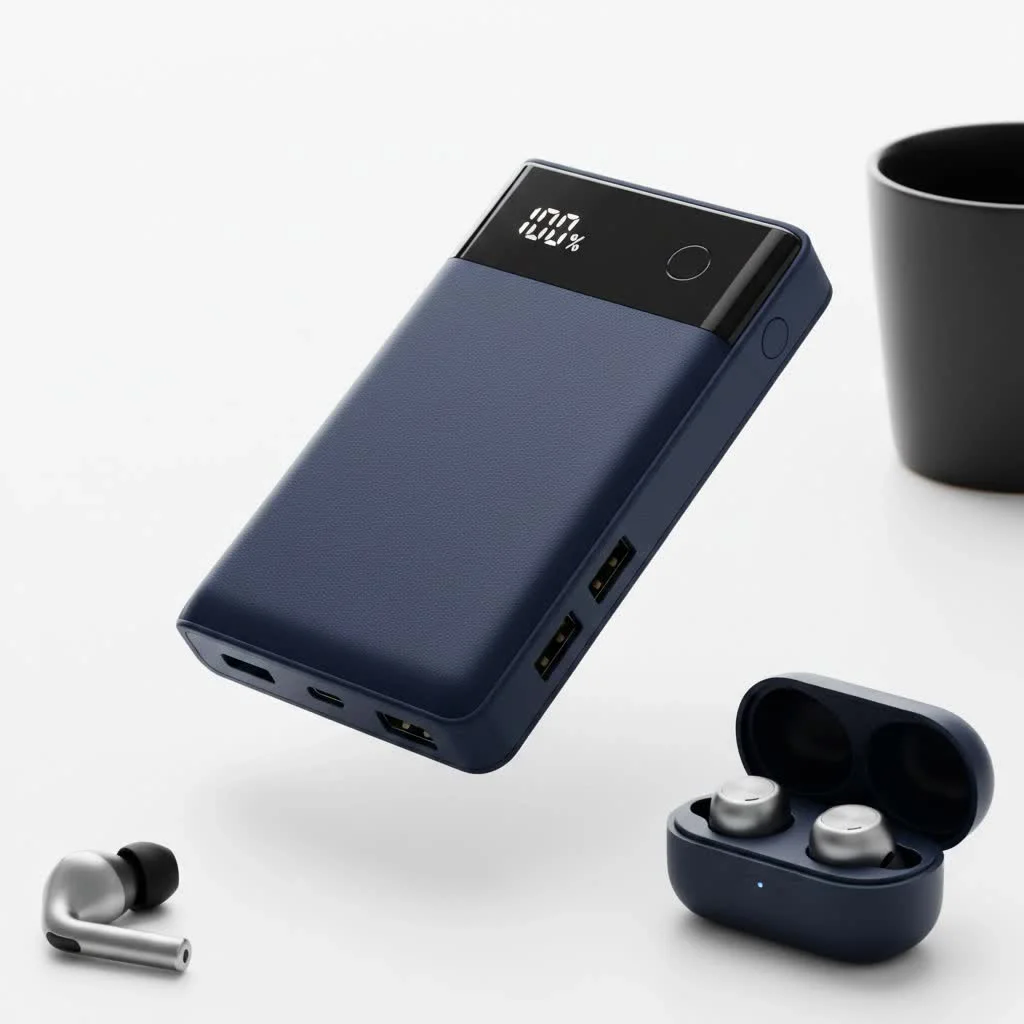
The most critical rule to remember is this: All spare lithium-ion batteries, including power banks, must be transported in your carry-on luggage only. This isn’t just an arbitrary suggestion; it’s a strict safety regulation enforced globally.
Why Your Power Bank Must Be in Your Carry-On
You might wonder why officials are so particular about where you store your portable charger. The answer comes down to safety and the nature of lithium-ion batteries.
The Risk of Thermal Runaway
Lithium-ion batteries, the technology inside virtually every power bank, pack a tremendous amount of energy into a small space. If a battery is damaged, short-circuited, or defective, it can lead to a dangerous event called “thermal runaway.” This is a rapid, unstoppable chain reaction where the battery overheats, potentially leading to smoke, fire, or even an explosion.
If this were to happen in the cargo hold, it would go undetected, creating a catastrophic fire risk. In the cabin, however, the flight crew is trained to identify and extinguish a lithium-ion battery fire immediately, containing the danger. This is why keeping your power bank airplane cabin-ready is a non-negotiable safety measure.
What’s the Maximum Power Bank Capacity for Airplanes?
The key metric for air travel isn’t the familiar milliamp-hours (mAh) but Watt-hours (Wh). This is the universal unit used by the FAA, TSA, and other international aviation authorities to measure battery capacity.
The Universal 100Wh Limit
For most travelers, the magic number is 100Wh. You can carry any power bank at or below this capacity without needing to notify the airline. The vast majority of commercially available power banks fall comfortably within this limit.
- Capacity: Up to 100 Watt-hours (Wh)
- Airline Approval Needed? No
- Quantity: Most airlines allow for multiple devices, but it’s always wise to check their specific policy. The TSA states “spare lithium-ion batteries” are allowed, without specifying a hard number, but reasonableness is key.
How to Calculate Watt-Hours (Wh) from mAh
What if your power bank only lists its capacity in milliamp-hours (mAh)? Don’t worry, the conversion is simple. Most power banks have an output voltage of 3.6V or 3.7V.
Formula: (mAh / 1000) x Voltage = Watt-hours (Wh)
For a standard 20,000 mAh power bank:
(20,000 mAh / 1000) x 3.7V = 74 Wh
This is well under the 100Wh limit, making it perfectly fine for air travel.
What About Power Banks Between 100Wh and 160Wh?
|
Our Picks for the Best Power Bank in 2026
As an Amazon Associate I earn from qualifying purchases.
|
||
| Num | Product | Action |
|---|---|---|
| 1 | Anker Laptop Power Bank, 25,000mAh Portable Charger with Triple 100W USB-C Ports, Built-in Retractable Cables, Flight-Approved for Travel, iPhone 17/16 Series, MacBook, Samsung, and More |

|
| 2 | Anker Laptop Power Bank, 25,000mAh Portable Charger with Triple 100W USB-C Ports, Built-in Retractable Cables, Flight-Approved for Travel, iPhone 17/16 Series, MacBook, Samsung, and More |
|
| 3 | UGREEN Nexode Power Bank 20000mAh 165W with Built-in USB C Cable Laptop Travel Portable Charger, 100W Input, Fast Charging for MacBook Pro/Air/iPhone 17/16/iPad Pro/Galaxy S25 Ultra/Dell/HP and More |
|
| 4 | UGREEN Power Bank 25,000mAh 145W Laptop Portable Charger, Nexode 3-Port USB C PD Battery Pack, for MacBook Pro/Air, Dell XPS, iPhone 17/16/15/14, Galaxy S24, Steam Deck, iPad, and More |
|
| 5 | INIU Portable Charger, Smallest 22.5W 10000mAh Power Bank, USB C in/Output Fast Charging 3-Output Mini Battery Pack Charger with Phone Holder for iPhone 17 16 15 14 Air Samsung S23 Google iPad Tablet |
|
| 6 | INIU Portable Charger, Slimmest Fast Charging 10000mAh USB C in/Out Power Bank, 22.5W PD3.0 QC4+ Battery Pack, Portable Phone Charger for iPhone 16 15 14 13 12 Pro Samsung S22 S21 Google AirPods iPad |
|
| 7 | Emergency Radio&22000mAh Solar Power Bank, FM NOAA Weather Radio, Portable Hand Crank Bluetooth Radio, 20W Fast Charge Wireless Phone Charger, SOS Flashlight for Emergency/Home |
|
| 8 | 90000mAh High Capacity Power Bank, 30W Fast Charging Portable Charger PD&QC 3.0, 5 Output 2 Input Large Powerbank with LED Display USB C Battery Pack Charger Portable for Outdoor Camping Travel |
|
| 9 | Energizer Power Bank 20000mAh - USB-C 20W Outputs Fast Charging Battery Pack, USB-A 18W with 4 Outputs & LCD Screen for Android/iPhone 15 16 Plus Pro Max/iPad Tablet and etc_UE20063PQ |
|
| 10 | INIU Power Bank, 25000mAh 100W USB C Laptop Portable Charger, PD QC Fast Charging 3-Output Battery Pack, Travel Charger for Laptop MacBook iPad Tablet Steam Deck iPhone 17 16 15 14 Pro Samsung S25 etc |
|
If you have a larger, professional-grade power bank, you might fall into this category. These devices are permitted, but with a crucial extra step.
- Capacity: 100.1Wh to 160Wh
- Airline Approval Needed? Yes, you must get approval from the airline before you fly.
- Quantity: Typically limited to two (2) spare batteries per passenger.
Power Banks Over 160Wh Are Prohibited
Any power bank exceeding 160Wh is considered forbidden cargo for passenger aircraft and cannot be brought on a plane, either in carry-on or checked luggage.
How to Properly Pack Your Power Bank for a Flight
Once you’ve confirmed your power bank is compliant, packing it correctly ensures you’ll breeze through security.
- Keep it Accessible: Place your power bank in an easily accessible pocket of your carry-on bag, as you may be asked to present it separately at the security checkpoint.
- Protect the Terminals: The main goal is to prevent a short circuit. You can do this by:
- Keeping it in its original retail packaging.
- Placing tape over the charging ports.
- Putting it in a separate battery case or protective pouch.
- Power It Down: Ensure the power bank is turned off.
“The single biggest mistake travelers make is accidentally packing their power bank in their checked luggage,” notes David Chen, a seasoned electrical engineer and frequent flyer. “It’s not just an inconvenience if it’s found; it’s a serious safety protocol. Always double-check your bags before you head to the airport.”
Can You Use Your Power Bank on the Plane?
Yes, you can generally use your power bank to charge your devices during the flight. Once the aircraft has reached a safe altitude and the use of electronic devices is permitted, you are free to plug in your phone or tablet. However, it’s considered good etiquette to keep your devices and cables tidy and out of the aisle.
International vs. Domestic Flights: Are the Rules Different?
The rules for flying with a power bank airplane-bound are remarkably consistent worldwide. This is thanks to guidelines set by the International Air Transport Association (IATA), which organizations like the FAA (USA), EASA (Europe), and CASA (Australia) follow closely. The 100Wh and 160Wh limits are the global standard, so you can travel with confidence between countries.
Frequently Asked Questions (FAQ)
What happens if my power bank is in my checked luggage?
If security screening detects a power bank in your checked bag, the bag will likely be opened, and the item will be confiscated. This can also cause delays in your luggage arriving at your destination.
Is a 20,000 mAh power bank allowed on a plane?
Yes, a 20,000 mAh power bank is typically around 74Wh, which is well below the 100Wh limit and is perfectly acceptable for carry-on luggage.
Can I bring a 30,000 mAh power bank on a flight?
A 30,000 mAh power bank is approximately 111Wh. This falls into the 100-160Wh category, meaning you must get prior approval from your airline to bring it on board.
How many power banks can I take on a plane?
While the TSA doesn’t set a specific limit, most airlines allow for a “reasonable number” for personal use. For power banks under 100Wh, two to three is generally not an issue. For those between 100-160Wh, the limit is typically two.
Do the rules apply to all airlines?
Yes, these are universal aviation safety regulations based on IATA guidelines. While an individual airline might have slightly stricter rules, they cannot be more lenient than the established international standards.
Your Final Pre-Flight Checklist
Traveling with your power bank doesn’t have to be complicated. By following these simple rules, you can ensure a smooth journey. Remember to check the Watt-hour (Wh) rating, pack it exclusively in your carry-on bag, and protect the terminals. A little preparation goes a long way in keeping you, your fellow passengers, and your devices safe and powered up throughout your travels. Now you are fully prepared to take your power bank airplane-ready on your next trip.
Get our weekly buyer guide
Practical specs, not advice. Unsubscribe anytime.