In our hyper-connected world, a dead phone battery can feel like being stranded on a digital island. That’s where a reliable mobile power bank becomes an essential piece of everyday technology. It’s more than just a backup battery; it’s your lifeline to communication, navigation, and entertainment when you’re away from a wall outlet. But with thousands of options on the market, how do you choose the right one? As the founder of pvhao.com with over a decade of hands-on experience, I’m here to demystify the world of portable chargers and help you find the perfect companion for your devices.
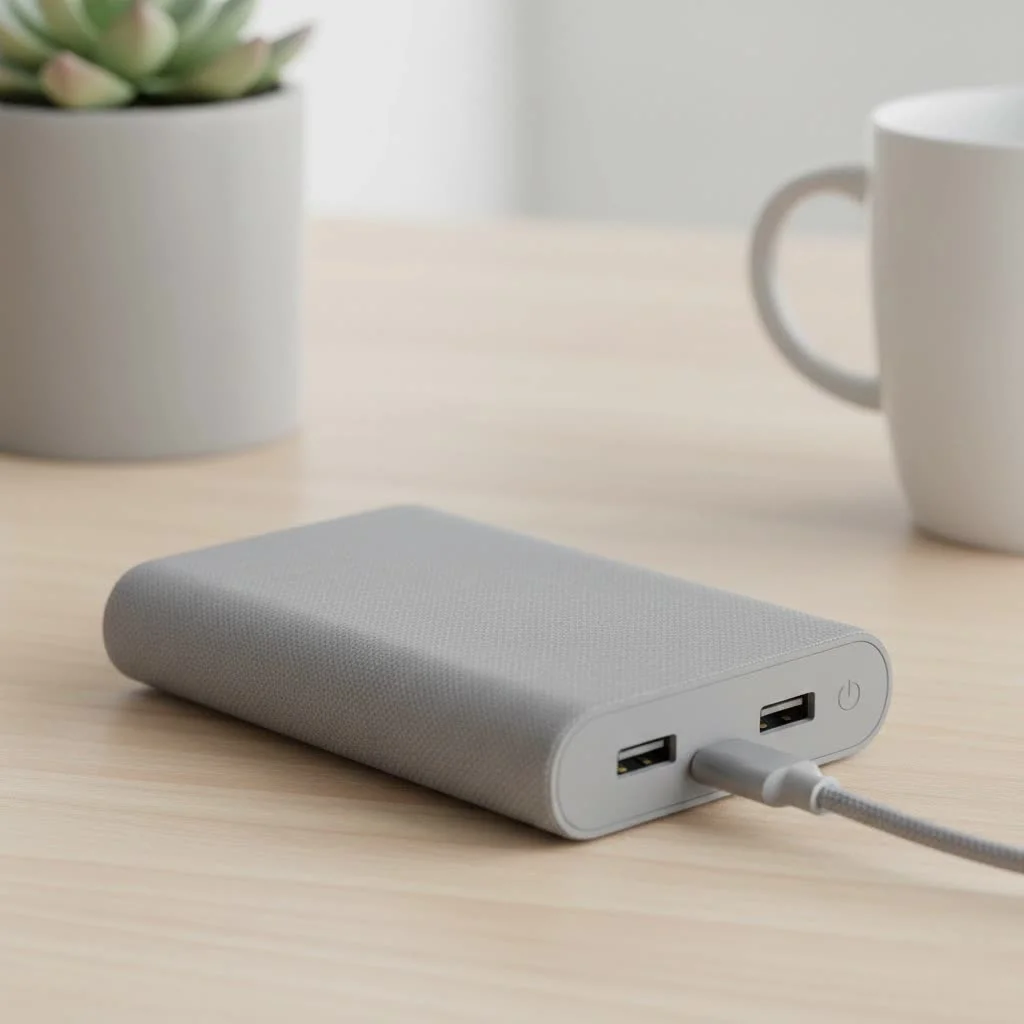
This guide will walk you through everything you need to know, from understanding capacity and charging speeds to recognizing crucial safety features. For see our portable power recommendations on this site.
What Exactly is a Mobile Power Bank and How Does It Work?
Think of a mobile power bank, often called a portable charger or external battery pack, as a reusable, portable battery designed to recharge your electronic devices when you’re on the go. Inside its casing is a set of rechargeable lithium-ion or lithium-polymer battery cells. When you plug the power bank into a wall adapter, it stores energy. When you plug your phone or tablet into the power bank, it releases that stored energy, charging your device. It’s a simple concept, but the technology behind it has evolved significantly, offering different speeds, capacities, and features to suit various needs.
Key Features to Consider When Buying a Mobile Power Bank
Choosing the right mobile power bank involves balancing four key factors: capacity, charging speed, portability, and safety. Getting this balance right ensures you have a device that’s not only effective but also convenient and safe.
Capacity (mAh): How Much Power Do You Need?
Capacity is measured in milliampere-hours (mAh). In simple terms, the higher the mAh rating, the more charging power the bank holds.
- 3,000 – 5,000mAh: A small, pocket-friendly option perfect for a single full charge on most smartphones. Ideal for emergencies or a quick top-up during the day.
- 10,000mAh: This is the sweet spot for most users. It’s portable enough to carry in a bag and typically provides two to three full smartphone charges. It’s the perfect all-rounder for daily use and short trips.
- 20,000mAh: A great choice for travelers, heavy users, or those needing to charge multiple devices like a phone and a tablet. It offers significant power but comes with increased size and weight.
- 27,000mAh and above: These high-capacity beasts are often designed to charge laptops and other large devices. They are the maximum capacity allowed on airplanes and are essential for digital nomads and professionals working remotely.
To estimate how many charges you’ll get, you can use a simple rule of thumb: A power bank can deliver about 60-70% of its advertised capacity due to energy loss during power conversion. So, a 10,000mAh power bank will realistically deliver around 6,500-7,000mAh of power to your devices.
Charging Speed and Ports: The Need for Speed
|
Our Picks for the Best Power Bank in 2026
As an Amazon Associate I earn from qualifying purchases.
|
||
| Num | Product | Action |
|---|---|---|
| 1 | INIU Power Bank, 25000mAh 100W USB C Laptop Portable Charger, PD QC Fast Charging 3-Output Battery Pack, Travel Charger for Laptop MacBook iPad Tablet Steam Deck iPhone 17 16 15 14 Pro Samsung S25 etc |

|
| 2 | Anker Laptop Power Bank, 25,000mAh Portable Charger with Triple 100W USB-C Ports, Built-in Retractable Cables, Flight-Approved for Travel, iPhone 17/16 Series, MacBook, Samsung, and More |
|
| 3 | Emergency Radio&22000mAh Solar Power Bank, FM NOAA Weather Radio, Portable Hand Crank Bluetooth Radio, 20W Fast Charge Wireless Phone Charger, SOS Flashlight for Emergency/Home |
|
| 4 | UGREEN Nexode Power Bank 20000mAh 165W with Built-in USB C Cable Laptop Travel Portable Charger, 100W Input, Fast Charging for MacBook Pro/Air/iPhone 17/16/iPad Pro/Galaxy S25 Ultra/Dell/HP and More |
|
| 5 | INIU Portable Charger, Smallest 22.5W 10000mAh Power Bank, USB C in/Output Fast Charging 3-Output Mini Battery Pack Charger with Phone Holder for iPhone 17 16 15 14 Air Samsung S23 Google iPad Tablet |
|
| 6 | Energizer Power Bank 20000mAh - USB-C 20W Outputs Fast Charging Battery Pack, USB-A 18W with 4 Outputs & LCD Screen for Android/iPhone 15 16 Plus Pro Max/iPad Tablet and etc_UE20063PQ |
|
| 7 | UGREEN Power Bank 25,000mAh 145W Laptop Portable Charger, Nexode 3-Port USB C PD Battery Pack, for MacBook Pro/Air, Dell XPS, iPhone 17/16/15/14, Galaxy S24, Steam Deck, iPad, and More |
|
| 8 | Anker Laptop Power Bank, 25,000mAh Portable Charger with Triple 100W USB-C Ports, Built-in Retractable Cables, Flight-Approved for Travel, iPhone 17/16 Series, MacBook, Samsung, and More |
|
| 9 | 90000mAh High Capacity Power Bank, 30W Fast Charging Portable Charger PD&QC 3.0, 5 Output 2 Input Large Powerbank with LED Display USB C Battery Pack Charger Portable for Outdoor Camping Travel |
|
| 10 | INIU Portable Charger, Slimmest Fast Charging 10000mAh USB C in/Out Power Bank, 22.5W PD3.0 QC4+ Battery Pack, Portable Phone Charger for iPhone 16 15 14 13 12 Pro Samsung S22 S21 Google AirPods iPad |
|
A high-capacity power bank isn’t much good if it takes forever to charge your phone. Modern charging technology is all about speed.
- Output Ports: Look for a mobile power bank with both USB-A and USB-C ports. USB-C is the modern standard and is essential for fast charging.
- Power Delivery (PD): This is a fast-charging standard used by Apple, Google, and many other brands. A USB-C port with PD can charge an iPhone to 50% in about 30 minutes. It’s also powerful enough to charge tablets and even some laptops.
- Qualcomm Quick Charge (QC): This is another popular fast-charging standard found on many Android devices. Both QC and PD are excellent, so check which standard your smartphone supports to get the maximum benefit.
- Wattage (W): The output power is measured in watts. For standard phone charging, 10-12W is fine. For fast charging, look for 18W or higher. For laptops, you’ll need a power bank that can deliver at least 30W, preferably 60W or more.
Portability: Size and Weight
The most powerful mobile power bank in the world is useless if you leave it at home because it’s too big and heavy. Consider how you plan to use it. If you need something to slip into your pocket for a night out, a slim 5,000mAh model is perfect. If you’re a frequent traveler who needs to keep multiple gadgets alive, the extra weight of a 20,000mAh model is a worthwhile trade-off.
As a leading product developer, David Chen, once noted, “The biggest challenge in power bank design is the ‘power-to-weight ratio.’ We are constantly pushing the boundaries of battery technology to pack more energy into a smaller, lighter form factor without compromising on safety.”
Essential Safety Features
A poorly made mobile power bank is a safety risk. Always choose products from reputable brands that have built-in safety protections. Key features to look for include:
- Overcharge Protection: Prevents the power bank and your device from being damaged by excessive charging.
- Short Circuit Protection: Automatically cuts the power if a short circuit is detected.
- Over-temperature Protection: Monitors the battery temperature and stops charging if it gets too hot.
- Certifications: Look for safety certifications like UL, CE, and FCC, which indicate the product has passed rigorous safety tests.
Pro Tips for Maintaining Your Mobile Power Bank
To get the most out of your portable charger and extend its lifespan, follow these simple tips:
- Avoid Extreme Temperatures: Don’t leave your power bank in a hot car or in freezing conditions. High heat is the number one enemy of battery health.
- Use It Regularly: Lithium-ion batteries are meant to be used. Try to use and recharge your power bank at least once every couple of months to keep the cells healthy.
- Don’t Store It Empty: If you’re not going to use your power bank for a while, charge it to about 50% before storing it. Storing it fully charged or completely empty can degrade the battery over time.
- Use Quality Cables: A high-quality charging cable ensures efficient power transfer and is safer for both your power bank and your devices.
Frequently Asked Questions (FAQ)
How long does it take to charge a mobile power bank?
This depends on its capacity and the charging input speed. A 10,000mAh power bank can take anywhere from 3 to 6 hours to charge, depending on whether you use a standard 10W wall adapter or a faster 18W+ PD charger.
Can I take a mobile power bank on an airplane?
Yes, you can. The general rule is that power banks must be in your carry-on luggage, not checked baggage. Most airlines restrict the capacity to 100Wh (watt-hours), which is roughly equivalent to 27,000mAh.
Can a power bank damage my phone’s battery?
A high-quality mobile power bank from a reputable brand will not damage your phone. Modern smartphones have built-in circuitry to regulate the power they draw, and good power banks have multiple safety features to prevent overcharging or power surges.
What is pass-through charging?
Pass-through charging allows you to charge the power bank while it is simultaneously charging another device. This is a convenient feature, but it can generate extra heat, so it’s best to use it sparingly.
Can I charge my laptop with any power bank?
No. To charge a laptop, you need a high-capacity mobile power bank (typically 20,000mAh or more) that has a USB-C PD port with a high power output (at least 30W, but 60W or higher is recommended). Always check your laptop’s power requirements.
Your Power, Your Choice
Choosing the right mobile power bank is about understanding your own needs. Assess which devices you need to charge, how often you’ll be away from an outlet, and how much portability matters to you. By focusing on capacity, charging speed, and safety, you can confidently select a portable charger that will keep you powered up and connected, no matter where life takes you. Don’t let a low battery warning dictate your day—invest in a quality power bank and take control of your charge.
Get our weekly buyer guide
Practical specs, not advice. Unsubscribe anytime.

This guide really broke down the ‘digital island’ problem perfectly. I used to constantly worry about my phone dying when I was out and about. After reading this, I invested in a power bank with multiple ports, and it’s been fantastic for keeping both my phone and my wireless earbuds charged. No more low battery anxiety!
I’ve been looking for a good power bank for ages, and this guide really helped me understand the different capacities. I ended up getting a 20,000mAh model, and it’s been a game-changer for my weekend camping trips. My phone and tablet stay charged the whole time, no problem. Definitely recommend paying attention to the mAh ratings!
The section on charging speeds was super helpful. I always just assumed all power banks charged at the same rate, but now I know to look for those higher wattages. My new portable charger charges my phone way faster than my old one, which is great when I’m in a hurry. It’s a solid improvement for my daily commute.
I appreciated the info on safety features, especially about overcharge protection. I bought a power bank based on some of the recommendations, and while it works fine, it’s a bit bulkier than I expected. It’s not ideal for slipping into a small purse, but it does the job for keeping my devices alive during long flights. Just wish it was a little more compact.