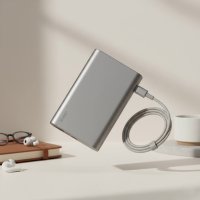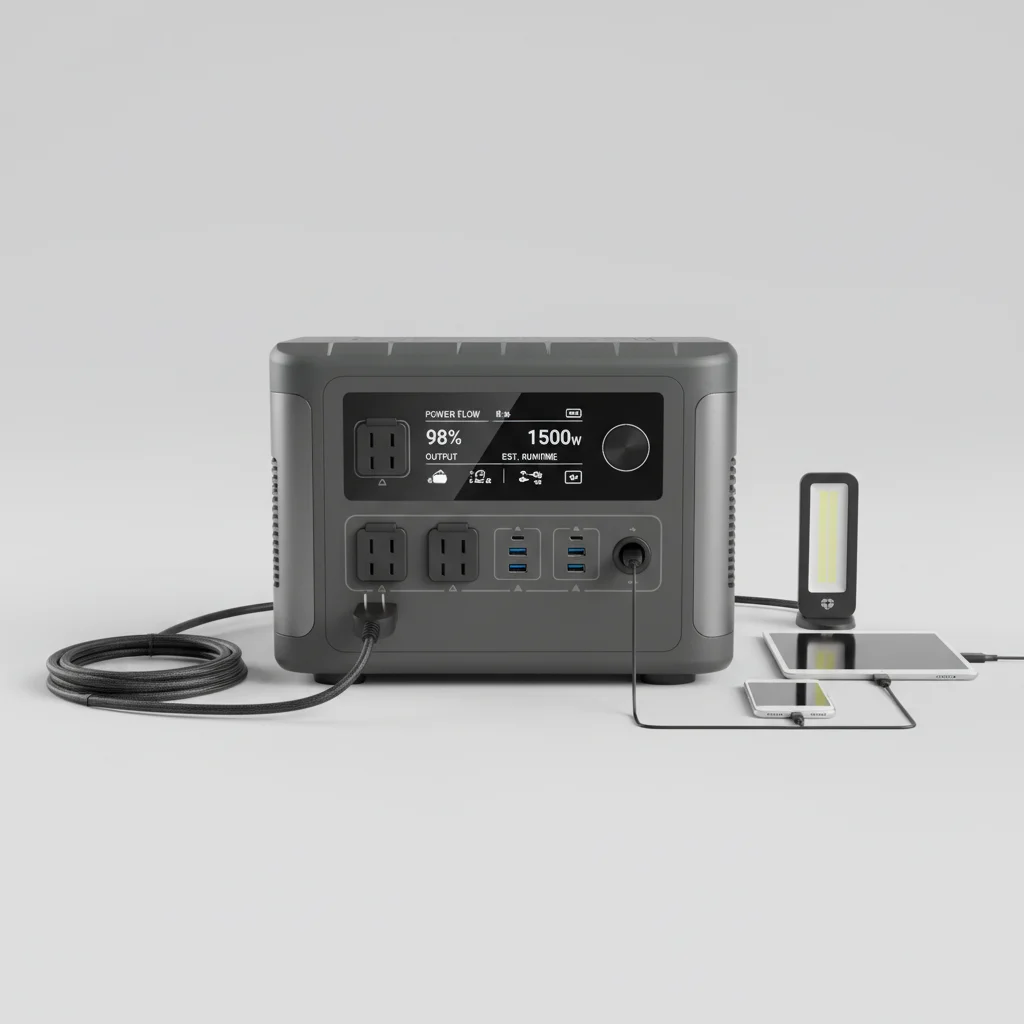
A power bank for home backup can provide crucial power during outages, keeping essential devices running. For most households, a power bank with a capacity of at least 500Wh is recommended to handle critical loads like routers, lamps, and charging phones for several hours. Larger homes or those needing to power more appliances might consider units in the 1000Wh to 2000Wh range, which can sustain small refrigerators or medical devices for a limited time.
Why a Home Backup Power Bank is Essential
Unexpected power outages can disrupt daily life, from communication breakdowns to food spoilage. A dedicated home backup power bank offers a reliable, portable solution to maintain essential services. Unlike noisy, fuel-dependent generators, these battery banks operate silently and produce no emissions, making them safe for indoor use. They are also much simpler to set up and operate, requiring no complex installation.
Having a power bank ready ensures that you can stay connected, illuminate your home, and keep vital electronics charged. This peace of mind is invaluable, especially during severe weather events or grid instability. Consider the specific needs of your household, such as medical equipment or remote work requirements, when determining the appropriate capacity.
Key Features to Look for in a Home Backup Power Bank
When selecting a power bank for home backup, several features are paramount. High capacity, measured in Watt-hours (Wh), dictates how long the unit can power your devices. Look for multiple output ports, including AC outlets, USB-A, and USB-C, to accommodate various appliances. Fast charging capabilities for both input and output are also beneficial, allowing the power bank to recharge quickly and deliver power efficiently.
Safety features, such as overcharge protection, short-circuit protection, and temperature control, are critical for reliable operation. A durable design with a robust casing can withstand accidental bumps and provide longevity. Some advanced models include an uninterruptible power supply (UPS) function, which allows them to seamlessly take over power delivery when the main grid fails, protecting sensitive electronics.
Recommended Capacities for Different Needs
|
Our Picks for the Best Power Bank in 2026
As an Amazon Associate I earn from qualifying purchases.
|
||
| Num | Product | Action |
|---|---|---|
| 1 | Energizer Power Bank 20000mAh - USB-C 20W Outputs Fast Charging Battery Pack, USB-A 18W with 4 Outputs & LCD Screen for Android/iPhone 15 16 Plus Pro Max/iPad Tablet and etc_UE20063PQ |

|
| 2 | 90000mAh High Capacity Power Bank, 30W Fast Charging Portable Charger PD&QC 3.0, 5 Output 2 Input Large Powerbank with LED Display USB C Battery Pack Charger Portable for Outdoor Camping Travel |
|
| 3 | Anker Laptop Power Bank, 25,000mAh Portable Charger with Triple 100W USB-C Ports, Built-in Retractable Cables, Flight-Approved for Travel, iPhone 17/16 Series, MacBook, Samsung, and More |
|
| 4 | UGREEN Nexode Power Bank 20000mAh 165W with Built-in USB C Cable Laptop Travel Portable Charger, 100W Input, Fast Charging for MacBook Pro/Air/iPhone 17/16/iPad Pro/Galaxy S25 Ultra/Dell/HP and More |
|
| 5 | Emergency Radio&22000mAh Solar Power Bank, FM NOAA Weather Radio, Portable Hand Crank Bluetooth Radio, 20W Fast Charge Wireless Phone Charger, SOS Flashlight for Emergency/Home |
|
| 6 | UGREEN Power Bank 25,000mAh 145W Laptop Portable Charger, Nexode 3-Port USB C PD Battery Pack, for MacBook Pro/Air, Dell XPS, iPhone 17/16/15/14, Galaxy S24, Steam Deck, iPad, and More |
|
| 7 | INIU Power Bank, 25000mAh 100W USB C Laptop Portable Charger, PD QC Fast Charging 3-Output Battery Pack, Travel Charger for Laptop MacBook iPad Tablet Steam Deck iPhone 17 16 15 14 Pro Samsung S25 etc |
|
| 8 | INIU Portable Charger, Slimmest Fast Charging 10000mAh USB C in/Out Power Bank, 22.5W PD3.0 QC4+ Battery Pack, Portable Phone Charger for iPhone 16 15 14 13 12 Pro Samsung S22 S21 Google AirPods iPad |
|
| 9 | INIU Portable Charger, Smallest 22.5W 10000mAh Power Bank, USB C in/Output Fast Charging 3-Output Mini Battery Pack Charger with Phone Holder for iPhone 17 16 15 14 Air Samsung S23 Google iPad Tablet |
|
| 10 | Anker Laptop Power Bank, 25,000mAh Portable Charger with Triple 100W USB-C Ports, Built-in Retractable Cables, Flight-Approved for Travel, iPhone 17/16 Series, MacBook, Samsung, and More |
|
The ideal capacity for your home backup power bank depends entirely on what you intend to power and for how long. For basic needs like charging phones, tablets, and powering a Wi-Fi router for a few hours, a 300-500Wh unit is often sufficient. This provides enough juice to maintain communication and basic connectivity.
If you need to power a mini-fridge, a few lights, and charge multiple devices for a longer duration (e.g., 12-24 hours), a 1000Wh to 1500Wh power bank would be more appropriate. For those with critical medical devices, a full-size refrigerator, or who want to run small appliances for extended periods, a 2000Wh or higher capacity unit is recommended. Always calculate the total wattage of your essential devices and multiply by the desired run time to estimate your Wh needs.
Setting Up Your Home Backup Power Bank
Setting up a home backup power bank is straightforward. First, fully charge the unit upon purchase and periodically thereafter to ensure it’s ready for an emergency. Store it in a cool, dry place, easily accessible when needed. During an outage, simply plug your essential devices directly into the power bank’s outlets. Prioritize devices that are critical for safety, communication, and comfort.
It’s advisable to create a list of essential devices and their power requirements beforehand. This helps you manage your power bank’s output efficiently and avoid overloading it. For devices with higher wattage, such as small kitchen appliances, use them sparingly to conserve battery life. Regularly test your power bank by powering a few devices to familiarize yourself with its operation and ensure it’s functioning correctly.
- Identify essential devices (router, phone, lamp).
- Calculate total wattage and desired run time.
- Choose a power bank with sufficient Wh capacity.
- Ensure multiple output ports (AC, USB-A, USB-C).
- Look for fast charging and safety features.
Maintaining Your Home Backup Power Bank
Proper maintenance ensures your home backup power bank remains reliable for years. Always follow the manufacturer’s charging guidelines; typically, this involves fully charging the unit every 3-6 months, even if it hasn’t been used. Avoid completely draining the battery frequently, as this can reduce its overall lifespan. Store the power bank within its recommended temperature range to prevent battery degradation.
Keep the power bank clean and free of dust, especially around the vents and ports, to ensure proper cooling. If the unit has a display, periodically check its functionality. For long-term storage, some manufacturers recommend storing the battery at a partial charge (e.g., 50-80%) rather than fully charged or completely depleted. Regular checks and adherence to these simple maintenance tips will maximize the longevity and effectiveness of your home backup power solution.
Get our weekly buyer guide
Practical specs, not advice. Unsubscribe anytime.