The best laptop power bank for most users in 2025 is the Anker Prime 27,650mAh Power Bank (250W), offering a massive 250W total output and a 27,650mAh capacity, which is the maximum allowed on flights. This ensures you can keep your laptop charged during crucial meetings, long flights, or remote work sessions without searching for a wall outlet. Understanding key specifications like wattage, mAh, and Power Delivery is essential for selecting the right portable charger to match your specific needs.
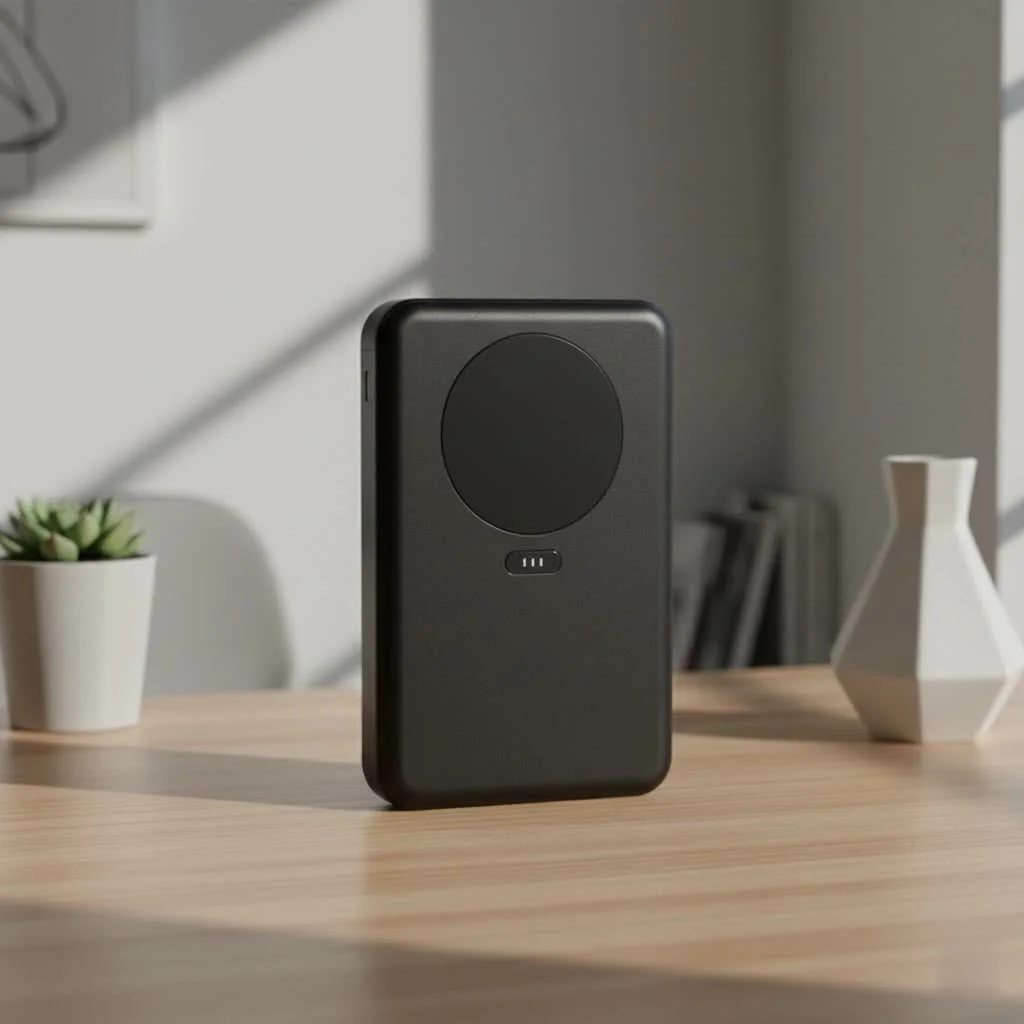
Choosing the right power bank involves balancing power, portability, and features. This guide will break down everything you need to know to select the perfect power companion for your laptop, ensuring you stay productive and entertained, no matter where you are.
How to Choose the Best Laptop Power Bank
Selecting a power bank for your laptop is about more than just picking the biggest capacity. You need to balance power, portability, and features to find the one that fits your specific needs. Here are the critical factors to consider.
Capacity (mAh and Wh): How Much Juice Do You Need?
Capacity measures how much energy a power bank can store, typically listed in milliamp-hours (mAh) or watt-hours (Wh). For airline travel, the key metric is watt-hours, with most international airlines limiting power banks to under 100Wh in carry-on luggage. High-capacity laptop power banks are often designed to be just under this limit, usually around 27,000mAh, which translates to approximately 99.9Wh.
A power bank with a 20,000mAh to 27,000mAh capacity is generally sufficient to provide at least one full charge for most modern ultrabooks like a MacBook Air or Dell XPS 13.
Power Output (Watts): The Speed of Your Charge
Power output, measured in watts (W), determines how fast the power bank can charge your laptop. This is arguably the most important specification. If the wattage is too low, it will charge your laptop painfully slowly, or worse, your laptop might lose power even while plugged in.
- For Ultrabooks (e.g., MacBook Air, Dell XPS 13): Look for a power bank with at least 45W to 65W output.
- For High-Performance Laptops (e.g., MacBook Pro 16″, gaming laptops): You’ll need 100W or even 140W to charge effectively, especially while you’re using the device for intensive tasks.
Always check your laptop’s original charger to see its wattage rating. Your power bank’s primary USB-C port should match or exceed this number for optimal performance.
Ports: Connectivity is Key
The modern standard for charging laptops is USB-C with Power Delivery (PD). This technology allows for high-speed, two-way power flow. A good laptop power bank should have at least one USB-C PD port that supports high-wattage output.
Many models also include additional USB-A ports for charging smaller devices like your phone, headphones, or smartwatch simultaneously. Having multiple ports turns your power bank into a versatile charging hub for all your gadgets.
Expert Tip: “Always prioritize a power bank with a dedicated, high-wattage USB-C PD port,” advises tech analyst Amelia Chen. “This ensures compatibility with the widest range of modern laptops and guarantees the fastest possible charging speeds. A low-wattage port simply won’t cut it for today’s power-hungry devices.”
Portability and Weight
|
Our Picks for the Best Power Bank in 2026
As an Amazon Associate I earn from qualifying purchases.
|
||
| Num | Product | Action |
|---|---|---|
| 1 | Anker Laptop Power Bank, 25,000mAh Portable Charger with Triple 100W USB-C Ports, Built-in Retractable Cables, Flight-Approved for Travel, iPhone 17/16 Series, MacBook, Samsung, and More |

|
| 2 | UGREEN Power Bank 25,000mAh 145W Laptop Portable Charger, Nexode 3-Port USB C PD Battery Pack, for MacBook Pro/Air, Dell XPS, iPhone 17/16/15/14, Galaxy S24, Steam Deck, iPad, and More |
|
| 3 | 90000mAh High Capacity Power Bank, 30W Fast Charging Portable Charger PD&QC 3.0, 5 Output 2 Input Large Powerbank with LED Display USB C Battery Pack Charger Portable for Outdoor Camping Travel |
|
| 4 | UGREEN Nexode Power Bank 20000mAh 165W with Built-in USB C Cable Laptop Travel Portable Charger, 100W Input, Fast Charging for MacBook Pro/Air/iPhone 17/16/iPad Pro/Galaxy S25 Ultra/Dell/HP and More |
|
| 5 | INIU Portable Charger, Slimmest Fast Charging 10000mAh USB C in/Out Power Bank, 22.5W PD3.0 QC4+ Battery Pack, Portable Phone Charger for iPhone 16 15 14 13 12 Pro Samsung S22 S21 Google AirPods iPad |
|
| 6 | INIU Portable Charger, Smallest 22.5W 10000mAh Power Bank, USB C in/Output Fast Charging 3-Output Mini Battery Pack Charger with Phone Holder for iPhone 17 16 15 14 Air Samsung S23 Google iPad Tablet |
|
| 7 | Energizer Power Bank 20000mAh - USB-C 20W Outputs Fast Charging Battery Pack, USB-A 18W with 4 Outputs & LCD Screen for Android/iPhone 15 16 Plus Pro Max/iPad Tablet and etc_UE20063PQ |
|
| 8 | INIU Power Bank, 25000mAh 100W USB C Laptop Portable Charger, PD QC Fast Charging 3-Output Battery Pack, Travel Charger for Laptop MacBook iPad Tablet Steam Deck iPhone 17 16 15 14 Pro Samsung S25 etc |
|
| 9 | Anker Laptop Power Bank, 25,000mAh Portable Charger with Triple 100W USB-C Ports, Built-in Retractable Cables, Flight-Approved for Travel, iPhone 17/16 Series, MacBook, Samsung, and More |
|
| 10 | Emergency Radio&22000mAh Solar Power Bank, FM NOAA Weather Radio, Portable Hand Crank Bluetooth Radio, 20W Fast Charge Wireless Phone Charger, SOS Flashlight for Emergency/Home |
|
While a massive capacity is appealing, remember that you have to carry this device. Higher capacity and more ports invariably mean more weight and bulk. Find a balance that works for you. If you’re a daily commuter, a more compact 20,000mAh model might be perfect. For long-haul travelers or remote workers who need maximum power, a slightly heavier 27,000mAh unit is a worthwhile trade-off.
Our Top Picks for the Best Laptop Power Banks in 2025
Here are some of the best-performing laptop power banks that offer a fantastic blend of power, portability, and reliability.
Best Overall: Anker Prime 27,650mAh Power Bank (250W)
Anker is a leader in the charging space for a reason. This powerhouse delivers a massive 250W of total output, capable of charging two laptops at high speed simultaneously. Its 27,650mAh capacity is the maximum allowed on flights, providing more than a full charge for a 16-inch MacBook Pro. The smart digital display gives you real-time information on remaining battery, power input, and output, taking the guesswork out of charging.
- Capacity: 27,650mAh / 99.54Wh
- Max Output: 140W per port (250W total)
- Ports: 2x USB-C, 1x USB-A
- Best for: Power users, professionals with multiple devices, and anyone who wants the best performance money can buy.
Best for Travel: UGREEN 25000mAh 145W Power Bank
UGREEN has quickly become a trusted name, and this model strikes the perfect balance for travelers. It offers a substantial 25,000mAh capacity and a powerful 145W total output, with one USB-C port capable of delivering 100W—enough for most demanding laptops. It’s slightly more compact than some competitors and remains safely under the 100Wh airline limit, making it an ideal companion for life on the road.
- Capacity: 25,000mAh / 92.5Wh
- Max Output: 100W per port (145W total)
- Ports: 2x USB-C, 1x USB-A
- Best for: Frequent flyers, digital nomads, and commuters.
Best Value: INIU B63 Power Bank 25,000mAh (100W)
For those seeking strong performance without the premium price tag, the INIU B63 is an excellent choice. It delivers a solid 100W of output from its main USB-C port, which is perfect for charging everything from a MacBook Air to a Steam Deck at full speed. The 25,000mAh capacity is plenty for a full laptop charge and then some. It features a clear digital display and robust safety features, offering peace of mind.
- Capacity: 25,000mAh / 92.5Wh
- Max Output: 100W
- Ports: 2x USB-C, 1x USB-A
- Best for: Students, budget-conscious buyers, and everyday users who need reliable power.
Frequently Asked Questions (FAQ)
What’s the difference between mAh and Wh?
mAh (milliamp-hours) measures charge capacity, while Wh (watt-hours) measures energy capacity. Wh is the universal standard for airlines and is calculated by multiplying the mAh by the battery’s voltage and dividing by 1000. For travel, always check the Wh rating.
Can I take a laptop power bank on a plane?
Yes, but with restrictions. Power banks must be in your carry-on luggage. The FAA and most airlines limit individual power banks to 100Wh. You may be allowed up to two larger batteries (101-160Wh) with airline approval, but anything over 160Wh is typically forbidden.
How many times can a 25,000mAh power bank charge my laptop?
This depends on your laptop’s battery capacity. For example, a 13-inch MacBook Air has a battery of around 52.6Wh. A 92.5Wh (25,000mAh) power bank could theoretically charge it about 1.7 times. However, you have to account for energy loss during charging (usually 10-20%), so a realistic estimate is closer to 1.2-1.5 full charges.
Does my power bank need to match my laptop charger’s wattage exactly?
No, but it should be close or higher for best results. A power bank with a higher wattage than your laptop’s charger will safely charge your device at its maximum supported speed. A lower wattage power bank will charge it much more slowly and may not be able to keep up if you’re using the laptop heavily.
Can I charge my phone and laptop at the same time?
Absolutely. Most modern laptop power banks are designed for this. Just be aware that when you plug in multiple devices, the total power output is shared across the ports, which might reduce the charging speed to your laptop.
Conclusion
Choosing the best laptop power bank frees you from the wall outlet and empowers you to work, create, and play from anywhere. By focusing on the key factors—capacity (under 100Wh for travel), power output (at least 65W for most laptops), and the right ports (USB-C PD is a must)—you can confidently select a device that fits your lifestyle. Whether you go for a top-tier model with maximum power or a budget-friendly option for everyday reliability, a portable laptop charger is an essential tool for staying productive in a mobile world.
Frequently Asked Questions
What is the difference between mAh and Wh in power banks?
mAh (milliamp-hours) measures the charge capacity of a battery, while Wh (watt-hours) measures its total energy capacity. Wh is the universal standard for airline regulations and is calculated by multiplying mAh by the battery's voltage and dividing by 1000. Always check the Wh rating for travel compliance.
Are laptop power banks allowed on airplanes?
Yes, laptop power banks are allowed on airplanes, but they must be carried in your carry-on luggage, not checked baggage. The FAA and most airlines limit individual power banks to 100Wh. You may be allowed up to two larger batteries (101-160Wh) with prior airline approval, but anything over 160Wh is generally forbidden.
How many full charges can a 25,000mAh power bank provide for a laptop?
A 25,000mAh (approximately 92.5Wh) power bank can typically provide about 1.2 to 1.5 full charges for a laptop like a 13-inch MacBook Air, which has a 52.6Wh battery. This estimate accounts for the 10-20% energy loss that occurs during the charging process.
Should a power bank's wattage match my laptop charger's wattage?
While not strictly necessary to match exactly, a power bank's wattage should be close to or higher than your laptop's original charger for optimal performance. A higher wattage power bank will safely charge your device at its maximum supported speed, whereas a lower wattage one will charge it much more slowly and may not keep up with heavy usage.
Can I charge multiple devices like my phone and laptop simultaneously?
Yes, most modern laptop power banks are designed to charge multiple devices, such as your phone and laptop, at the same time. However, be aware that the total power output is shared across all active ports, which might result in a slightly reduced charging speed for your laptop.
How to Choose the Right Laptop Power Bank
Selecting the best laptop power bank requires balancing capacity, power output, and portability to meet your specific charging needs.
Assess how much energy you need. For most ultrabooks, 20,000mAh to 27,000mAh (around 99.9Wh) is sufficient for at least one full charge. Remember that power banks must be under 100Wh for airline carry-on.
Identify your laptop's original charger wattage. For ultrabooks, aim for 45W-65W output; for high-performance laptops, 100W-140W is necessary. The power bank's primary USB-C port should match or exceed this for optimal charging speed.
Ensure the power bank has at least one high-wattage USB-C PD port for fast, efficient laptop charging. Additional USB-A ports are useful for charging other smaller devices simultaneously, turning it into a versatile hub.
Balance capacity with portability. A 20,000mAh model might be ideal for daily commuting due to its compact size, while a slightly heavier 27,000mAh unit is better for long-haul travel or remote work requiring maximum power.
Get our weekly buyer guide
Practical specs, not advice. Unsubscribe anytime.

I got a power bank based on the recommendations for long flights, and while it does charge my laptop, it’s a bit heavier than I expected. The capacity is great for keeping my device alive during those crucial meetings, but I wish it was a little more compact. It’s not a deal-breaker, but something to consider if you’re really trying to minimize weight in your bag.
This guide really helped me understand the difference between wattage and mAh. I used to just look at capacity, but now I get why Power Delivery is so important for laptops. I ended up getting a different brand than the Anker Prime, but the info on balancing power and portability was spot on. My new power bank keeps my Dell XPS charged through a full day of remote work.
As someone who’s always on the go, finding a power bank that could handle my laptop and still be flight-friendly was a challenge. The mention of the 27,650mAh capacity being the maximum allowed on flights was exactly what I needed to hear. My new power bank has been a lifesaver for keeping me productive during long layovers and unexpected delays.
I finally pulled the trigger on the Anker Prime 27,650mAh Power Bank after reading about it here, and wow, it’s a game-changer. The 250W output is no joke; it charges my MacBook Pro super fast, even when I’m running multiple apps. I travel a lot for work, and knowing I can take this on flights without issues is a huge relief. Definitely worth the investment for anyone needing reliable portable power.