A magnetic wireless power bank is a portable charger that attaches to the back of your smartphone using magnets and charges it wirelessly, offering a seamless, cord-free experience. This technology is particularly beneficial for iPhone 12 and newer models with MagSafe, and increasingly for Android phones supporting the new universal Qi2 standard. As a lead expert at pvhao.com with over a decade of experience testing portable chargers, I’ve found these devices provide unmatched convenience and perfect alignment for efficient charging.
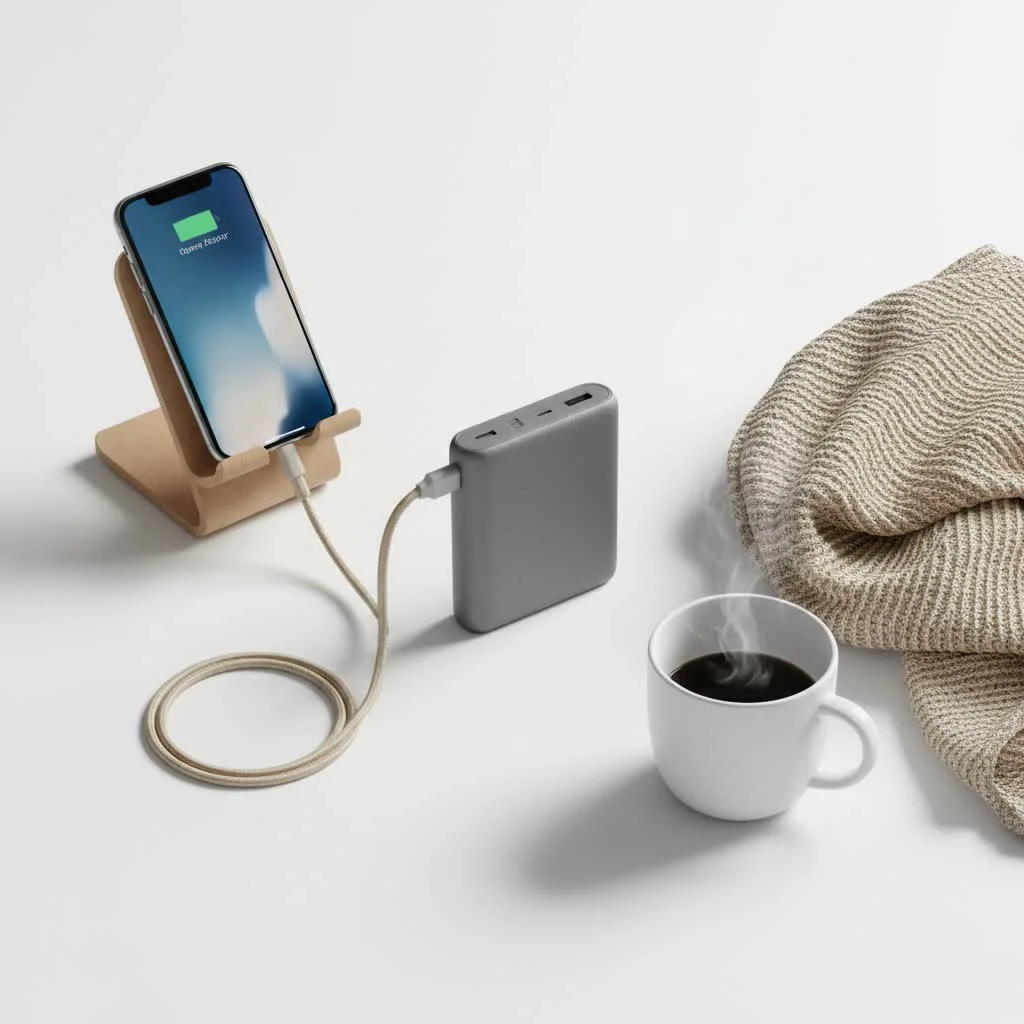
This guide covers how these gadgets work, their pros and cons, and key features to consider when choosing the right one for your needs. For browse all portable power articles on this site.
What is a Magnetic Wireless Power Bank?
A magnetic wireless power bank is a portable charger that attaches to the back of your smartphone using magnets and charges it wirelessly. It functions as a sleek, snap-on battery pack, eliminating the need for cables and ensuring perfect alignment for efficient charging.
This technology relies on two main standards:
- MagSafe: Apple’s proprietary technology, introduced with iPhone 12 and newer models. It uses a specific ring of magnets to ensure the power bank and phone snap into the perfect position for optimal wireless charging.
- Qi2 (pronounced “Chee Two”): This new universal standard incorporates the Magnetic Power Profile from MagSafe. This means many new Android phones and accessories will offer the same “snap-and-charge” convenience previously exclusive to Apple users.
It combines the freedom of wireless charging with the security of a magnetic connection, preventing your phone from slipping off the charging coil.
The Pros and Cons of Going Magnetic
Understanding the unique advantages and disadvantages of magnetic wireless charging is crucial for deciding if it fits your lifestyle.
Advantages of a Magnetic Wireless Power Bank
- Unmatched Convenience: The ability to simply snap the charger onto your phone and go is the biggest selling point. There are no cables to plug in or get tangled in your bag.
- Perfect Alignment: The magnets solve the biggest problem of traditional wireless charging—misalignment. A secure magnetic lock guarantees your phone is always in the sweet spot for the most efficient charge.
- Use While Charging: Because the power bank is securely attached, you can continue to use your phone for calls, texting, or watching videos without being tethered to a wall outlet or fumbling with a separate battery pack and cable.
- Reduced Port Wear: By eliminating the need to constantly plug and unplug a cable, you reduce the wear and tear on your phone’s charging port over time.
Potential Drawbacks to Consider
|
Our Picks for the Best Power Bank in 2026
As an Amazon Associate I earn from qualifying purchases.
|
||
| Num | Product | Action |
|---|---|---|
| 1 | 90000mAh High Capacity Power Bank, 30W Fast Charging Portable Charger PD&QC 3.0, 5 Output 2 Input Large Powerbank with LED Display USB C Battery Pack Charger Portable for Outdoor Camping Travel |

|
| 2 | INIU Portable Charger, Smallest 22.5W 10000mAh Power Bank, USB C in/Output Fast Charging 3-Output Mini Battery Pack Charger with Phone Holder for iPhone 17 16 15 14 Air Samsung S23 Google iPad Tablet |
|
| 3 | Energizer Power Bank 20000mAh - USB-C 20W Outputs Fast Charging Battery Pack, USB-A 18W with 4 Outputs & LCD Screen for Android/iPhone 15 16 Plus Pro Max/iPad Tablet and etc_UE20063PQ |
|
| 4 | INIU Portable Charger, Slimmest Fast Charging 10000mAh USB C in/Out Power Bank, 22.5W PD3.0 QC4+ Battery Pack, Portable Phone Charger for iPhone 16 15 14 13 12 Pro Samsung S22 S21 Google AirPods iPad |
|
| 5 | Anker Laptop Power Bank, 25,000mAh Portable Charger with Triple 100W USB-C Ports, Built-in Retractable Cables, Flight-Approved for Travel, iPhone 17/16 Series, MacBook, Samsung, and More |
|
| 6 | UGREEN Power Bank 25,000mAh 145W Laptop Portable Charger, Nexode 3-Port USB C PD Battery Pack, for MacBook Pro/Air, Dell XPS, iPhone 17/16/15/14, Galaxy S24, Steam Deck, iPad, and More |
|
| 7 | Emergency Radio&22000mAh Solar Power Bank, FM NOAA Weather Radio, Portable Hand Crank Bluetooth Radio, 20W Fast Charge Wireless Phone Charger, SOS Flashlight for Emergency/Home |
|
| 8 | INIU Power Bank, 25000mAh 100W USB C Laptop Portable Charger, PD QC Fast Charging 3-Output Battery Pack, Travel Charger for Laptop MacBook iPad Tablet Steam Deck iPhone 17 16 15 14 Pro Samsung S25 etc |
|
| 9 | Anker Laptop Power Bank, 25,000mAh Portable Charger with Triple 100W USB-C Ports, Built-in Retractable Cables, Flight-Approved for Travel, iPhone 17/16 Series, MacBook, Samsung, and More |
|
| 10 | UGREEN Nexode Power Bank 20000mAh 165W with Built-in USB C Cable Laptop Travel Portable Charger, 100W Input, Fast Charging for MacBook Pro/Air/iPhone 17/16/iPad Pro/Galaxy S25 Ultra/Dell/HP and More |
|
- Slower Charging Speeds: Wireless charging is generally slower than its wired counterpart. While a wired power bank might offer 20W or more, most magnetic wireless options top out at 7.5W or 15W for the latest Qi2 and MagSafe models.
- Energy Inefficiency and Heat: The process of transferring power wirelessly generates more heat and is less energy-efficient than a direct cable connection. This means some energy is lost as heat, and the power bank’s battery might not deliver its full advertised capacity to your phone.
- Limited Compatibility: While Qi2 is expanding compatibility, the strongest magnetic connection is still primarily found on iPhone 12 and newer models. Older phones or those in non-magnetic cases will need a special adapter or case to work.
Key Features to Look for When Buying
Choosing the right magnetic wireless power bank can feel overwhelming. Here are the critical features to focus on to make an informed decision.
1. Capacity (mAh)
Capacity, measured in milliampere-hours (mAh), tells you how much juice the power bank holds.
- 5,000 mAh: A great choice for portability. It’s typically slim and lightweight, providing about one full charge for most modern smartphones. Perfect for daily top-ups.
- 10,000 mAh: The sweet spot for most users. It offers a balance of capacity and size, capable of charging a smartphone around two times. Ideal for long days or short trips.
- 20,000 mAh or more: Best for power users, travelers, or those charging multiple devices. These are bulkier but provide several charges.
“A common mistake is assuming a 10,000 mAh power bank will charge a 5,000 mAh phone battery exactly twice,” notes tech expert Alex Chen from Pvhao. “Due to energy loss from heat and power conversion, you should expect about 60-70% efficiency. So, that 10,000 mAh pack realistically delivers around 6,000-7,000 mAh of actual charge.”
2. Charging Speed (Watts)
The output speed, measured in watts (W), determines how quickly the power bank can charge your phone.
- 5W: The slowest and most basic speed.
- 7.5W: The standard MagSafe charging speed for iPhones.
- 15W: The fastest speed available for Qi2 and MagSafe, offering a significantly quicker charge.
Look for a power bank that supports at least 7.5W, but aim for a 15W Qi2-certified model for future-proofing and faster charging if your device supports it.
3. Design and Extra Features
- Built-in Kickstand: A surprisingly useful feature that allows you to prop your phone up in landscape or portrait mode while it charges—perfect for watching videos or taking video calls.
- Pass-Through Charging: This lets you charge your phone and the power bank simultaneously. You can plug the power bank into the wall and attach your phone, and both will be fully charged by morning.
- Strong Magnets: Look for reviews that comment on the magnetic strength. A weak connection can cause the power bank to fall off, especially if you keep your phone in your pocket.
- Size and Weight: Consider how you’ll carry it. A slim, lightweight model is better for pocketability, while a larger one might be better suited for a backpack.
The Final Verdict: Is It Worth It?
A magnetic wireless power bank is an excellent investment for anyone who values convenience and a cable-free lifestyle. For iPhone 12+ users, it’s a seamless extension of the MagSafe ecosystem. With the rise of the Qi2 standard, Android users can now enjoy the same effortless snap-and-charge experience.
While they may not offer the raw speed of a wired charger, the sheer practicality of having a battery that clips on perfectly every time is a huge advantage for daily use. By considering your needs for capacity, speed, and extra features, you can find the perfect model to ensure your phone never runs out of power at a critical moment.
Get our weekly buyer guide
Practical specs, not advice. Unsubscribe anytime.
I finally got one of these magnetic wireless power banks for my iPhone 14 Pro, and it’s a game-changer. The MagSafe alignment is perfect every time, and I love not having to fuss with cables. It’s so convenient for travel and just keeping my phone topped up throughout the day without being tethered to an outlet. Definitely recommend for anyone with a newer iPhone.
As someone who’s always on the go, this magnetic wireless power bank has been a lifesaver. The fact that it just snaps on and charges without any effort is amazing. I used to carry a separate cable and charger, but this is so much more streamlined. It’s especially handy for long commutes and when I forget to charge my phone overnight.
I got a magnetic power bank after reading about the seamless experience, but I’m a bit underwhelmed by the charging speed. It’s fine for a slow top-up, but it doesn’t quite keep up if I’m using my phone heavily while it’s attached. The magnetic connection is strong, though, and it’s definitely convenient not having a cable. Just wish it charged a little faster.
This guide really helped me understand the Qi2 standard better. I picked up a magnetic power bank that supports it for my new Android phone, and the wireless charging is surprisingly fast and reliable. My only minor gripe is that it adds a little bulk to the phone, but the cord-free experience totally makes up for it. Great for when I’m out and about.