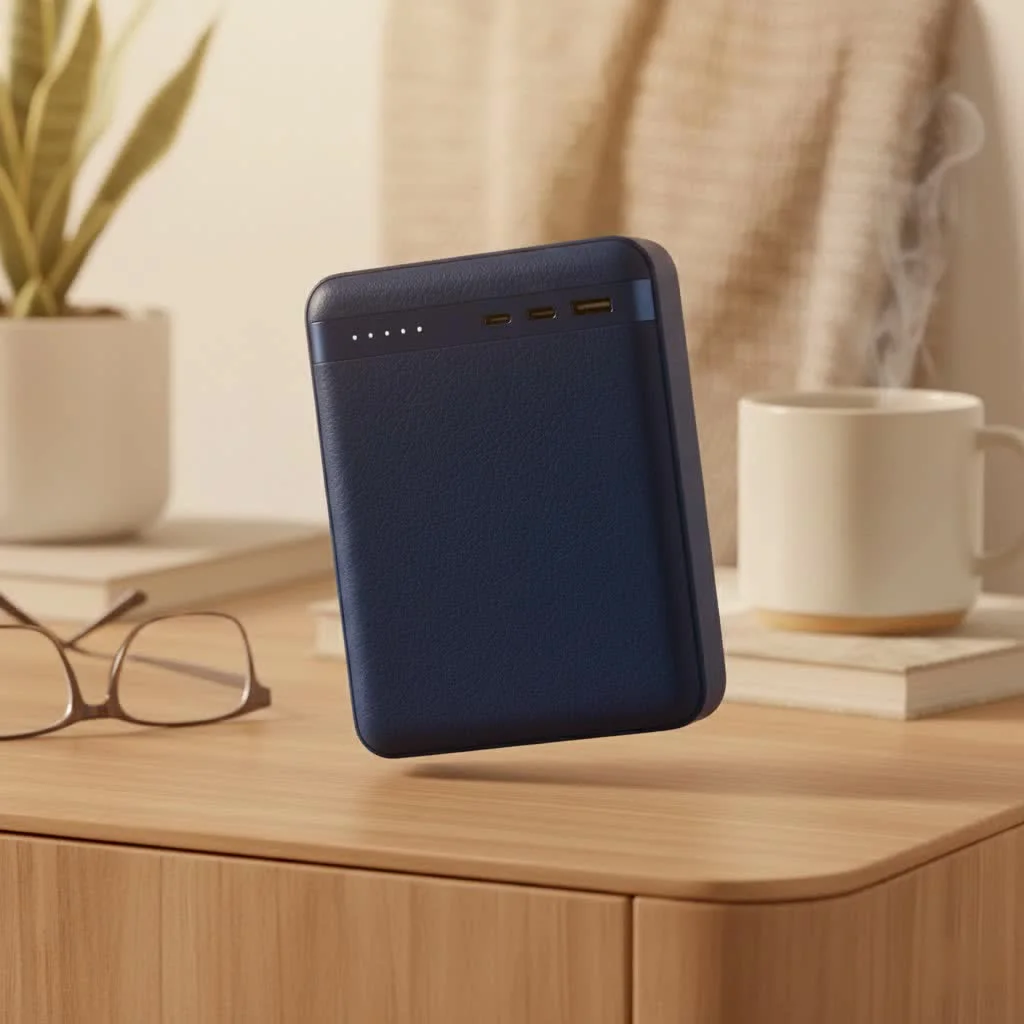
In the world of portable chargers, the 10000mAh power bank often hits the sweet spot for a perfect balance of portability and power. It’s a popular choice for good reason, but is it the right choice for you? As experts who have tested countless devices over the last decade, we at pvhao.com are here to give you the complete breakdown. We’ll explore what that “10000mAh” number really means, how many charges you can expect for your devices, and what key features you should look for before you buy.
What Does 10000mAh Actually Mean?
Before we dive into charging capabilities, let’s clarify the terminology. The “mAh” stands for milliampere-hour, a unit that measures electric charge. It represents the capacity of the battery cells inside the power bank. In theory, a 10000mAh power bank should be able to deliver 10,000 milliamps of current for one hour.
However, you can’t just take that number at face value. There’s a crucial difference between the advertised capacity and the actual usable capacity.
The Reality of Charging Efficiency
You will never get the full 10000mAh out of your power bank. This isn’t because manufacturers are dishonest; it’s due to the physics of energy transfer. Two main factors are at play:
- Voltage Conversion: The battery cells in a power bank typically operate at 3.7 volts. Your smartphone and other USB devices charge at 5 volts. Converting the voltage from 3.7V to 5V results in energy loss, primarily as heat.
- Circuit Resistance and Heat: The internal components of the power bank, the charging cable, and even your device’s battery have resistance, which generates more heat and wastes energy.
As a general rule of thumb, you can expect the real-world output of a quality power bank to be about 60-70% of its advertised capacity. For a 10000mAh power bank, this means you’ll have a usable capacity of around 6,000 to 7,000mAh.
How Many Charges Can a 10000mAh Power Bank Provide?
This is the most common question users have, and the answer depends entirely on the battery size of the device you are charging. You can estimate the number of charges with a simple formula:
(Power Bank’s Real Capacity) / (Your Device’s Battery Capacity) = Number of Charges
Let’s use an average real capacity of 6,500mAh for our 10000mAh power bank. Here’s a look at how many charges you might get for some of today’s popular smartphones:
| Device | Average Battery Size (mAh) | Estimated Charges |
|---|---|---|
| iPhone 15 | ~3,350 mAh | 1.8 – 2 times |
| iPhone 15 Pro Max | ~4,420 mAh | 1.3 – 1.5 times |
| Samsung Galaxy S24 | ~4,000 mAh | 1.5 – 1.7 times |
| Google Pixel 8 | ~4,575 mAh | 1.2 – 1.4 times |
As you can see, a 10000mAh power bank is typically enough to fully charge most modern smartphones at least once, with some power left to spare. It’s perfect for getting you through a long day of heavy use or a weekend trip.
Key Features in a Modern 10000mAh Power Bank
Not all power banks are created equal. Beyond capacity, here are the critical features to look for to ensure you get a device that is both efficient and convenient.
Fast Charging Technology: PD and QC
|
Our Picks for the Best Power Bank in 2026
As an Amazon Associate I earn from qualifying purchases.
|
||
| Num | Product | Action |
|---|---|---|
| 1 | UGREEN Nexode Power Bank 20000mAh 165W with Built-in USB C Cable Laptop Travel Portable Charger, 100W Input, Fast Charging for MacBook Pro/Air/iPhone 17/16/iPad Pro/Galaxy S25 Ultra/Dell/HP and More |

|
| 2 | Anker Laptop Power Bank, 25,000mAh Portable Charger with Triple 100W USB-C Ports, Built-in Retractable Cables, Flight-Approved for Travel, iPhone 17/16 Series, MacBook, Samsung, and More |
|
| 3 | UGREEN Power Bank 25,000mAh 145W Laptop Portable Charger, Nexode 3-Port USB C PD Battery Pack, for MacBook Pro/Air, Dell XPS, iPhone 17/16/15/14, Galaxy S24, Steam Deck, iPad, and More |
|
| 4 | INIU Portable Charger, Slimmest Fast Charging 10000mAh USB C in/Out Power Bank, 22.5W PD3.0 QC4+ Battery Pack, Portable Phone Charger for iPhone 16 15 14 13 12 Pro Samsung S22 S21 Google AirPods iPad |
|
| 5 | 90000mAh High Capacity Power Bank, 30W Fast Charging Portable Charger PD&QC 3.0, 5 Output 2 Input Large Powerbank with LED Display USB C Battery Pack Charger Portable for Outdoor Camping Travel |
|
| 6 | Anker Laptop Power Bank, 25,000mAh Portable Charger with Triple 100W USB-C Ports, Built-in Retractable Cables, Flight-Approved for Travel, iPhone 17/16 Series, MacBook, Samsung, and More |
|
| 7 | INIU Portable Charger, Smallest 22.5W 10000mAh Power Bank, USB C in/Output Fast Charging 3-Output Mini Battery Pack Charger with Phone Holder for iPhone 17 16 15 14 Air Samsung S23 Google iPad Tablet |
|
| 8 | Emergency Radio&22000mAh Solar Power Bank, FM NOAA Weather Radio, Portable Hand Crank Bluetooth Radio, 20W Fast Charge Wireless Phone Charger, SOS Flashlight for Emergency/Home |
|
| 9 | Energizer Power Bank 20000mAh - USB-C 20W Outputs Fast Charging Battery Pack, USB-A 18W with 4 Outputs & LCD Screen for Android/iPhone 15 16 Plus Pro Max/iPad Tablet and etc_UE20063PQ |
|
| 10 | INIU Power Bank, 25000mAh 100W USB C Laptop Portable Charger, PD QC Fast Charging 3-Output Battery Pack, Travel Charger for Laptop MacBook iPad Tablet Steam Deck iPhone 17 16 15 14 Pro Samsung S25 etc |
|
A large capacity is useless if it takes all day to transfer power. Modern fast-charging standards are essential.
- Power Delivery (PD): This is the universal standard for fast charging over USB-C. It’s used by Apple for iPhones and MacBooks, as well as by Google Pixel phones and many other modern devices. A power bank with a USB-C PD port can charge a compatible iPhone from 0 to 50% in about 30 minutes.
- Qualcomm Quick Charge (QC): This is a popular fast-charging protocol found in many Android smartphones, especially those with Qualcomm Snapdragon processors.
Port Selection
The types of ports on a power bank determine its versatility.
- USB-C: This is the most important port. Look for a USB-C port that supports both input and output, meaning you can use the same port to charge your devices and to recharge the power bank itself.
- USB-A: Still useful for legacy cables and devices, most power banks include at least one USB-A port.
- Wireless Charging: Many modern 10000mAh power banks now include Qi wireless charging pads. Some even incorporate Apple’s MagSafe technology for a secure, magnetic connection to compatible iPhones.
Size, Weight, and Portability
The primary appeal of the 10000mAh capacity is that it offers significant power in a relatively compact form factor. These models are often pocketable and lightweight, making them ideal for everyday carry without adding too much bulk. They are noticeably smaller and lighter than their 20,000mAh counterparts.
Is a 10000mAh Power Bank Allowed on Flights?
Yes, absolutely. Airline regulations on lithium-ion batteries are based on Watt-hours (Wh), not milliamp-hours. The limit for carry-on luggage is typically 100Wh per battery.
You can calculate the Watt-hours of a power bank with this formula:
(mAh / 1000) x Volts = Wh
For a 10000mAh power bank with a standard 3.7V internal battery:
(10,000 / 1000) x 3.7 = 37 Wh
This is well below the 100Wh limit, so you can safely bring your 10000mAh power bank on any flight.
Crucial Safety Note: All power banks, regardless of size, must be packed in your carry-on luggage. They are strictly prohibited in checked baggage due to fire safety regulations.
Who is a 10000mAh Power Bank For?
This capacity is a versatile workhorse, but it’s particularly well-suited for certain users:
- The Daily Commuter: Easily slips into a backpack or purse to ensure your phone survives a long day of work, navigation, and streaming.
- The Weekend Traveler: Provides enough power to get you through a short trip without needing to hunt for wall outlets.
- The Casual User: Perfect for emergencies, concerts, or sporting events where you might need a quick top-up.
If you need to charge multiple devices (like a phone, tablet, and headphones) multiple times, or if you need to charge a laptop, you should consider a larger 20,000mAh power bank.
Frequently Asked Questions
How long does it take to recharge a 10000mAh power bank?
This depends on the wattage of the charger you use. With a modern 18W or 20W USB-C PD wall adapter, it typically takes around 3 to 4 hours to fully recharge. Using an old 5W charger could take over 10 hours.
Can I use my phone while it’s being charged by the power bank?
Yes, you can. However, be aware that this will slow down the charging process for your phone as it is simultaneously consuming power.
How long will a 10000mAh power bank hold its charge?
A good quality power bank can hold its charge for months with very little self-discharge. However, it’s a good practice to top it up every 3-4 months if it’s not in regular use to maintain battery health.
Is it safe to leave my power bank charging overnight?
Modern, certified power banks have built-in safety features that prevent overcharging. Once the battery is full, the charging circuit will shut off. It is generally safe, but always use a reputable brand to ensure these safety mechanisms are reliable.
10000mAh vs 20000mAh: Which one do I need?
Choose a 10000mAh power bank for portability and everyday use. It’s perfect for keeping a single device topped up. Opt for a 20000mAh model if you are a heavy user, travel for longer periods, need to charge multiple devices simultaneously, or need to power a small laptop or tablet.
The Final Verdict
For the vast majority of smartphone users, a 10000mAh power bank is the ideal companion. It delivers a reliable amount of power in a package that is small enough to go anywhere with you. By understanding its real-world capacity and choosing one with modern features like Power Delivery, you’ll have a dependable source of energy that keeps you connected throughout your day. When you’re ready to buy, focus on reputable brands that prioritize safety and efficiency to get the most out of your 10000mAh power bank.
Get our weekly buyer guide
Practical specs, not advice. Unsubscribe anytime.

The information about what 10000mAh actually means was really helpful. I picked up a model based on the recommendations, and while it charges my phone fine, I was hoping for a bit more speed. It’s not super slow, but it’s not as fast as my wall charger, which I guess is to be expected with portable options. Still, it gets the job done in a pinch.
This guide was spot on about the balance between portability and power. I travel a lot for work and needed something that wasn’t too bulky but could still keep my tablet and phone topped up. The 10000mAh size is perfect for my needs, giving me enough juice for a full day of meetings and travel without constantly searching for an outlet. It’s been a lifesaver during long layovers.
I appreciated the breakdown of how many charges to expect for different devices. It really clarified what I could realistically get out of a 10000mAh unit. I ended up getting one with multiple USB ports, which is fantastic for charging my earbuds and phone simultaneously. It’s become an essential part of my everyday carry, especially since I’m always on the move.
I’ve been looking for a reliable power bank for ages, and the guide really helped me understand the 10000mAh capacity. I can now confidently get about two full charges for my iPhone 14, which is exactly what I needed for weekend trips. It’s super portable and fits right in my small bag without any hassle. Definitely a game-changer for staying connected on the go.