In an age where our lives are tethered to our devices, running out of battery is more than a minor inconvenience—it’s a full-blown crisis. Whether you’re a digital nomad working from a remote cafe, an avid camper exploring the great outdoors, or simply someone who needs to keep their family’s gadgets juiced up on a long road trip, a standard pocket-sized charger just won’t cut it. This is where a large power bank becomes not just a gadget, but an essential piece of your tech arsenal. But with so many options, how do you choose the right one?
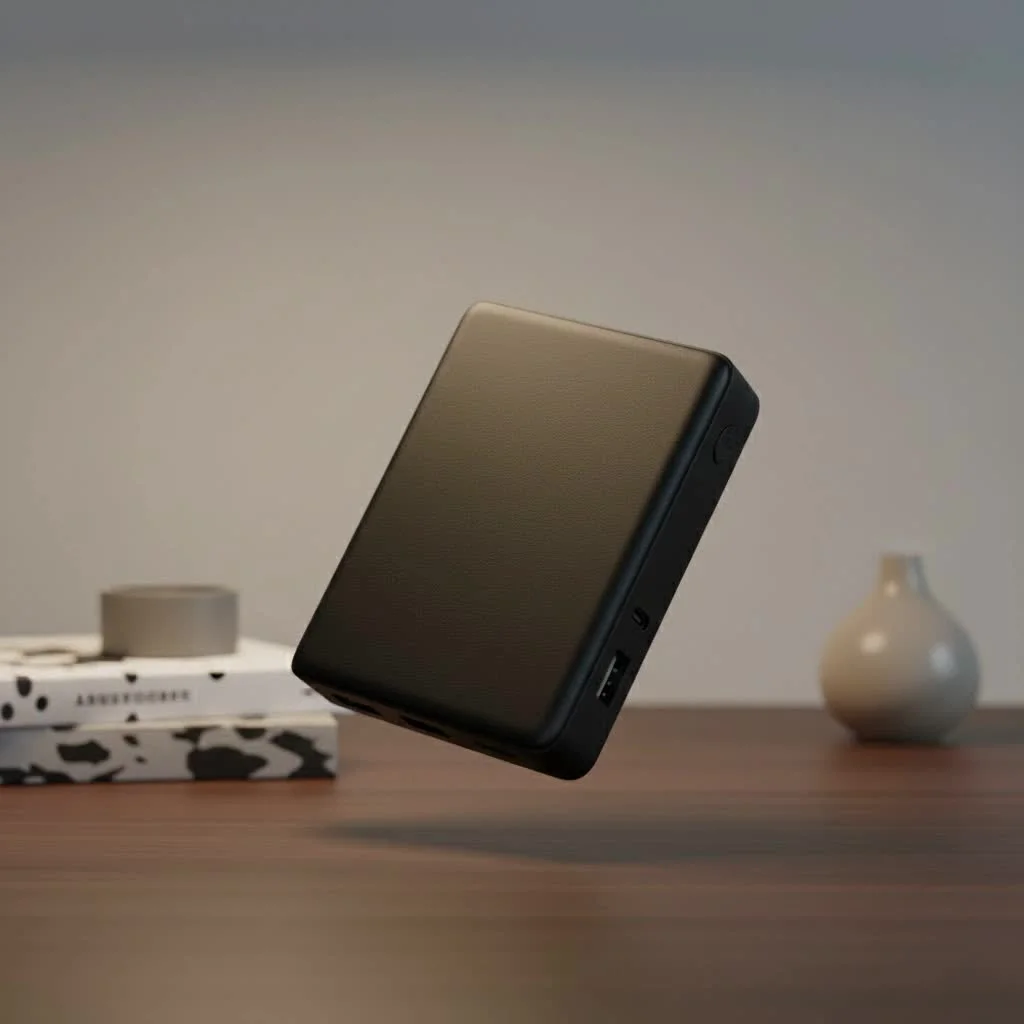
As a power bank expert with over a decade of experience, I’m here to demystify the world of high-capacity portable power. We’ll break down the technical jargon into simple terms and give you the confidence to select a large power bank that perfectly fits your needs. For complete portable power library on this site.
What Exactly Defines a “Large” Power Bank?
When we talk about a “large power bank,” we’re primarily referring to its capacity, measured in milliamp-hours (mAh). While there’s no official dictionary definition, the industry generally considers anything 20,000mAh and above to be in the large category.
A 20,000mAh unit can typically charge a modern smartphone 4-6 times, a tablet 1-2 times, or even give a significant boost to a compatible laptop. Models can go all the way up to 50,000mAh or more, but these often come with significant increases in size and weight.
Key Features to Consider in a Large Power Bank
Choosing a high-capacity power bank involves more than just picking the biggest number you can find. You need to balance power, portability, and features to get the right tool for the job.
Capacity (mAh): More Than Just a Number
The mAh rating is your starting point. It tells you how much energy the power bank can store. To put it in perspective:
- Modern Smartphone: ~3,000 to 5,000 mAh
- Tablet: ~7,000 to 10,000 mAh
- Laptop (USB-C): ~40 to 100 Watt-hours (Wh), which translates to a wide mAh range depending on voltage.
Keep in mind that no power bank is 100% efficient. Due to heat loss and voltage conversion, you should expect to get about 70-80% of the advertised capacity in real-world charging. So, a 20,000mAh power bank will realistically deliver around 14,000-16,000mAh to your devices.
Power Output (Watts): The Laptop Lifesaver
For a large power bank to be truly useful, especially for bigger devices, you must pay attention to its power output, measured in watts (W). This determines how fast it can charge your gadgets. Look for a feature called Power Delivery (PD), which is a fast-charging standard that uses USB-C.
- For Smartphones: 18W or higher is great for fast charging.
- For Tablets and Ultrabooks: You’ll want at least 30W-45W.
- For more powerful Laptops (like a MacBook Pro): Look for 60W, 100W, or even higher to charge effectively.
“A common mistake is buying a high-capacity power bank with a low wattage output,” notes power solutions engineer David Chen. “You’ll have a massive fuel tank that can only dispense energy through a tiny straw. For laptops, a high watt output via USB-C PD is non-negotiable.”
Portability vs. Power: Finding the Sweet Spot
|
Our Picks for the Best Power Bank in 2026
As an Amazon Associate I earn from qualifying purchases.
|
||
| Num | Product | Action |
|---|---|---|
| 1 | UGREEN Power Bank 25,000mAh 145W Laptop Portable Charger, Nexode 3-Port USB C PD Battery Pack, for MacBook Pro/Air, Dell XPS, iPhone 17/16/15/14, Galaxy S24, Steam Deck, iPad, and More |

|
| 2 | INIU Portable Charger, Slimmest Fast Charging 10000mAh USB C in/Out Power Bank, 22.5W PD3.0 QC4+ Battery Pack, Portable Phone Charger for iPhone 16 15 14 13 12 Pro Samsung S22 S21 Google AirPods iPad |
|
| 3 | Anker Laptop Power Bank, 25,000mAh Portable Charger with Triple 100W USB-C Ports, Built-in Retractable Cables, Flight-Approved for Travel, iPhone 17/16 Series, MacBook, Samsung, and More |
|
| 4 | Anker Laptop Power Bank, 25,000mAh Portable Charger with Triple 100W USB-C Ports, Built-in Retractable Cables, Flight-Approved for Travel, iPhone 17/16 Series, MacBook, Samsung, and More |
|
| 5 | INIU Portable Charger, Smallest 22.5W 10000mAh Power Bank, USB C in/Output Fast Charging 3-Output Mini Battery Pack Charger with Phone Holder for iPhone 17 16 15 14 Air Samsung S23 Google iPad Tablet |
|
| 6 | 90000mAh High Capacity Power Bank, 30W Fast Charging Portable Charger PD&QC 3.0, 5 Output 2 Input Large Powerbank with LED Display USB C Battery Pack Charger Portable for Outdoor Camping Travel |
|
| 7 | INIU Power Bank, 25000mAh 100W USB C Laptop Portable Charger, PD QC Fast Charging 3-Output Battery Pack, Travel Charger for Laptop MacBook iPad Tablet Steam Deck iPhone 17 16 15 14 Pro Samsung S25 etc |
|
| 8 | UGREEN Nexode Power Bank 20000mAh 165W with Built-in USB C Cable Laptop Travel Portable Charger, 100W Input, Fast Charging for MacBook Pro/Air/iPhone 17/16/iPad Pro/Galaxy S25 Ultra/Dell/HP and More |
|
| 9 | Emergency Radio&22000mAh Solar Power Bank, FM NOAA Weather Radio, Portable Hand Crank Bluetooth Radio, 20W Fast Charge Wireless Phone Charger, SOS Flashlight for Emergency/Home |
|
| 10 | Energizer Power Bank 20000mAh - USB-C 20W Outputs Fast Charging Battery Pack, USB-A 18W with 4 Outputs & LCD Screen for Android/iPhone 15 16 Plus Pro Max/iPad Tablet and etc_UE20063PQ |
|
This is the fundamental trade-off. A 50,000mAh beast might sound appealing, but if it weighs five pounds and doesn’t fit in your backpack, you’ll never take it with you. Consider your primary use case:
- Daily Commute/Day Trips: A 20,000mAh model is often the perfect balance.
- Weekend Camping/Business Travel: A 25,000-30,000mAh unit provides extra security.
- Off-Grid Living/Emergency Backup: This is where the massive 40,000mAh+ models with features like AC outlets shine.
Navigating Airline Regulations with Your Power Bank
If you’re a frequent flyer, this is critical. The Federal Aviation Administration (FAA) in the U.S. and other international bodies have strict rules. Power banks are only allowed in carry-on luggage. The limit is based on Watt-hours (Wh), not mAh.
- The Rule: You can carry on batteries up to 100Wh without airline approval.
- How to Calculate Wh:
(mAh / 1000) x Voltage = Wh. The voltage of lithium-ion cells is typically 3.7V. - Example: A 26,800mAh power bank is
(26800 / 1000) x 3.7V = 99.16Wh. This is just under the limit and a very common capacity for this reason.
Always check the Wh rating printed on the device itself. If it’s not listed, you risk having it confiscated.
Who Really Needs a Large Power Bank?
While anyone can benefit from extra power, certain lifestyles demand it.
- Digital Nomads & Remote Workers: For those whose office is wherever they can find Wi-Fi, a large power bank ensures their laptop and phone can last through a full workday, no outlet required.
- Outdoor Enthusiasts: Campers, hikers, and festival-goers rely on them to power phones, GPS devices, headlamps, and cameras for days at a time.
- Frequent Travelers: Long-haul flights, layovers, and busy airports make finding a free outlet a nightmare. A high-capacity portable charger eliminates that stress.
- Families on the Go: Keeping multiple tablets and phones charged during a long car ride can be the key to a peaceful journey.
- Emergency Preparedness: In case of a power outage, a fully charged large power bank can be a lifeline for communication and lighting.
Frequently Asked Questions (FAQ)
How many times can a 30,000mAh power bank charge a phone?
Assuming a phone with a 4,000mAh battery and accounting for efficiency loss, you can expect around 5-6 full charges. This makes it an excellent option for multi-day trips.
Can I take a large power bank on a plane?
Yes, as long as it is in your carry-on bag and its capacity is under 100 Watt-hours (Wh). Most power banks up to 26,800mAh fall safely within this limit. Always check the specific regulations for your airline.
What’s the difference between mAh and Wh?
Milliamp-hours (mAh) measure stored charge, while Watt-hours (Wh) measure stored energy. Wh is a more universal and accurate measurement because it accounts for voltage, which is why aviation authorities use it as their standard.
Is a higher wattage always better?
Not necessarily. Your device will only draw the maximum power it’s designed to handle. A 100W power bank won’t charge a phone that only accepts 18W any faster than an 18W power bank will. However, a higher wattage provides more versatility for charging larger devices like laptops.
How long does it take to recharge a large power bank?
This depends heavily on the power bank’s input wattage and the charger you use. A 20,000mAh unit could take over 10 hours with a basic 10W charger but may recharge in as little as 2-3 hours using a 60W or 100W PD wall charger.
Your Power, Your Freedom
Choosing the right large power bank is about more than just buying a battery; it’s about buying freedom. It’s the freedom to work from a park bench, to navigate a new city without battery anxiety, and to stay connected when it matters most. By focusing on capacity (mAh), power output (W), and the crucial Watt-hour (Wh) rating for travel, you can make an informed decision that will keep your digital life running smoothly, wherever you go. Now, go forth and stay charged
Get our weekly buyer guide
Practical specs, not advice. Unsubscribe anytime.