In today’s hyper-connected world, a dead phone is more than just an inconvenience; it can feel like being cut off from the world. Whether you’re navigating a new city, capturing priceless moments, or closing a deal on the go, a reliable power source is essential. This is where the humble battery power bank comes to the rescue. As a portable charger, it’s your personal, pocket-sized power grid. But with a sea of options, how do you choose the right one? With over a decade of experience in battery technology, I’m here to demystify the process and help you find the perfect companion for your devices.
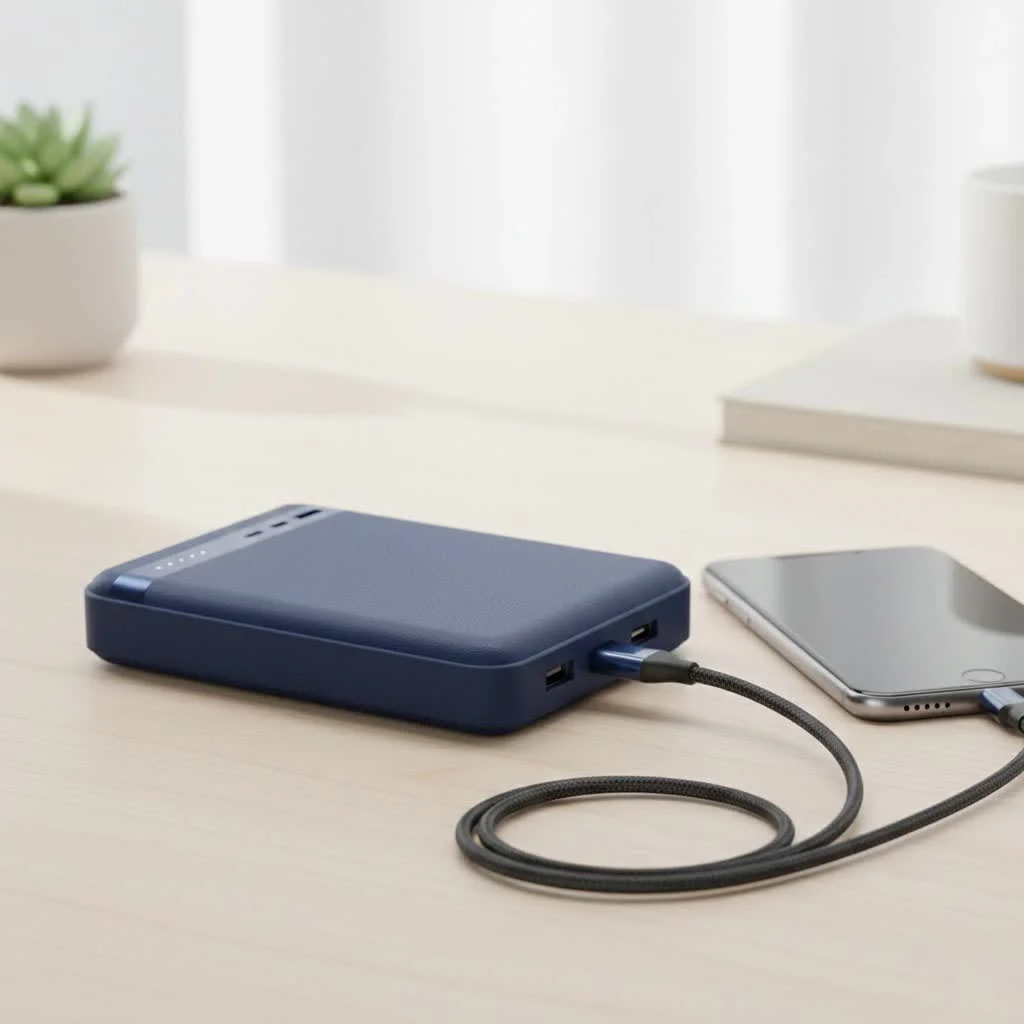
What Exactly Is a Battery Power Bank?
A battery power bank, often called a portable charger, is essentially a rechargeable battery housed in a case with ports to charge other devices. Think of it as a small, portable electrical outlet. Inside, it contains lithium-ion or lithium-polymer cells, a circuit board to manage power flow, and input/output ports. Its sole purpose is to store electrical energy and deliver it to your smartphone, tablet, headphones, or any other USB-powered gadget when you’re away from a wall socket. For shop curated portable power on this site.
How to Choose the Right Battery Power Bank
Selecting the right power bank isn’t about picking the biggest or most expensive one. It’s about matching its capabilities to your lifestyle and devices. Let’s break down the key factors you need to consider.
Capacity (mAh): The Fuel in Your Tank
The most crucial specification of a power bank is its capacity, measured in milliampere-hours (mAh). This number tells you how much energy the power bank can store. A higher mAh rating means more charging power.
- Low Capacity (Under 5,000 mAh): These are compact and lightweight, perfect for a quick emergency boost to get your phone through the rest of the day. They might give a standard smartphone one full charge.
- Medium Capacity (10,000 – 15,000 mAh): This is the sweet spot for most users. A 10,000 mAh power bank is typically portable enough for daily carry and can charge a modern smartphone two to three times.
- High Capacity (20,000 mAh and above): If you’re a heavy user, traveling for days, or need to charge multiple devices like a laptop and a phone, this is your category. These are heavier and bulkier but offer substantial power reserves.
Expert Tip: The rated capacity isn’t the exact amount of power delivered to your device. Some energy is always lost during the transfer process due to heat and voltage conversion. Expect to get about 60-70% of the advertised capacity as usable energy. So, a 10,000 mAh power bank will realistically deliver around 6,500-7,000 mAh to your devices.
Charging Speed: Power Delivery and Quick Charge
|
Our Picks for the Best Power Bank in 2026
As an Amazon Associate I earn from qualifying purchases.
|
||
| Num | Product | Action |
|---|---|---|
| 1 | INIU Portable Charger, Smallest 22.5W 10000mAh Power Bank, USB C in/Output Fast Charging 3-Output Mini Battery Pack Charger with Phone Holder for iPhone 17 16 15 14 Air Samsung S23 Google iPad Tablet |

|
| 2 | UGREEN Nexode Power Bank 20000mAh 165W with Built-in USB C Cable Laptop Travel Portable Charger, 100W Input, Fast Charging for MacBook Pro/Air/iPhone 17/16/iPad Pro/Galaxy S25 Ultra/Dell/HP and More |
|
| 3 | Anker Laptop Power Bank, 25,000mAh Portable Charger with Triple 100W USB-C Ports, Built-in Retractable Cables, Flight-Approved for Travel, iPhone 17/16 Series, MacBook, Samsung, and More |
|
| 4 | 90000mAh High Capacity Power Bank, 30W Fast Charging Portable Charger PD&QC 3.0, 5 Output 2 Input Large Powerbank with LED Display USB C Battery Pack Charger Portable for Outdoor Camping Travel |
|
| 5 | UGREEN Power Bank 25,000mAh 145W Laptop Portable Charger, Nexode 3-Port USB C PD Battery Pack, for MacBook Pro/Air, Dell XPS, iPhone 17/16/15/14, Galaxy S24, Steam Deck, iPad, and More |
|
| 6 | INIU Power Bank, 25000mAh 100W USB C Laptop Portable Charger, PD QC Fast Charging 3-Output Battery Pack, Travel Charger for Laptop MacBook iPad Tablet Steam Deck iPhone 17 16 15 14 Pro Samsung S25 etc |
|
| 7 | Emergency Radio&22000mAh Solar Power Bank, FM NOAA Weather Radio, Portable Hand Crank Bluetooth Radio, 20W Fast Charge Wireless Phone Charger, SOS Flashlight for Emergency/Home |
|
| 8 | INIU Portable Charger, Slimmest Fast Charging 10000mAh USB C in/Out Power Bank, 22.5W PD3.0 QC4+ Battery Pack, Portable Phone Charger for iPhone 16 15 14 13 12 Pro Samsung S22 S21 Google AirPods iPad |
|
| 9 | Anker Laptop Power Bank, 25,000mAh Portable Charger with Triple 100W USB-C Ports, Built-in Retractable Cables, Flight-Approved for Travel, iPhone 17/16 Series, MacBook, Samsung, and More |
|
| 10 | Energizer Power Bank 20000mAh - USB-C 20W Outputs Fast Charging Battery Pack, USB-A 18W with 4 Outputs & LCD Screen for Android/iPhone 15 16 Plus Pro Max/iPad Tablet and etc_UE20063PQ |
|
A high-capacity power bank is useless if it takes all day to charge your phone. Charging speed is determined by the power output, measured in watts (W). To understand this, you need to look at two things: amperage (A) and voltage (V). Watts are simply Amps x Volts.
Many power banks now support fast-charging standards. Look for these technologies:
- Power Delivery (PD): Primarily used with USB-C ports, this is the standard for fast-charging iPhones, Google Pixels, and even larger devices like the Nintendo Switch and many modern laptops. Look for power banks offering at least 20W PD for fast phone charging.
- Quick Charge (QC): Developed by Qualcomm, this standard is common among Android devices. There are several versions, with QC 3.0 and 4+ being prevalent.
To take advantage of these speeds, your device must also support the same standard. Using a fast-charging power bank with an older phone will simply result in it charging at a standard, slower speed.
Ports: Your Connection to Power
The type and number of ports on a battery power bank determine its versatility.
- USB-A: The traditional, rectangular USB port. Most power banks have at least one of these for output.
- USB-C: The modern, oval-shaped, reversible port. This is the most versatile type. On many new power banks, a single USB-C port can act as both an input (to charge the power bank) and an output (to charge your devices), often supporting Power Delivery for fast charging.
- Micro-USB/Lightning: These are typically input-only ports for charging the power bank itself, though they are becoming less common in favor of the more universal USB-C.
Consider how many devices you need to charge simultaneously. If you often need to power up your phone and wireless earbuds at the same time, look for a model with at least two output ports.
Safety Features: Protecting Your Devices
A power bank is more than just a battery; it contains a complex circuit board designed to protect your valuable electronics. Never compromise on safety. As battery technology specialist Dr. Alistair Finch states, “A well-designed power bank’s primary job, beyond charging, is to prevent itself and the connected device from damage. Robust safety protocols are non-negotiable.”
Look for models that explicitly list these safety features:
- Overcharge Protection: Stops charging the power bank once its battery is full.
- Over-Discharge Protection: Prevents the power bank’s battery from draining too low, which can damage it.
- Short-Circuit Protection: Cuts the power if it detects a short circuit, preventing fire or damage.
- Temperature Control: Monitors the battery’s temperature and stops charging if it gets too hot.
Frequently Asked Questions (FAQ)
How many times can a 10,000 mAh power bank charge my phone?
This depends on your phone’s battery capacity. For example, an iPhone 15 has a battery of around 3,350 mAh. Considering the 60-70% efficiency rule, a 10,000 mAh power bank delivers about 7,000 mAh. So, you can expect around two full charges (7,000 / 3,350 ≈ 2.08).
Can I bring a battery power bank on an airplane?
Yes, but with restrictions. The FAA and other aviation authorities require power banks to be in your carry-on luggage, not checked bags. Most airlines limit the capacity to 100 watt-hours (Wh). A 20,000 mAh power bank is typically around 74 Wh, so it’s well within the limit. Always check with your specific airline before flying.
How long does it take to charge a power bank?
This depends on the power bank’s capacity and the wattage of the charger you use to fill it up. Charging a 10,000 mAh power bank with a standard 5W phone charger could take over 6 hours. However, if the power bank supports a fast input (like 18W or 20W PD), you can recharge it in under 3 hours using a compatible wall adapter.
Is it safe to leave my phone charging from a power bank overnight?
Yes, modern power banks and smartphones are equipped with protection circuits that stop the charging process once the phone’s battery is full. There is no risk of “overcharging” your device.
Does a battery power bank lose its charge over time?
Yes, all batteries have a natural self-discharge rate. A good quality power bank can hold its charge for several months with minimal loss, but it’s always a good practice to top it up before a long trip if it has been sitting unused for a while.
Final Thoughts: Powering Your Life
A battery power bank is an indispensable accessory in the modern tech arsenal. By understanding the core concepts of capacity, charging speed, ports, and safety, you can move beyond marketing jargon and make an informed decision. The right portable charger isn’t just a gadget; it’s the freedom to stay connected, productive, and prepared, no matter where your journey takes you. Choose wisely, and you’ll never have to suffer from low-battery anxiety again.
Get our weekly buyer guide
Practical specs, not advice. Unsubscribe anytime.

I appreciate the info on how these work as a ‘pocket-sized power grid.’ I bought one based on the recommendations for capacity, but it feels a bit bulkier than I expected for everyday carry. It does charge my phone quickly, but I was hoping for something a little more discreet.
I’ve been looking for a good power bank for a while, and the breakdown of what’s inside them was super helpful. I finally understand the difference between lithium-ion and lithium-polymer. My new portable charger works great for my tablet and phone, though I wish it had one more USB-C port.
This was exactly what I needed to make an informed decision. The explanation of a battery power bank as a ‘small, portable electrical outlet’ really clicked for me. I travel a lot for work and having a reliable power source is absolutely essential for closing deals on the go. My new one has been flawless.
I used to constantly worry about my phone dying when I was out exploring new cities. This guide really helped me understand the different types of portable chargers. I ended up getting one with lithium-polymer cells and it’s been a game-changer for keeping my devices charged all day. No more being cut off from the world!