We’ve all felt that familiar wave of panic: you’re out for the day, navigating to a new place, capturing memories, and suddenly you see the dreaded red battery icon. In a world that runs on connectivity, a dead phone can feel like being cut off from everything. That’s where a reliable cell phone power bank becomes your most essential accessory. But with a sea of options, how do you pick the right one? As the creative force behind pvhao.com, I’ve spent over a decade testing these devices, and I’m here to guide you through everything you need to know to buy with confidence.
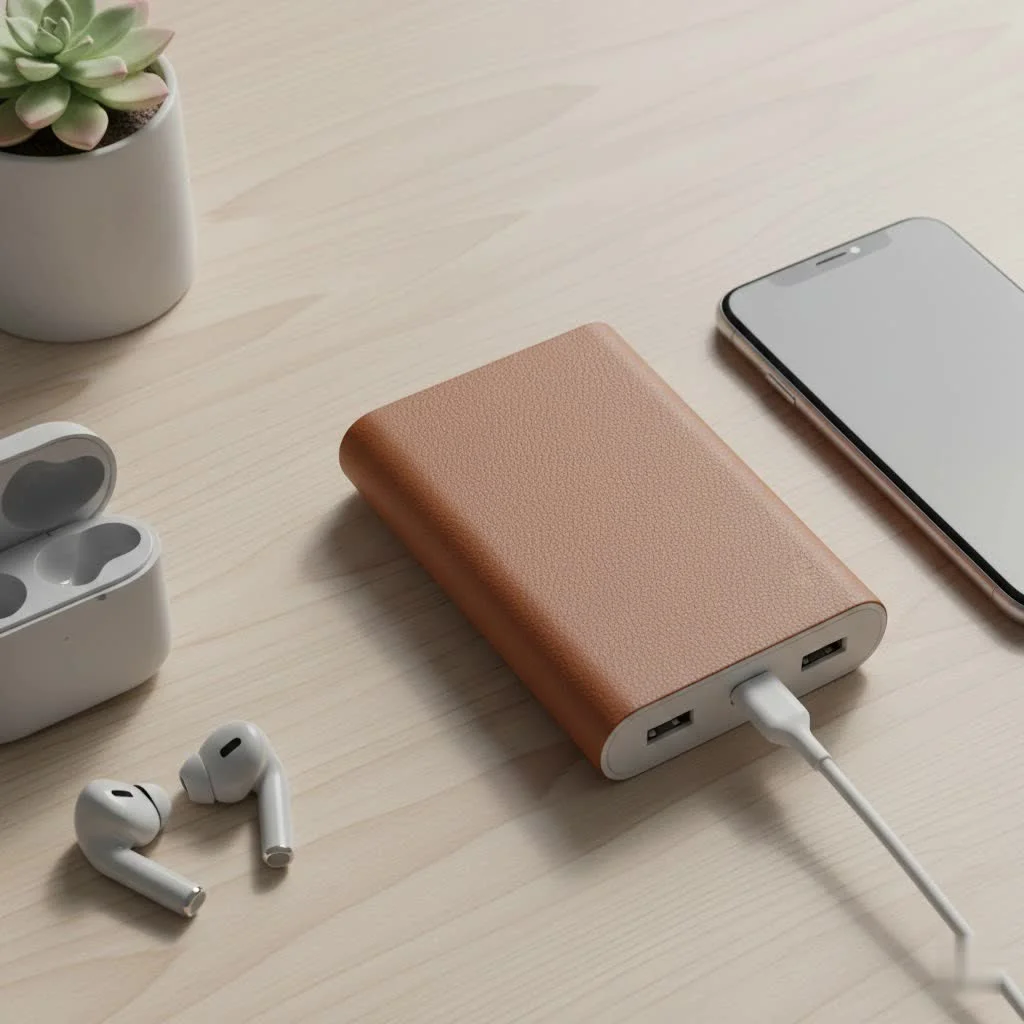
What Exactly Is a Cell Phone Power Bank?
At its core, a cell phone power bank is a portable, external battery designed to recharge your electronic devices when you don’t have access to a wall outlet. Think of it as a personal power reserve for your smartphone, tablet, or even headphones. They come in various shapes, sizes, and capacities, but their primary job is simple: to deliver power on the go so you can stay connected. For see our portable power recommendations on this site.
How to Choose the Right Cell Phone Power Bank for You
Choosing the perfect power bank isn’t about finding the biggest or most expensive model; it’s about matching its features to your lifestyle. Let’s break down the key factors to consider.
Capacity (mAh): How Much Juice Do You Need?
The most important specification on any power bank is its capacity, measured in milliampere-hours (mAh). This number tells you how much energy it can store. The higher the mAh, the more charging power it holds. However, it’s important to know that some energy is lost during the transfer, so a 10,000mAh power bank typically delivers around 6,000-7,000mAh of usable energy.
Here’s a simple guide to help you choose:
- 5,000 – 10,000mAh: This is the sweet spot for everyday use. A power bank in this range is usually compact enough to fit in your pocket and can provide one to two full charges for most modern smartphones. It’s perfect for daily commutes or a day out.
- 10,000 – 20,000mAh: Ideal for travelers, students, or moderate users who need to charge their phone multiple times or power a tablet. This capacity offers a great balance between portability and power.
- 20,000mAh+: This is for the true power users. If you’re on a long trip, need to charge multiple devices simultaneously, or even power a laptop, a high-capacity unit is your best bet. Keep in mind they are larger and heavier.
Charging Speed (Watts): The Need for Speed
|
Our Picks for the Best Power Bank in 2026
As an Amazon Associate I earn from qualifying purchases.
|
||
| Num | Product | Action |
|---|---|---|
| 1 | UGREEN Nexode Power Bank 20000mAh 165W with Built-in USB C Cable Laptop Travel Portable Charger, 100W Input, Fast Charging for MacBook Pro/Air/iPhone 17/16/iPad Pro/Galaxy S25 Ultra/Dell/HP and More |

|
| 2 | INIU Portable Charger, Smallest 22.5W 10000mAh Power Bank, USB C in/Output Fast Charging 3-Output Mini Battery Pack Charger with Phone Holder for iPhone 17 16 15 14 Air Samsung S23 Google iPad Tablet |
|
| 3 | Emergency Radio&22000mAh Solar Power Bank, FM NOAA Weather Radio, Portable Hand Crank Bluetooth Radio, 20W Fast Charge Wireless Phone Charger, SOS Flashlight for Emergency/Home |
|
| 4 | INIU Portable Charger, Slimmest Fast Charging 10000mAh USB C in/Out Power Bank, 22.5W PD3.0 QC4+ Battery Pack, Portable Phone Charger for iPhone 16 15 14 13 12 Pro Samsung S22 S21 Google AirPods iPad |
|
| 5 | INIU Power Bank, 25000mAh 100W USB C Laptop Portable Charger, PD QC Fast Charging 3-Output Battery Pack, Travel Charger for Laptop MacBook iPad Tablet Steam Deck iPhone 17 16 15 14 Pro Samsung S25 etc |
|
| 6 | 90000mAh High Capacity Power Bank, 30W Fast Charging Portable Charger PD&QC 3.0, 5 Output 2 Input Large Powerbank with LED Display USB C Battery Pack Charger Portable for Outdoor Camping Travel |
|
| 7 | Energizer Power Bank 20000mAh - USB-C 20W Outputs Fast Charging Battery Pack, USB-A 18W with 4 Outputs & LCD Screen for Android/iPhone 15 16 Plus Pro Max/iPad Tablet and etc_UE20063PQ |
|
| 8 | UGREEN Power Bank 25,000mAh 145W Laptop Portable Charger, Nexode 3-Port USB C PD Battery Pack, for MacBook Pro/Air, Dell XPS, iPhone 17/16/15/14, Galaxy S24, Steam Deck, iPad, and More |
|
| 9 | Anker Laptop Power Bank, 25,000mAh Portable Charger with Triple 100W USB-C Ports, Built-in Retractable Cables, Flight-Approved for Travel, iPhone 17/16 Series, MacBook, Samsung, and More |
|
| 10 | Anker Laptop Power Bank, 25,000mAh Portable Charger with Triple 100W USB-C Ports, Built-in Retractable Cables, Flight-Approved for Travel, iPhone 17/16 Series, MacBook, Samsung, and More |
|
If capacity is the size of the fuel tank, then charging speed (measured in Watts) is how fast you can fill up. A standard USB port provides about 5W, which is quite slow. For a significantly faster charge, look for power banks that support fast-charging technologies.
- Power Delivery (PD): This is the modern standard for fast charging, especially for iPhones and many Android devices. An 18W or 20W PD output can charge a compatible phone from 0% to 50% in about 30 minutes.
- Qualcomm Quick Charge (QC): This technology is common in Android phones with Qualcomm processors and offers similar fast-charging benefits.
Always check that the power bank’s output wattage matches your phone’s capabilities to take full advantage of fast charging.
Ports and Compatibility: One Size Doesn’t Fit All
Consider how many devices you’ll need to charge at once and what kind of ports they use.
- USB-A: The traditional, rectangular USB port. It’s widely compatible but generally offers slower charging speeds unless it supports a protocol like Quick Charge.
- USB-C: The modern, oval-shaped, reversible port. It’s now the standard for both charging your devices and recharging the power bank itself. It’s essential for Power Delivery fast charging.
- Built-in Cables: Some power banks come with integrated cables, which is incredibly convenient. The only downside is that if the cable breaks, the power bank becomes less useful.
- Wireless Charging: Many newer models offer Qi wireless charging. Simply place your compatible phone on the power bank for a cable-free experience.
Size and Portability: Your On-the-Go Companion
A power bank is only useful if you’re willing to carry it. The highest-capacity models can be bulky and heavy, so finding the right balance is key. For daily use, a slim, pocket-friendly design is often best. If you typically carry a backpack, a slightly larger model won’t be an issue and will provide more power for your needs.
Key Safety Features to Look For
This is an area where you should never compromise. A well-made cell phone power bank protects both itself and your valuable devices. According to electronics safety expert Dr. Alistair Finch, “A power bank without robust safety certifications is a gamble. Features like overcharge and short-circuit protection are not luxuries; they are essential for preventing damage to your device’s battery and ensuring safe operation.”
Look for these critical safety features:
- Overcharge Protection: Prevents the power bank and your device from being damaged by too much current.
- Short-Circuit Protection: Automatically shuts the power bank down if it detects a short circuit.
- Temperature Control: Monitors the battery’s temperature to prevent overheating during charging and discharging.
Frequently Asked Questions (FAQ)
How many times can a 10,000mAh power bank charge a phone?
A 10,000mAh power bank can typically charge a modern smartphone (with a ~4,000mAh battery) about 1.5 to 2 times, accounting for energy loss during transfer.
Can I take a cell phone power bank on a plane?
Yes, but they must be in your carry-on luggage. Most airlines have a limit of 100Wh (Watt-hours), which is around 27,000mAh, but it’s always best to check with your specific airline before flying.
How long does a power bank last?
The lifespan of a power bank is measured in charge cycles (a full charge and discharge). Most quality power banks are rated for 300-500 cycles. With regular use, this translates to about 2-3 years of reliable performance.
Is it safe to charge my phone overnight with a power bank?
Yes, provided you are using a quality power bank with built-in safety features like overcharge protection. These systems will automatically stop the charging process once your phone’s battery is full.
What’s the difference between a power bank and a portable charger?
The terms are used interchangeably. Both refer to a portable, external battery used to charge electronic devices.
Conclusion
A cell phone power bank is more than just a backup battery; it’s a lifeline that keeps you connected to your world. By understanding your own needs and focusing on the key factors—capacity, charging speed, ports, and safety—you can confidently choose a device that’s perfectly suited to your lifestyle. No more battery anxiety, just the freedom to go wherever your day takes you. Now that you’re equipped with this knowledge, go out and find the perfect power bank to keep you powered up.
Get our weekly buyer guide
Practical specs, not advice. Unsubscribe anytime.