We’ve all felt that familiar pang of anxiety: you’re out and about, navigating with GPS, capturing a perfect photo, or in the middle of an important call, and you see that dreaded red battery icon flash on your screen. In our hyper-connected world, a dead phone can feel like being stranded on a deserted island. This is where a power bank portable charger becomes not just a gadget, but an essential lifeline. But with a sea of options boasting different numbers, acronyms, and features, how do you choose the right one?
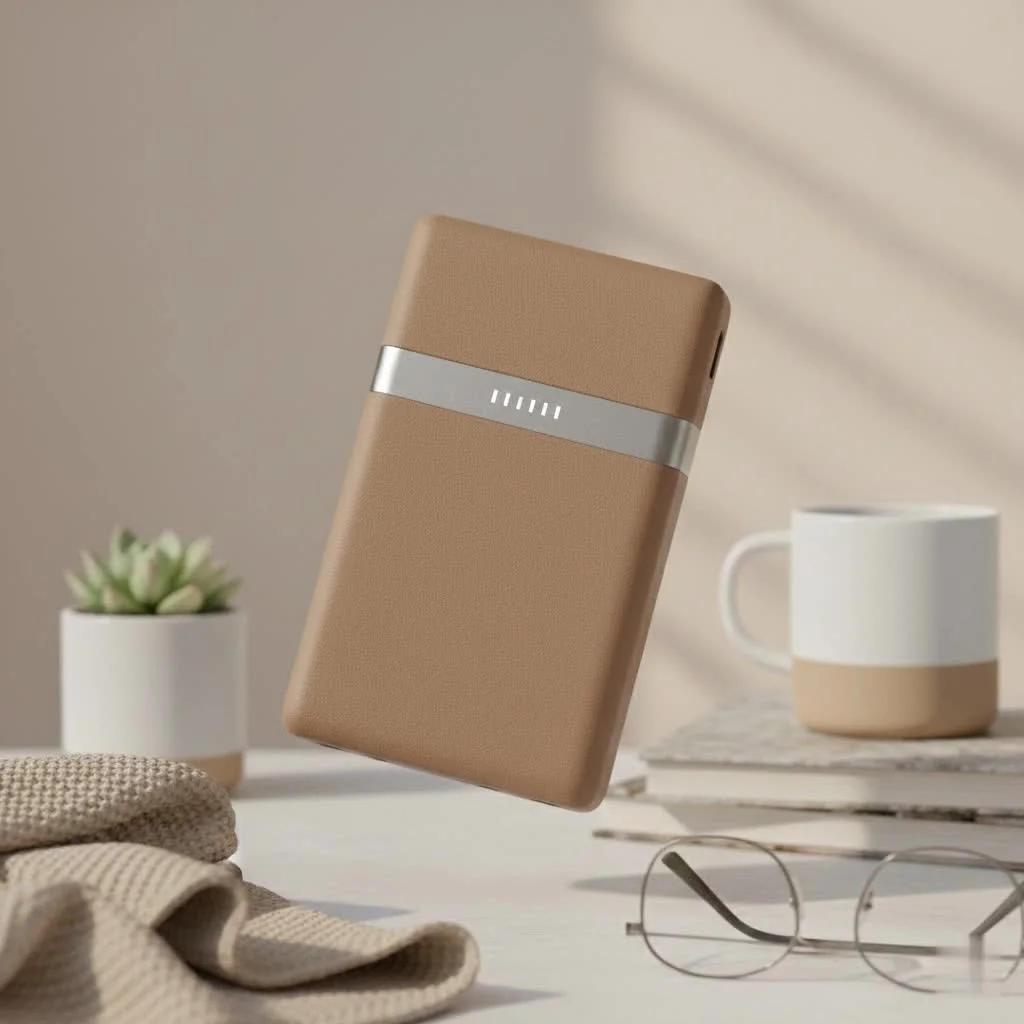
As the lead expert at pvhao.com with over a decade of experience testing and dissecting these devices, I’m here to demystify the world of portable power. This guide will walk you through everything you need to know, from understanding capacity and charging speeds to advanced features and crucial safety tips. By the end, you’ll be able to confidently select a power bank that perfectly fits your lifestyle.
Power Bank vs. Portable Charger: What’s the Difference?
First, let’s clear up some common confusion. Are “power bank” and “portable charger” two different things?
The short answer is no. The terms are used interchangeably to describe the same device: a portable battery pack used to recharge electronic gadgets when a wall outlet isn’t available. “Power bank” often emphasizes the device’s function as a reserve of energy, while “portable charger” highlights its on-the-go charging capability. For all practical purposes, they mean the same thing. So, whether you’re searching for a power bank portable charger or one term or the other, you’re looking for the same helpful tool.
How Does a Power Bank Work? A Simple Breakdown
At its core, a power bank is a simple concept. It consists of a special battery housed in a protective casing, all managed by a control circuit.
- Storing Energy: When you plug your power bank into a wall outlet, the internal battery cells—typically lithium-ion or lithium-polymer—store electrical energy.
- Releasing Energy: When you connect your phone or another device to the power bank, the control circuit detects it. It then reverses the process, safely releasing the stored energy through the USB port to charge your device.
Think of it like a water reservoir. You fill the reservoir (charge the power bank) from a main supply (the wall outlet). Later, you can open a tap (plug in your phone) to use that stored water (power) wherever you are.
Key Factors to Consider When Choosing a Power Bank
Not all portable chargers are created equal. The best one for you depends entirely on your needs. Let’s break down the most critical features to look for.
Capacity (mAh): How Much Power Do You Really Need?
|
Our Picks for the Best Power Bank in 2026
As an Amazon Associate I earn from qualifying purchases.
|
||
| Num | Product | Action |
|---|---|---|
| 1 | UGREEN Power Bank 25,000mAh 145W Laptop Portable Charger, Nexode 3-Port USB C PD Battery Pack, for MacBook Pro/Air, Dell XPS, iPhone 17/16/15/14, Galaxy S24, Steam Deck, iPad, and More |

|
| 2 | Anker Laptop Power Bank, 25,000mAh Portable Charger with Triple 100W USB-C Ports, Built-in Retractable Cables, Flight-Approved for Travel, iPhone 17/16 Series, MacBook, Samsung, and More |
|
| 3 | 90000mAh High Capacity Power Bank, 30W Fast Charging Portable Charger PD&QC 3.0, 5 Output 2 Input Large Powerbank with LED Display USB C Battery Pack Charger Portable for Outdoor Camping Travel |
|
| 4 | Anker Laptop Power Bank, 25,000mAh Portable Charger with Triple 100W USB-C Ports, Built-in Retractable Cables, Flight-Approved for Travel, iPhone 17/16 Series, MacBook, Samsung, and More |
|
| 5 | Emergency Radio&22000mAh Solar Power Bank, FM NOAA Weather Radio, Portable Hand Crank Bluetooth Radio, 20W Fast Charge Wireless Phone Charger, SOS Flashlight for Emergency/Home |
|
| 6 | INIU Power Bank, 25000mAh 100W USB C Laptop Portable Charger, PD QC Fast Charging 3-Output Battery Pack, Travel Charger for Laptop MacBook iPad Tablet Steam Deck iPhone 17 16 15 14 Pro Samsung S25 etc |
|
| 7 | INIU Portable Charger, Smallest 22.5W 10000mAh Power Bank, USB C in/Output Fast Charging 3-Output Mini Battery Pack Charger with Phone Holder for iPhone 17 16 15 14 Air Samsung S23 Google iPad Tablet |
|
| 8 | INIU Portable Charger, Slimmest Fast Charging 10000mAh USB C in/Out Power Bank, 22.5W PD3.0 QC4+ Battery Pack, Portable Phone Charger for iPhone 16 15 14 13 12 Pro Samsung S22 S21 Google AirPods iPad |
|
| 9 | Energizer Power Bank 20000mAh - USB-C 20W Outputs Fast Charging Battery Pack, USB-A 18W with 4 Outputs & LCD Screen for Android/iPhone 15 16 Plus Pro Max/iPad Tablet and etc_UE20063PQ |
|
| 10 | UGREEN Nexode Power Bank 20000mAh 165W with Built-in USB C Cable Laptop Travel Portable Charger, 100W Input, Fast Charging for MacBook Pro/Air/iPhone 17/16/iPad Pro/Galaxy S25 Ultra/Dell/HP and More |
|
Capacity is measured in milliampere-hours (mAh). This number tells you how much energy the power bank can store. A higher mAh means more charging power.
- Small (3,000 – 5,000 mAh): Perfect for an emergency top-up. These are usually pocket-sized and can provide about one full charge for most smartphones.
- Medium (10,000 – 15,000 mAh): The sweet spot for most users. A 10,000 mAh power bank portable charger is typically compact enough for a bag or purse and can charge a modern smartphone 2-3 times. This is ideal for daily use or short trips.
- Large (20,000 – 30,000 mAh): The workhorse for power users, long travels, or charging multiple devices like tablets and laptops. Keep in mind, these are heavier and bulkier.
- Extra Large (Above 30,000 mAh): These are less common and often have restrictions for air travel. They are best suited for camping trips or situations where you’ll be off-grid for days.
Expert Tip from Alex Renner: “Don’t just look at the mAh. Due to power conversion loss, you’ll only get about 60-70% of the advertised capacity delivered to your device. For a 10,000 mAh power bank, expect around 6,000-7,000 mAh of actual charging output.”
Charging Speed and Technology
How fast your device charges is determined by the power output (measured in watts) and the charging technology supported.
- Standard Charging (5W-12W): This is the basic speed. It gets the job done but can feel slow for modern devices.
- Fast Charging (18W+): This is where technologies like Power Delivery (PD) and Qualcomm Quick Charge (QC) come in.
- USB Power Delivery (PD): The universal standard for fast charging, primarily used over USB-C ports. It’s essential for quickly charging modern iPhones, Google Pixels, and even larger devices like the Nintendo Switch or laptops.
- Qualcomm Quick Charge (QC): A popular standard for many Android devices.
To benefit from fast charging, both your power bank and your device must support the same technology.
Ports: The More, The Merrier?
The type and number of ports determine what you can charge and how many devices you can charge at once.
- USB-A: The classic rectangular port. Still common, but being phased out for output.
- USB-C: The versatile, oval-shaped port. It’s the modern standard for both input (charging the power bank itself) and output (charging your devices). A power bank with a USB-C PD port is highly recommended.
- Micro-USB: An older port, now mostly used for input on budget power banks.
For maximum flexibility, look for a power bank with at least one USB-C port and one USB-A port.
Size, Weight, and Portability
A 20,000 mAh power bank is fantastic until you have to carry it in your pocket all day. There’s a direct trade-off between capacity and portability. Consider your daily routine. If you just need a safety net, a slim, lightweight model is best. If you’re a traveler or digital nomad, the extra weight of a high-capacity model is a worthwhile investment.
Advanced Features to Look For
Beyond the basics, some power banks offer convenient extra features.
- Pass-Through Charging: This allows you to charge the power bank while it’s simultaneously charging another device. It’s incredibly useful when you only have one wall outlet available.
- Wireless Charging (Qi): Some models have a built-in Qi wireless charging pad. Just place your compatible phone on the power bank to start charging—no cables needed.
- LED Display: A digital display that shows the exact percentage of battery remaining is far more useful than the standard four indicator lights.
How to Care for Your Power Bank to Maximize Its Lifespan
A good power bank portable charger is an investment. To make it last, follow these simple tips:
- Avoid Extreme Temperatures: Don’t leave your power bank in a hot car or in freezing cold, as this can permanently damage the battery cells.
- Charge It Periodically: Don’t leave it completely dead for months. If you’re storing it, aim to keep it at around a 50% charge and top it up every 3-4 months.
- Use Quality Cables: A cheap, frayed cable can not only charge slowly but also pose a safety risk.
- Don’t Drop It: While many have durable casings, a hard impact can damage the internal components.
Frequently Asked Questions (FAQ)
What is the best capacity for a power bank portable charger?
For the average user, 10,000 mAh is the ideal balance of portability and power, providing 2-3 full smartphone charges. Power users or travelers should consider 20,000 mAh.
Can I bring a power bank on an airplane?
Yes, but with restrictions. The FAA limits batteries to 100 watt-hours (Wh) without airline approval. Most power banks under 27,000 mAh fall under this limit. You MUST carry them in your carry-on luggage, not in your checked bags.
How long does it take to charge a power bank?
This depends on its capacity and the charging input speed. A 10,000 mAh power bank can take anywhere from 3-4 hours to recharge with a fast-charging wall adapter (18W+) to over 6-8 hours with a standard one.
Why is my power bank charging my phone so slowly?
This could be due to several reasons: the power bank doesn’t support fast charging, you’re using a low-quality cable, or your phone’s battery is already near full (charging naturally slows down to protect the battery).
How many years will a power bank last?
The lifespan is measured in charge cycles (a full drain and recharge). Most quality power banks are rated for 300-500 charge cycles. With regular use, this typically translates to 2-4 years before the battery capacity starts to degrade noticeably.
Your Partner in Power
Choosing the right power bank portable charger doesn’t have to be complicated. By focusing on your personal needs for capacity, speed, and portability, you can find a reliable companion that keeps you powered up and connected. A dead battery is a problem of the past. Now you have the knowledge to pick the perfect solution and stay charged, no matter where life takes you.
Get our weekly buyer guide
Practical specs, not advice. Unsubscribe anytime.