A power bank is a portable battery that stores electrical energy to recharge electronic devices like smartphones, tablets, and laptops on the go. These essential gadgets typically range in capacity from 3,000 mAh for emergency top-ups to over 20,000 mAh for extended use, offering convenience and peace of mind for travelers and daily users alike. Selecting the right power bank involves understanding its capacity, charging speed, port types, and crucial safety features.
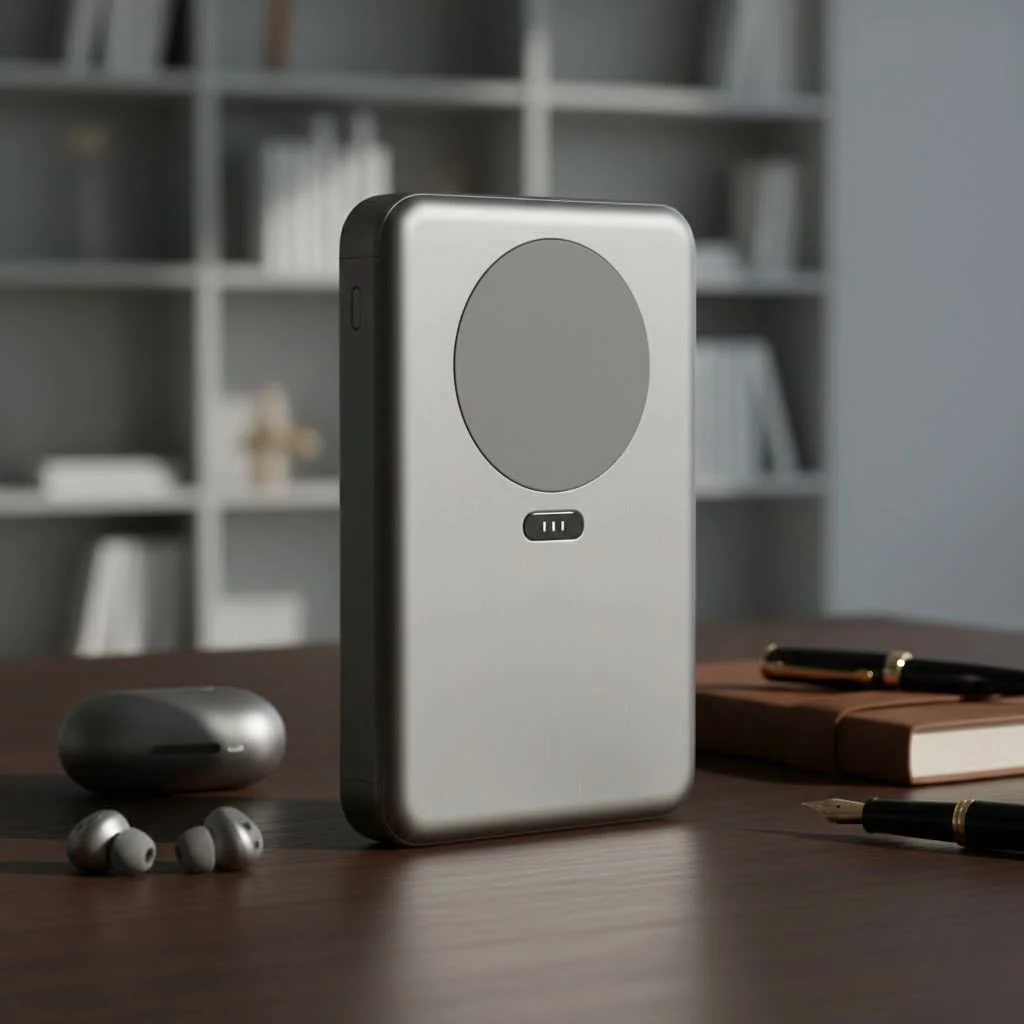
What Exactly Is a Power Bank?
A power bank is essentially a portable battery in a sealed case that you can use to charge your electronic devices on the go. Think of it as a personal, pocket-sized power outlet. Inside, it has a set of rechargeable batteries and a circuit board to control the flow of electricity. You charge the power bank itself using a standard USB wall adapter, and once it’s full, it holds that energy until you need to transfer it to your smartphone, tablet, headphones, or any other USB-powered gadget. For explore our portable power reviews on this site.
How to Choose the Right Power Bank for You
Selecting the perfect power bank isn’t about buying the biggest one you can find. It’s about matching its capabilities to your lifestyle and the devices you use. Here’s a breakdown of the most important factors to consider.
Understanding Capacity: mAh Explained
The most prominent specification you’ll see is capacity, measured in milliampere-hours (mAh). In simple terms, mAh is the measure of how much energy the power bank can store. The higher the mAh, the more charging power it has.
- Small (3,000 – 5,000 mAh): Perfect for an emergency top-up. These are typically very compact, sometimes lipstick-sized, and can give a standard smartphone about one full charge.
- Medium (10,000 – 15,000 mAh): The sweet spot for most users. A 10,000 mAh power bank is portable enough for a daily bag and can charge a modern smartphone 2-3 times.
- Large (20,000 mAh and above): Ideal for long trips, multiple devices, or charging more demanding gadgets like laptops. Keep in mind that most airlines have a limit of around 27,000 mAh (100Wh) for carry-on luggage.
As portable power technology analyst Alex Greyson notes, “Don’t just look at the mAh rating. Real-world output is always slightly less due to energy conversion loss, typically around 20-30%. A 10,000 mAh power bank will realistically deliver about 7,000 mAh of charge to your devices.”
The Need for Speed: Charging Ports and Technology
|
Our Picks for the Best Power Bank in 2026
As an Amazon Associate I earn from qualifying purchases.
|
||
| Num | Product | Action |
|---|---|---|
| 1 | Anker Laptop Power Bank, 25,000mAh Portable Charger with Triple 100W USB-C Ports, Built-in Retractable Cables, Flight-Approved for Travel, iPhone 17/16 Series, MacBook, Samsung, and More |

|
| 2 | INIU Power Bank, 25000mAh 100W USB C Laptop Portable Charger, PD QC Fast Charging 3-Output Battery Pack, Travel Charger for Laptop MacBook iPad Tablet Steam Deck iPhone 17 16 15 14 Pro Samsung S25 etc |
|
| 3 | UGREEN Power Bank 25,000mAh 145W Laptop Portable Charger, Nexode 3-Port USB C PD Battery Pack, for MacBook Pro/Air, Dell XPS, iPhone 17/16/15/14, Galaxy S24, Steam Deck, iPad, and More |
|
| 4 | Anker Laptop Power Bank, 25,000mAh Portable Charger with Triple 100W USB-C Ports, Built-in Retractable Cables, Flight-Approved for Travel, iPhone 17/16 Series, MacBook, Samsung, and More |
|
| 5 | INIU Portable Charger, Slimmest Fast Charging 10000mAh USB C in/Out Power Bank, 22.5W PD3.0 QC4+ Battery Pack, Portable Phone Charger for iPhone 16 15 14 13 12 Pro Samsung S22 S21 Google AirPods iPad |
|
| 6 | INIU Portable Charger, Smallest 22.5W 10000mAh Power Bank, USB C in/Output Fast Charging 3-Output Mini Battery Pack Charger with Phone Holder for iPhone 17 16 15 14 Air Samsung S23 Google iPad Tablet |
|
| 7 | 90000mAh High Capacity Power Bank, 30W Fast Charging Portable Charger PD&QC 3.0, 5 Output 2 Input Large Powerbank with LED Display USB C Battery Pack Charger Portable for Outdoor Camping Travel |
|
| 8 | UGREEN Nexode Power Bank 20000mAh 165W with Built-in USB C Cable Laptop Travel Portable Charger, 100W Input, Fast Charging for MacBook Pro/Air/iPhone 17/16/iPad Pro/Galaxy S25 Ultra/Dell/HP and More |
|
| 9 | Emergency Radio&22000mAh Solar Power Bank, FM NOAA Weather Radio, Portable Hand Crank Bluetooth Radio, 20W Fast Charge Wireless Phone Charger, SOS Flashlight for Emergency/Home |
|
| 10 | Energizer Power Bank 20000mAh - USB-C 20W Outputs Fast Charging Battery Pack, USB-A 18W with 4 Outputs & LCD Screen for Android/iPhone 15 16 Plus Pro Max/iPad Tablet and etc_UE20063PQ |
|
A large-capacity power bank is useless if it takes all day to charge your phone. That’s why understanding charging speed and port types is crucial.
-
Output Ports (Charging Your Devices):
- USB-A: The traditional rectangular port. Standard USB-A ports offer slow charging (around 5W-12W). Look for support for fast-charging standards like Qualcomm Quick Charge (QC) if your device is compatible.
- USB-C: The modern, oval-shaped, reversible port. This is the most versatile type. A USB-C port with Power Delivery (PD) is the gold standard for fast charging modern iPhones, Android devices, and even some laptops. A USB-C PD port can deliver anywhere from 18W to over 100W.
-
Input Ports (Charging the Power Bank Itself):
- The power bank needs to be recharged too. A model with a fast-charging input port (like USB-C PD) will save you hours of waiting. Recharging a large 20,000 mAh power bank with a slow micro-USB port could take over 10 hours, while a USB-C PD input could do it in 3-4 hours.
What is GaN Technology?
You might see the term “GaN” on newer, more premium power banks. GaN stands for Gallium Nitride, a material that is more efficient at conducting electricity than traditional silicon. For a power bank, this means it can be made smaller, lighter, and run cooler while handling high power outputs, making it excellent for fast-charging multiple devices.
Safety Features: Don’t Compromise on Protection
A power bank deals with a significant amount of energy, so safety is paramount. Reputable brands build in a multi-protection safety system to prevent common issues. Look for these essential protections:
- Overcharge Protection: Stops charging the power bank once its battery is full.
- Over-discharge Protection: Prevents the power bank’s battery from draining to a dangerously low level.
- Short Circuit Protection: Cuts the power if it detects a short circuit.
- Overcurrent Protection: Protects your device from receiving too much current.
- Temperature Control: Monitors the battery temperature to prevent overheating.
Always choose a power bank from a well-known brand and avoid suspiciously cheap, unbranded models, as they often cut corners on safety components.
Special Features to Consider
Beyond the basics, some power banks offer features that can add a lot of conveniences.
- Wireless Charging (Qi): If your phone supports it, you can simply place it on the power bank to start charging—no cables needed.
- Pass-through Charging: This allows you to charge your device while the power bank itself is being charged. It’s incredibly useful in a hotel room with limited outlets.
- Built-in Cables: Some models come with integrated Lightning or USB-C cables, so you never have to worry about forgetting yours.
- LED Display: A digital display that shows the exact remaining percentage is much more precise than the standard four-dot indicator lights.
Conclusion: Powering Your Life with Confidence
Choosing the right power bank is about more than just buying extra battery life; it’s about investing in convenience, reliability, and peace of mind. By understanding capacity (mAh), prioritizing fast-charging technologies like USB-C Power Delivery, and never compromising on safety features, you can confidently select a portable charger that perfectly suits your digital lifestyle. The next time you see that low battery warning, you won’t feel a moment of panic—you’ll just reach for your trusted power bank.
Frequently Asked Questions
What is the best mAh capacity for a portable power bank?
For most users, a 10,000 mAh power bank offers the ideal balance of portability and charging capacity, capable of charging a smartphone 2-3 times. Frequent travelers or those with multiple devices may prefer a 20,000 mAh model for extended power.
Can I bring a power bank with me on an airplane?
Yes, power banks are permitted on airplanes but must be carried in your carry-on luggage, not checked baggage. The typical airline limit is 100 Watt-hours (Wh), which translates to approximately 27,000 mAh, covering most standard power banks.
How long can I expect a quality power bank to last?
The lifespan of a quality power bank is measured in charge cycles, with most rated for 300-500 full charge/discharge cycles. With regular use, this typically means a lifespan of about 2-4 years before the battery's capacity begins to noticeably degrade.
Will using a power bank damage my smartphone's battery?
A quality power bank equipped with proper safety features will not damage your phone's battery, as smartphones have built-in circuitry to manage charging. Damage typically only occurs when using low-quality, uncertified power banks that lack essential safety protections or deliver unstable voltage.
Why does my portable charger charge my phone slowly?
Slow charging can result from several factors: a low-wattage output port on the power bank, a charging cable not rated for fast charging, or your phone's battery nearing full capacity, which naturally slows charging speed. Ensure both your power bank port and cable support a fast-charging standard compatible with your device.
How to Choose the Right Power Bank
Selecting the ideal power bank involves matching its features to your devices and lifestyle. Consider capacity, charging speed, and safety.
Determine the required milliampere-hours (mAh) based on your devices. Small power banks (3,000-5,000 mAh) offer one phone charge, medium (10,000-15,000 mAh) provide 2-3 charges, and large (20,000+ mAh) are for multiple devices or laptops.
Look for USB-C ports with Power Delivery (PD) for fast charging modern devices and laptops, delivering 18W to over 100W. Ensure the power bank also has a fast-charging input port (like USB-C PD) to reduce its own recharge time from over 10 hours to 3-4 hours for a 20,000 mAh unit.
Always choose reputable brands that include multi-protection safety systems. Key features to look for are overcharge, over-discharge, short circuit, overcurrent, and temperature control to prevent damage to both the power bank and your devices.
Evaluate extra features like wireless charging (Qi), pass-through charging (charging devices while the power bank recharges), built-in cables, or an LED display for precise battery percentage. These can significantly enhance user experience and convenience.
Get our weekly buyer guide
Practical specs, not advice. Unsubscribe anytime.

I picked up a 20,000 mAh power bank after reading about the different capacities, and it’s been a lifesaver. I can charge my phone multiple times and even give my tablet a boost without worrying about finding an outlet. It’s perfect for long flights and weekend trips, definitely gives me peace of mind.
Understanding the safety features was really important to me, and the explanation here was clear. I feel much more confident using my new power bank knowing what to look for. It’s great for daily use, especially when I’m out and about and need a quick top-up for my smartphone.
I always thought power banks were just for phones, but learning about how they can charge laptops was a game-changer. I got one with a higher output and it’s been fantastic for working remotely from cafes or during commutes. It’s a bit bulkier than my old one, but totally worth it for the versatility.
The guide was helpful for understanding port types, but I wish it had more specific brand recommendations. I ended up with one that’s a bit slower than I’d like for my laptop, even though it has a good capacity. It gets the job done for my phone, but the charging speed for larger devices is just okay.