In a world where our devices are our lifelines, running out of battery is more than an inconvenience; it can be a critical problem. While a standard power bank can save your smartphone from dying, what about powering a laptop for days, running small appliances while camping, or having a reliable backup during a power outage? This is where the quest for the largest power bank begins. But how big can they get, and what does “largest” truly mean?
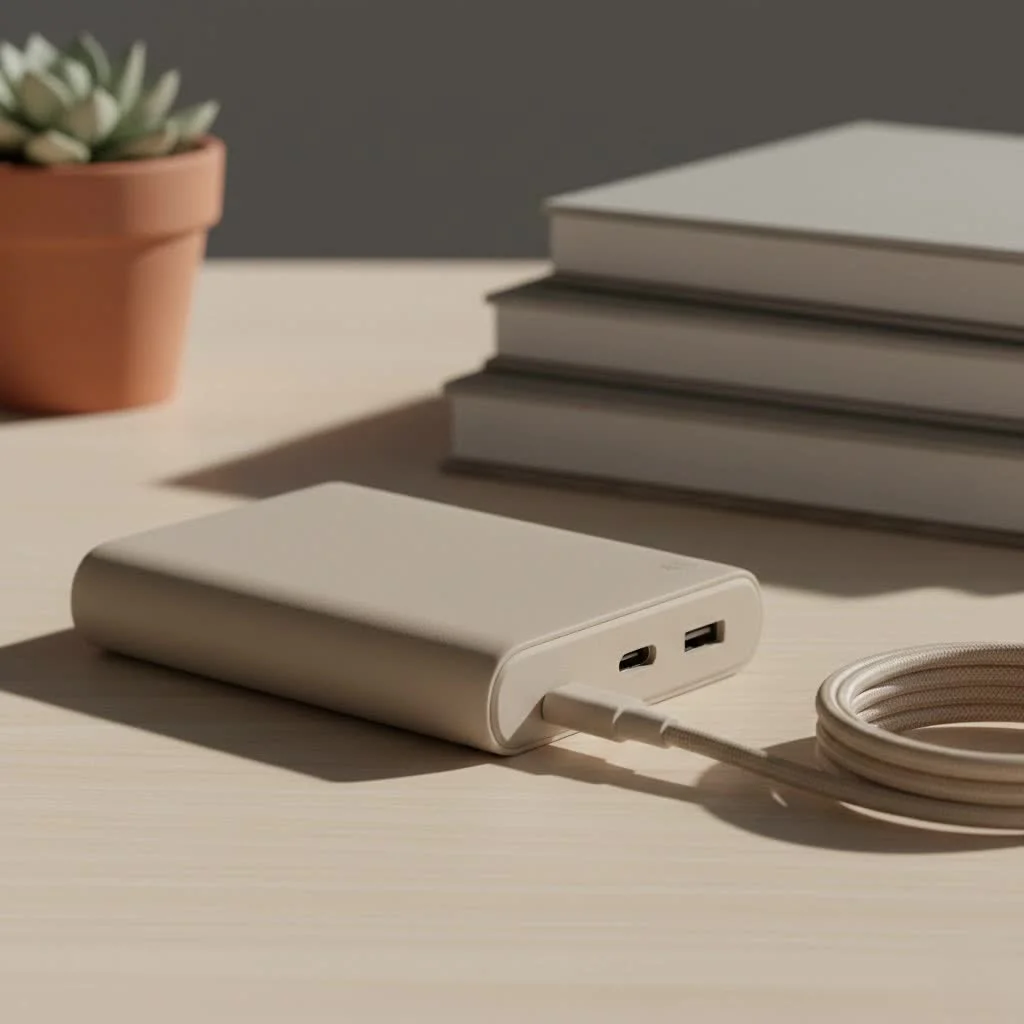
This guide, brought to you by the experts at Pvhao, will demystify the world of high-capacity portable power. We’ll explore the technical specifications, the real-world limitations (especially for air travel), and help you identify the perfect powerhouse for your needs.
Understanding Capacity: It’s Not Just About mAh
When shopping for a power bank, the most prominent number you’ll see is its capacity in milliamp-hours (mAh). While a 20,000mAh unit is substantial, the term largest power bank pushes into territory where mAh can be a misleading metric. The true measure of energy storage is the watt-hour (Wh).
- Milliamp-hours (mAh): Measures charge capacity relative to a specific voltage (usually the internal battery’s 3.7V). This makes comparing devices with different battery technologies difficult.
- Watt-hours (Wh): Measures total energy. It’s a universal standard calculated as
(mAh * Voltage) / 1000. This is the number that truly matters, especially to airlines.
For instance, a 27,000mAh power bank is typically around 99.9Wh, a number specifically designed to fall just under the limit for air travel.
What is the Largest Power Bank You Can Take on a Plane?
This is the most critical question for travelers. Aviation authorities like the FAA and TSA have strict rules to prevent fire risks from lithium-ion batteries.
- Under 100Wh: You can carry on multiple power banks without needing airline approval. This is the sweet spot for most high-capacity, yet travel-friendly, power banks.
- 101Wh to 160Wh: You are allowed to carry on a maximum of two of these larger batteries, but you must get approval from the airline first.
- Over 160Wh: Strictly forbidden on all commercial aircraft.
Crucially, all power banks, regardless of size, must be in your carry-on luggage. They are never allowed in checked baggage.
The Titans of Power: Beyond 160Wh
When you move beyond the constraints of air travel, the definition of the largest power bank expands dramatically into the realm of “portable power stations.” These are not your pocket-sized chargers; they are robust units designed for serious power needs.
Capacities for these units can range from 200Wh to over 2,000Wh (or 2kWh). To put that in perspective, a 2,000Wh power station could theoretically recharge a modern smartphone over 130 times or power a mini-fridge for more than 24 hours.
Who Needs a Portable Power Station?
|
Our Picks for the Best Power Bank in 2026
As an Amazon Associate I earn from qualifying purchases.
|
||
| Num | Product | Action |
|---|---|---|
| 1 | INIU Portable Charger, Smallest 22.5W 10000mAh Power Bank, USB C in/Output Fast Charging 3-Output Mini Battery Pack Charger with Phone Holder for iPhone 17 16 15 14 Air Samsung S23 Google iPad Tablet |

|
| 2 | Anker Laptop Power Bank, 25,000mAh Portable Charger with Triple 100W USB-C Ports, Built-in Retractable Cables, Flight-Approved for Travel, iPhone 17/16 Series, MacBook, Samsung, and More |
|
| 3 | Energizer Power Bank 20000mAh - USB-C 20W Outputs Fast Charging Battery Pack, USB-A 18W with 4 Outputs & LCD Screen for Android/iPhone 15 16 Plus Pro Max/iPad Tablet and etc_UE20063PQ |
|
| 4 | Anker Laptop Power Bank, 25,000mAh Portable Charger with Triple 100W USB-C Ports, Built-in Retractable Cables, Flight-Approved for Travel, iPhone 17/16 Series, MacBook, Samsung, and More |
|
| 5 | 90000mAh High Capacity Power Bank, 30W Fast Charging Portable Charger PD&QC 3.0, 5 Output 2 Input Large Powerbank with LED Display USB C Battery Pack Charger Portable for Outdoor Camping Travel |
|
| 6 | UGREEN Nexode Power Bank 20000mAh 165W with Built-in USB C Cable Laptop Travel Portable Charger, 100W Input, Fast Charging for MacBook Pro/Air/iPhone 17/16/iPad Pro/Galaxy S25 Ultra/Dell/HP and More |
|
| 7 | UGREEN Power Bank 25,000mAh 145W Laptop Portable Charger, Nexode 3-Port USB C PD Battery Pack, for MacBook Pro/Air, Dell XPS, iPhone 17/16/15/14, Galaxy S24, Steam Deck, iPad, and More |
|
| 8 | INIU Portable Charger, Slimmest Fast Charging 10000mAh USB C in/Out Power Bank, 22.5W PD3.0 QC4+ Battery Pack, Portable Phone Charger for iPhone 16 15 14 13 12 Pro Samsung S22 S21 Google AirPods iPad |
|
| 9 | Emergency Radio&22000mAh Solar Power Bank, FM NOAA Weather Radio, Portable Hand Crank Bluetooth Radio, 20W Fast Charge Wireless Phone Charger, SOS Flashlight for Emergency/Home |
|
| 10 | INIU Power Bank, 25000mAh 100W USB C Laptop Portable Charger, PD QC Fast Charging 3-Output Battery Pack, Travel Charger for Laptop MacBook iPad Tablet Steam Deck iPhone 17 16 15 14 Pro Samsung S25 etc |
|
These massive power banks are tailored for specific, demanding use cases:
- Off-Grid Camping: Powering lights, portable fridges, speakers, and charging all your gadgets for a weekend in the wilderness.
- Emergency Home Backup: During a power outage, they can keep your Wi-Fi router, lights, and medical devices (like a CPAP machine) running.
- Remote Work & Digital Nomads: Creating a fully powered office anywhere, from a park to a remote cabin.
- Outdoor Events & Construction Sites: Providing power for tools, cameras, and sound equipment where there are no outlets.
“We’re seeing a huge shift from simple phone chargers to complete energy solutions,” notes Alex Renner, a leading product developer in portable power technology. “People want freedom—freedom from the outlet. The largest power banks, or power stations, provide that by essentially letting you take a wall socket anywhere you go.”
Key Features to Consider in the Largest Power Banks
When you’re investing in a high-capacity unit, you need to look beyond just the watt-hours.
1. Output Ports
The best units offer a variety of ports to charge multiple devices simultaneously.
- USB-C Power Delivery (PD): Essential for fast-charging modern laptops, tablets, and smartphones. Look for outputs of 60W or, ideally, 100W.
- AC Outlets: This is what separates power stations from power banks. An AC port allows you to plug in standard appliances, just like at home.
- USB-A: Still useful for charging older devices and accessories.
- DC Car Port: A 12V socket for powering devices designed for vehicles.
2. Output Power (Wattage)
A unit’s watt-hour (Wh) rating is its capacity, while its wattage (W) rating is its power output. A high-capacity 500Wh station with only a 300W output can’t power a 500W appliance. Ensure the wattage rating exceeds the needs of the devices you plan to use.
3. Recharging Methods
A massive battery is useless if it takes days to recharge.
- Wall Charging: Check the input wattage. A high-wattage input (100W or more) can significantly reduce charging time.
- Solar Charging: Many of the largest power banks are designed to be part of a solar generator system. They have a built-in MPPT controller for efficient charging from solar panels.
- Car Charging: The ability to recharge from your vehicle’s 12V socket is invaluable on a road trip.
4. Battery Chemistry and Safety
The industry standard is Lithium-ion (Li-ion). However, a newer technology, Lithium Iron Phosphate (LiFePO4), is becoming the premium choice for the largest power banks. LiFePO4 batteries offer a much longer lifespan (thousands of charge cycles vs. hundreds) and are considered safer and more stable.
Frequently Asked Questions (FAQ)
What’s the difference between a power bank and a portable power station?
The primary difference is the presence of an AC outlet. Power banks are typically smaller, designed for USB-powered devices. Power stations are larger, have much higher capacities, and include one or more AC ports to power traditional appliances.
Can I build my own large power bank?
While technically possible for those with advanced electronics knowledge, it is extremely dangerous. Handling lithium-ion cells improperly can lead to fires or explosions. It is always safer to purchase a unit from a reputable manufacturer with built-in safety management systems.
Is a bigger power bank always the better choice?
Not necessarily. The “best” power bank is the one that fits your needs. A massive 1,000Wh power station is overkill and impractical if you just need to charge your phone and tablet on a flight. Consider your primary use case, budget, and any travel restrictions before buying.
How many times can a 500Wh power station charge my laptop?
This depends on your laptop’s battery size. For example, a MacBook Air has roughly a 50Wh battery. Factoring in energy transfer inefficiencies (around 85%), a 500Wh power station could charge it approximately 8 to 9 times (500 * 0.85 / 50).
How long will the largest power bank last?
The lifespan is measured in charge cycles. A typical Li-ion unit may last for 500-800 full charge/discharge cycles before its capacity degrades significantly. A unit with a LiFePO4 battery can last for 2,500-3,500+ cycles, making it a much longer-term investment.
Conclusion: Power Without Limits
The search for the largest power bank leads to an exciting category of devices that offer true energy independence. While air travel regulations rightly cap what you can carry on a plane to around 100-160Wh, the options for ground-based use are immense. Portable power stations have transformed camping, remote work, and emergency preparedness by providing safe, silent, and fume-free power anywhere.
When making your choice, remember to look beyond the flashy mAh number. Focus on the universal standard of watt-hours, ensure the output ports and wattage match your devices, and consider the long-term value of newer battery technologies like LiFePO4. By doing so, you can confidently invest in a powerhouse that will keep you connected and productive, no matter how far you are from the nearest outlet.
Get our weekly buyer guide
Practical specs, not advice. Unsubscribe anytime.