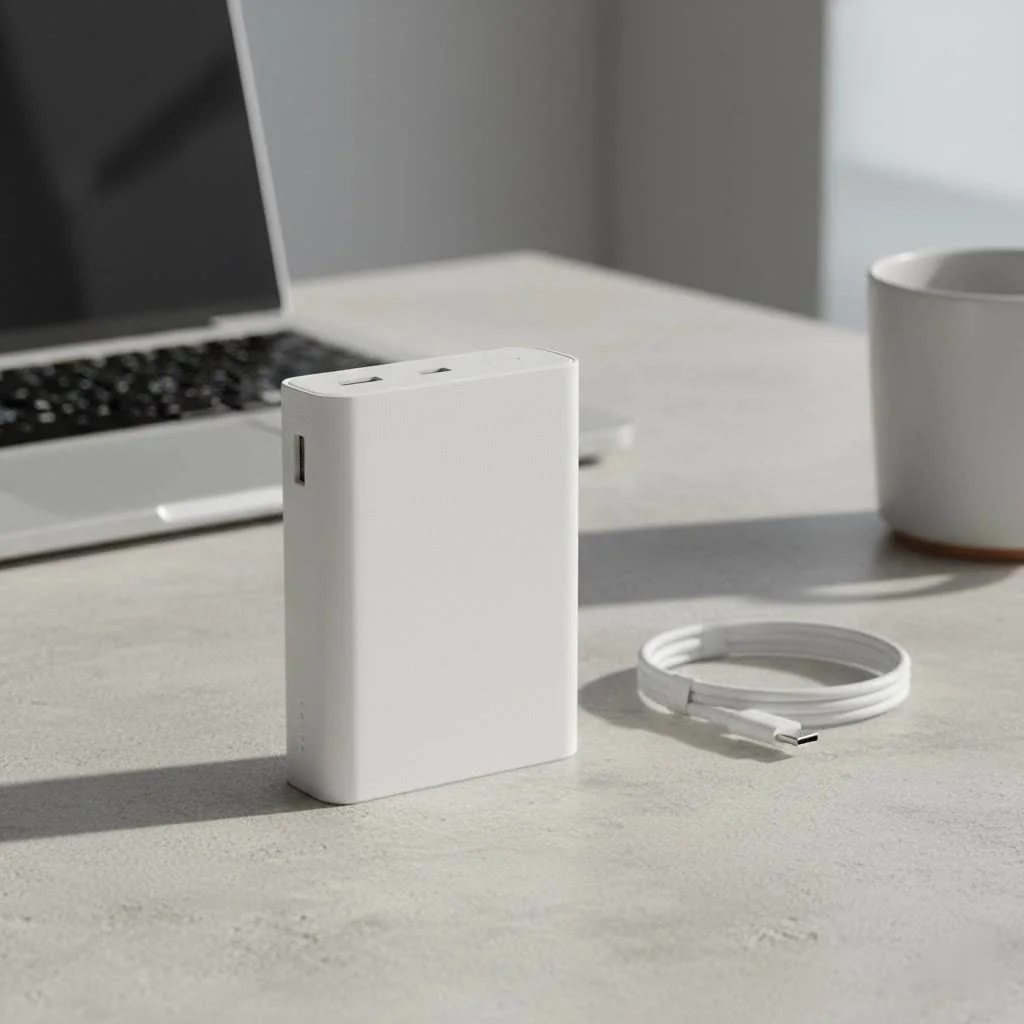
Choosing the right portable power bank for iPhone is essential for staying connected, especially when your battery runs low at critical moments. For most users, a 10,000mAh power bank with at least one 20W USB-C Power Delivery (PD) port offers the ideal combination of power and portability, providing approximately 1.8 to 2.5 full charges for a modern iPhone. This choice balances sufficient capacity for daily use with a compact size, ensuring efficient and safe charging for your device.
Why Not All Power Banks Are Created Equal
Before you grab the first power bank you see, it’s crucial to understand that your iPhone is a sophisticated device. It requires a charger that can deliver power safely and efficiently. Generic, low-quality chargers can potentially damage your iPhone’s battery over time or offer frustratingly slow charging speeds.
The Importance of Power Delivery (PD)
Modern iPhones, starting from the iPhone 8, support fast charging through a technology called USB-C Power Delivery (PD). To take advantage of this, you need a power bank that has a USB-C PD port. This can charge your iPhone battery up to 50% in about 30 minutes, a major upgrade when you’re short on time. Using a standard, older USB-A port will be significantly slower.
As our lead technician at Pvhao, Alex Carter, often says, “Using a power bank without Power Delivery for a modern iPhone is like trying to fill a swimming pool with a garden hose. It will get the job done eventually, but it’s not efficient. USB-C PD is the fire hydrant your iPhone deserves.”
Understanding Capacity: How Much mAh Do You Need?
The capacity of a power bank is measured in milliampere-hours (mAh). This number tells you how much energy the battery can store. Choosing the right mAh depends entirely on your daily habits and needs.
The Daily Commuter: 5,000mAh
A 5,000mAh power bank is slim, lightweight, and perfect for carrying in a pocket or small purse. It typically provides about one full charge for most iPhone models. This is the ideal choice if you just need a safety net to get you through a long day of meetings or an evening out after work.
The All-Day User: 10,000mAh
This is the sweet spot for most people. A 10,000mAh power bank offers the best balance of capacity and portability. It can charge a standard iPhone about two times, giving you peace of mind for an entire day of heavy use, from morning navigation to late-night social media scrolling. It’s substantial enough for a weekend trip if you’re a light user.
The Traveler or Power User: 20,000mAh and Above
|
Our Picks for the Best Power Bank in 2026
As an Amazon Associate I earn from qualifying purchases.
|
||
| Num | Product | Action |
|---|---|---|
| 1 | UGREEN Power Bank 25,000mAh 145W Laptop Portable Charger, Nexode 3-Port USB C PD Battery Pack, for MacBook Pro/Air, Dell XPS, iPhone 17/16/15/14, Galaxy S24, Steam Deck, iPad, and More |

|
| 2 | UGREEN Nexode Power Bank 20000mAh 165W with Built-in USB C Cable Laptop Travel Portable Charger, 100W Input, Fast Charging for MacBook Pro/Air/iPhone 17/16/iPad Pro/Galaxy S25 Ultra/Dell/HP and More |
|
| 3 | Anker Laptop Power Bank, 25,000mAh Portable Charger with Triple 100W USB-C Ports, Built-in Retractable Cables, Flight-Approved for Travel, iPhone 17/16 Series, MacBook, Samsung, and More |
|
| 4 | Energizer Power Bank 20000mAh - USB-C 20W Outputs Fast Charging Battery Pack, USB-A 18W with 4 Outputs & LCD Screen for Android/iPhone 15 16 Plus Pro Max/iPad Tablet and etc_UE20063PQ |
|
| 5 | Anker Laptop Power Bank, 25,000mAh Portable Charger with Triple 100W USB-C Ports, Built-in Retractable Cables, Flight-Approved for Travel, iPhone 17/16 Series, MacBook, Samsung, and More |
|
| 6 | INIU Portable Charger, Slimmest Fast Charging 10000mAh USB C in/Out Power Bank, 22.5W PD3.0 QC4+ Battery Pack, Portable Phone Charger for iPhone 16 15 14 13 12 Pro Samsung S22 S21 Google AirPods iPad |
|
| 7 | 90000mAh High Capacity Power Bank, 30W Fast Charging Portable Charger PD&QC 3.0, 5 Output 2 Input Large Powerbank with LED Display USB C Battery Pack Charger Portable for Outdoor Camping Travel |
|
| 8 | INIU Portable Charger, Smallest 22.5W 10000mAh Power Bank, USB C in/Output Fast Charging 3-Output Mini Battery Pack Charger with Phone Holder for iPhone 17 16 15 14 Air Samsung S23 Google iPad Tablet |
|
| 9 | Emergency Radio&22000mAh Solar Power Bank, FM NOAA Weather Radio, Portable Hand Crank Bluetooth Radio, 20W Fast Charge Wireless Phone Charger, SOS Flashlight for Emergency/Home |
|
| 10 | INIU Power Bank, 25000mAh 100W USB C Laptop Portable Charger, PD QC Fast Charging 3-Output Battery Pack, Travel Charger for Laptop MacBook iPad Tablet Steam Deck iPhone 17 16 15 14 Pro Samsung S25 etc |
|
If you’re frequently traveling, a digital nomad, or someone who needs to charge multiple devices (like an iPhone, AirPods, and an iPad), a 20,000mAh power bank is your best bet. It holds enough power to charge your iPhone multiple times over several days. that with great power comes greater size and weight. Also, be aware of airline regulations, as most airlines have a limit of around 27,000mAh (100 watt-hours) for carry-on luggage.
| Power Bank Capacity | iPhone 15 Pro (approx. charges) | Best For |
|---|---|---|
| 5,000 mAh | 0.8 – 1.2 charges | Emergency top-ups, daily carry |
| 10,000 mAh | 1.8 – 2.5 charges | All-day use, weekend trips |
| 20,000 mAh | 4 – 5 charges | Extended travel, multiple devices |
Note: These are estimates. Actual performance varies based on battery health, temperature, and efficiency loss during charging.
MagSafe vs. Cable: Which Charging Style Is for You?
With the introduction of MagSafe on the iPhone 12 and newer models, you now have a choice between the convenience of wireless charging and the speed of a traditional cable.
The Convenience of MagSafe
MagSafe power banks snap magnetically to the back of your iPhone. This offers incredible convenience—no cables to untangle or forget. They are perfect for charging on the go while you’re still using your phone. The trade-off is slightly slower charging speeds compared to a cable and some energy loss due to the nature of wireless charging.
The Speed and Versatility of USB-C
A classic portable power bank for iPhone with a USB-C cable will almost always charge your device faster. If maximum speed is your priority, a wired connection with Power Delivery is the undisputed winner. A power bank with USB ports is more versatile, allowing you to charge non-Apple devices as well.
Key Features to Look For
Beyond capacity and charging style, a few other features separate a great power bank from a mediocre one.
- Portability (Size & Weight): The best power bank is the one you actually have with you. Consider how you’ll carry it. A slim, pocket-sized model is more practical for daily use than a heavy brick.
- Number and Type of Ports: A good power bank should have at least one USB-C PD port for fast charging your iPhone. An additional USB-A port can be handy for charging older accessories or a friend’s device simultaneously.
- Pass-Through Charging: This feature allows you to charge the power bank itself while it is also charging your iPhone. It’s incredibly useful when you only have one wall outlet available, for example, in a hotel room or coffee shop.
- Safety Features: Reputable brands build in safety mechanisms to protect against overcharging, overheating, and short-circuiting. This is crucial for protecting your expensive iPhone.
Frequently Asked Questions (FAQ)
What is the best portable power bank for an iPhone?
The “best” one depends on your needs. For most users, a 10,000mAh power bank with at least one 20W USB-C Power Delivery port offers the ideal combination of power and portability. If you have an iPhone 12 or newer, a 5,000mAh MagSafe power bank is excellent for cable-free convenience.
How many times can a 10,000mAh power bank charge an iPhone?
A 10,000mAh power bank can typically charge a newer iPhone model, like the iPhone 15, about 1.8 to 2.5 times. The exact number of charges depends on your iPhone’s specific battery capacity and the efficiency of the power bank.
Can I take a power bank on an airplane?
Yes, but they must be in your carry-on luggage, not your checked bags. Most airlines restrict power banks to 100 watt-hours (Wh), which is roughly 27,000mAh. A 10,000mAh or 20,000mAh model is perfectly safe for air travel.
Is it safe to charge my iPhone with a power bank overnight?
Yes, it is generally safe. Both modern iPhones and quality power banks have built-in safety features that stop the charging process once the battery is full. This prevents overcharging and potential damage to your battery.
Do I need to buy a special cable?
To get the fastest charging speeds, you will need a USB-C to Lightning cable (for iPhone 14 and older) or a USB-C to USB-C cable (for iPhone 15 and newer). Your power bank must also have a USB-C Power Delivery (PD) port.
Your iPhone’s Perfect Partner
Choosing the right portable power bank for your iPhone is about assessing your daily life. Think about your routine: Are you constantly on the move and just need a quick boost, or are you a traveler who needs to stay powered for days? By focusing on the right capacity (mAh), deciding between MagSafe and a cable, and ensuring it has key features like Power Delivery, you can find a reliable partner for your iPhone. A well-chosen power bank ensures that you stay connected, productive, and ready for whatever the day throws at you.
Frequently Asked Questions
What is the best portable power bank for an iPhone?
For most users, a 10,000mAh power bank with at least one 20W USB-C Power Delivery port offers the ideal combination of power and portability. If you have an iPhone 12 or newer, a 5,000mAh MagSafe power bank is excellent for cable-free convenience, though it charges slightly slower.
How many times can a 10,000mAh power bank charge an iPhone?
A 10,000mAh power bank can typically charge a newer iPhone model, such as the iPhone 15, about 1.8 to 2.5 times. The exact number of charges depends on your iPhone's specific battery capacity and the power bank's efficiency, which can vary.
Can I take a power bank on an airplane?
Yes, power banks are allowed on airplanes but must be carried in your carry-on luggage, not checked bags. Most airlines restrict power banks to 100 watt-hours (Wh), which is approximately 27,000mAh. A 10,000mAh or 20,000mAh model is generally safe for air travel.
Is it safe to charge my iPhone with a power bank overnight?
Yes, it is generally safe to charge your iPhone with a quality power bank overnight. Both modern iPhones and reputable power banks have built-in safety features that automatically stop the charging process once the battery is full, preventing overcharging and potential damage.
Do I need a special cable for fast charging my iPhone with a power bank?
To achieve the fastest charging speeds, you will need a USB-C to Lightning cable for iPhone 14 and older models, or a USB-C to USB-C cable for iPhone 15 and newer models. Additionally, your power bank must feature a USB-C Power Delivery (PD) port to utilize these fast charging capabilities.
Get our weekly buyer guide
Practical specs, not advice. Unsubscribe anytime.
I picked up a power bank based on the advice here, specifically looking for the 20W USB-C PD. It works well for charging my iPhone, but I found it a little bulkier than I expected for a 10,000mAh unit. It still fits in my bag, but it’s not as pocket-friendly as I’d hoped. The charging speed is great though.
Finally, a clear explanation of why generic chargers are a no-go! I’ve always been wary of cheap power banks damaging my iPhone’s battery, and this confirmed my suspicions. Investing in a quality power bank with the right specs, like the 20W PD, is totally worth it for the peace of mind and efficient charging.
I used to constantly worry about my iPhone dying during long commutes, but not anymore! The recommendation for a 10,000mAh power bank with a 20W USB-C PD port was spot on. It charges my iPhone 13 Pro super fast, and I get almost two full charges out of it. Definitely a game-changer for staying connected all day.
This guide really helped me understand why some chargers are better than others. I used to just grab whatever was cheapest, but now I get why Power Delivery is so important. My new power bank charges my phone way quicker than my old one, and I feel better knowing it’s safer for my battery. Wish I’d known this sooner!