In an age where staying connected is more a necessity than a luxury, a dead battery can feel like being stranded on a digital island. Whether you’re navigating trails in the backcountry, enjoying a multi-day festival, or preparing an emergency kit, access to power is crucial. This is where solar power banks come in, offering a lifeline of renewable energy. But with a sea of options, finding the best solar power bank can be daunting. As the lead expert at pvhao.com, I’m here to demystify the tech and guide you to the perfect off-grid charging companion.
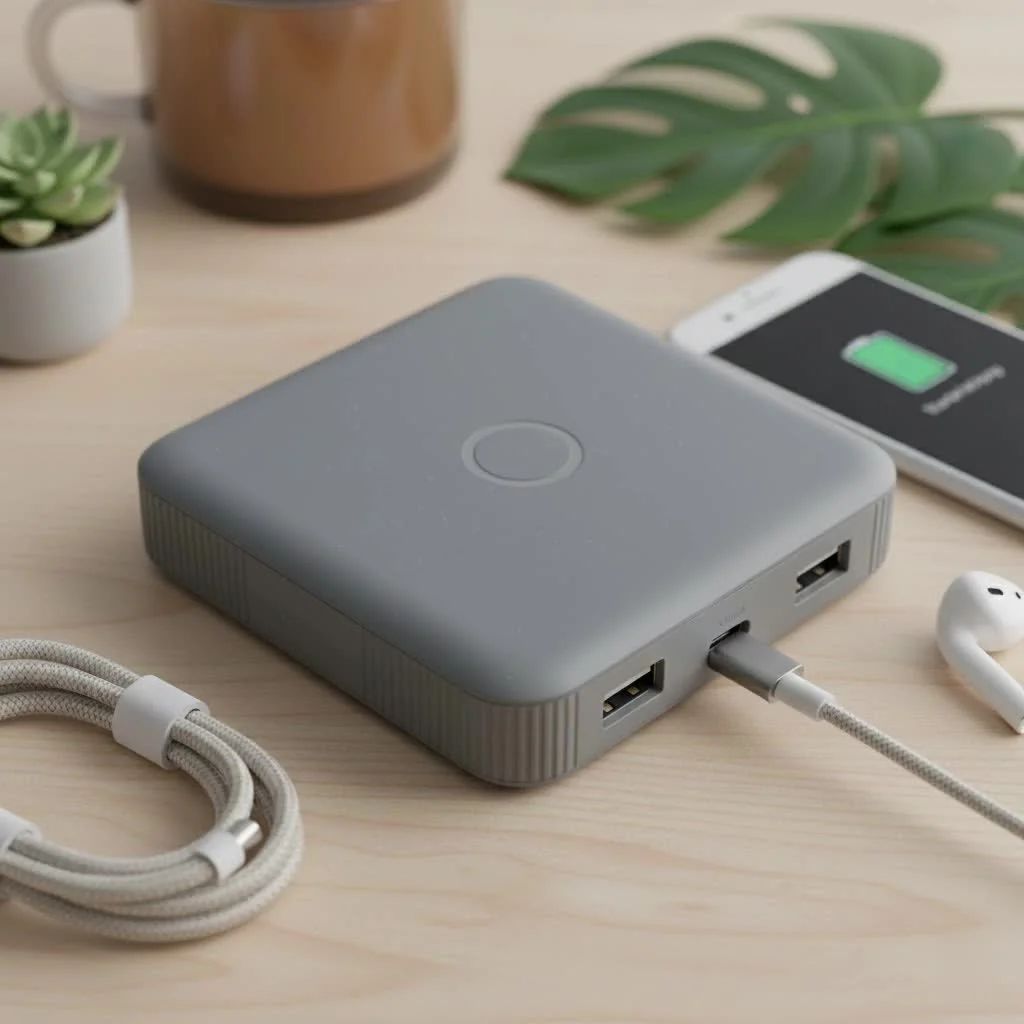
This guide will walk you through everything you need to know, from how they work to the key features that separate the exceptional from the merely adequate. For best portable power roundups on this site.
How Do Solar Power Banks Actually Work?
At its core, a solar power bank is a portable battery pack combined with small photovoltaic (PV) panels. These panels capture sunlight and convert it into electrical energy, which is then stored in the internal battery. You can then use this stored energy to charge your devices, like smartphones, tablets, and headphones, via USB ports.
However, it’s vital to set realistic expectations. The small size of the integrated panels means that charging the power bank solely with sunlight is a slow process, often taking several days of ideal, direct sun. The primary and most efficient way to charge the unit is by plugging it into a wall outlet before you leave home. The solar panel function is best viewed as an emergency top-up or a way to trickle-charge the battery on a long trip, not as a primary charging method.
What to Look for in the Best Solar Power Bank
Choosing the right device comes down to understanding your specific needs. Here are the critical factors to consider to ensure you get a reliable and effective power bank.
Battery Capacity (mAh): How Much Power Do You Need?
Battery capacity, measured in milliamp-hours (mAh), determines how much energy the power bank can store. A higher number means more charging power.
- 10,000mAh: This is a great entry point, ideal for day trips or as an emergency backup. It can typically charge a modern smartphone 2-3 times.
- 20,000mAh: A popular choice for weekend campers and travelers, offering around 4-6 smartphone charges. It strikes a good balance between capacity and portability.
- 30,000mAh and above: For multi-day expeditions, group use, or charging larger devices, a high-capacity bank is your best bet. Keep in mind that higher capacity also means more weight and size.
Solar Panel Efficiency and Wattage
|
Our Picks for the Best Power Bank in 2026
As an Amazon Associate I earn from qualifying purchases.
|
||
| Num | Product | Action |
|---|---|---|
| 1 | UGREEN Nexode Power Bank 20000mAh 165W with Built-in USB C Cable Laptop Travel Portable Charger, 100W Input, Fast Charging for MacBook Pro/Air/iPhone 17/16/iPad Pro/Galaxy S25 Ultra/Dell/HP and More |

|
| 2 | Anker Laptop Power Bank, 25,000mAh Portable Charger with Triple 100W USB-C Ports, Built-in Retractable Cables, Flight-Approved for Travel, iPhone 17/16 Series, MacBook, Samsung, and More |
|
| 3 | INIU Power Bank, 25000mAh 100W USB C Laptop Portable Charger, PD QC Fast Charging 3-Output Battery Pack, Travel Charger for Laptop MacBook iPad Tablet Steam Deck iPhone 17 16 15 14 Pro Samsung S25 etc |
|
| 4 | Energizer Power Bank 20000mAh - USB-C 20W Outputs Fast Charging Battery Pack, USB-A 18W with 4 Outputs & LCD Screen for Android/iPhone 15 16 Plus Pro Max/iPad Tablet and etc_UE20063PQ |
|
| 5 | 90000mAh High Capacity Power Bank, 30W Fast Charging Portable Charger PD&QC 3.0, 5 Output 2 Input Large Powerbank with LED Display USB C Battery Pack Charger Portable for Outdoor Camping Travel |
|
| 6 | Anker Laptop Power Bank, 25,000mAh Portable Charger with Triple 100W USB-C Ports, Built-in Retractable Cables, Flight-Approved for Travel, iPhone 17/16 Series, MacBook, Samsung, and More |
|
| 7 | INIU Portable Charger, Slimmest Fast Charging 10000mAh USB C in/Out Power Bank, 22.5W PD3.0 QC4+ Battery Pack, Portable Phone Charger for iPhone 16 15 14 13 12 Pro Samsung S22 S21 Google AirPods iPad |
|
| 8 | INIU Portable Charger, Smallest 22.5W 10000mAh Power Bank, USB C in/Output Fast Charging 3-Output Mini Battery Pack Charger with Phone Holder for iPhone 17 16 15 14 Air Samsung S23 Google iPad Tablet |
|
| 9 | Emergency Radio&22000mAh Solar Power Bank, FM NOAA Weather Radio, Portable Hand Crank Bluetooth Radio, 20W Fast Charge Wireless Phone Charger, SOS Flashlight for Emergency/Home |
|
| 10 | UGREEN Power Bank 25,000mAh 145W Laptop Portable Charger, Nexode 3-Port USB C PD Battery Pack, for MacBook Pro/Air, Dell XPS, iPhone 17/16/15/14, Galaxy S24, Steam Deck, iPad, and More |
|
The effectiveness of the solar charging feature depends on the quality and size of the solar panels. Most integrated panels are small, designed for emergency use. For more serious off-grid charging, look for models with multiple foldable panels. This larger surface area can significantly reduce solar charging times, making the feature more practical.
Charging Ports and Speed (USB-C, PD, Quick Charge)
The best solar power bank should be versatile and fast. Modern devices benefit from advanced charging technologies.
- USB-C Power Delivery (PD): This is the new standard for fast charging, capable of delivering more power to charge compatible devices (including some laptops) much faster.
- Qualcomm Quick Charge (QC): Another popular fast-charging protocol common in Android devices.
- Multiple Ports: Having a mix of USB-A and USB-C ports allows you to charge multiple gadgets simultaneously.
Durability and Weather Resistance
Since these devices are built for the outdoors, they need to be tough. Look for a rugged build with shock-absorbent materials. More importantly, check the IP rating, which indicates its resistance to dust and water.
- IP65: The device is dust-tight and can withstand water jets from any direction.
- IP67: The device is dust-tight and can be submerged in up to one meter of water for 30 minutes. This is ideal for serious outdoor adventures.
Are Solar Power Banks Really Worth It? A Realistic Look
This is a question we get a lot at pvhao.com. The answer is a resounding yes, as long as you understand their purpose. A solar power bank is not a magic bullet for infinite power. Its true value lies in being a reliable, grid-independent backup.
It provides peace of mind during a power outage or when you’re miles from the nearest outlet. The solar capability extends the life of your battery pack when you’re off-grid, giving you that crucial extra charge for navigation or communication. It’s an essential piece of gear for anyone who camps, hikes, or values emergency preparedness.
“Think of the solar feature as your insurance policy,” says David Chen, a renewable energy engineer at Pvhao Labs. “You pre-charge the bank at home for primary use, but the sun is there to give you a critical boost when you’re running on empty and far from civilization.”
Expert Tips for Maximizing Your Solar Power Bank’s Life
To get the most out of your device, follow these best practices:
- Always Pre-Charge: Fully charge your power bank using a wall outlet before heading out. This ensures you start with a full tank of power.
- Position for Direct Sunlight: When using the solar feature, angle the panels directly towards the sun. Move it throughout the day to track the sun’s path across the sky.
- Keep it Clean: Dust and grime on the panels can reduce their efficiency. Wipe them down with a soft, dry cloth periodically.
- Avoid Overheating: While it needs sun to charge, don’t leave your power bank on a hot surface like a car dashboard for extended periods. Extreme heat can damage the battery cells.
Frequently Asked Questions (FAQ)
How long does it take to fully charge a power bank with solar?
This varies greatly depending on the panel size, battery capacity, and sun intensity. For most compact power banks, it can take 25-50 hours of direct, peak sunlight to go from empty to full. It’s best used to top off the battery, not for a full charge.
Can I charge my laptop with a solar power bank?
Most standard solar power banks cannot charge a laptop. However, models with a high capacity (over 25,000mAh) and a USB-C PD port with a high wattage output (45W or more) may be able to charge some compatible laptops, like a MacBook Air.
What does the IP67 rating mean?
An IP67 rating means the device is completely protected against dust ingress and can be submerged in up to 1 meter of water for 30 minutes, making it highly durable for outdoor use.
Can a solar power bank charge in cloudy weather?
Yes, but the charging efficiency will be significantly reduced. The panels will still generate some power from ambient light, but it will be a very slow trickle charge.
Is it safe to leave a solar power bank in the sun all day?
Yes, they are designed for this purpose. However, to protect the battery’s long-term health, place it in a well-ventilated area where it won’t overheat, perhaps clipping it to the outside of a backpack while you hike.
Your Partner in Portable Power
Choosing the best solar power bank is about matching its capabilities to your adventures. By focusing on essential features like capacity, charging speed, and durability, you can find a device that offers both convenience and security. It’s more than just a gadget; it’s a tool that empowers you to explore further, stay connected longer, and be prepared for anything. Now, go out there and harness the power of the sun.
Get our weekly buyer guide
Practical specs, not advice. Unsubscribe anytime.