A solar panel power bank is a portable hybrid device that combines photovoltaic (PV) panels with an internal rechargeable battery, typically lithium-ion or lithium-polymer, to store electricity generated from sunlight. While it offers the convenience of off-grid charging, its solar charging capability is extremely slow, often taking several days of direct sunlight to fully charge the internal battery. Therefore, it is best utilized as an emergency backup or a trickle charger to supplement power on multi-day excursions, rather than a primary charging method.
 power bank charging a smartphone outdoors” style=”margin: 20px auto;width: 800px;max-width: 100%;height: auto” />
How Does a Solar Panel Power Bank Actually Work?
At its core, a solar panel power bank is a hybrid device. It combines two distinct pieces of technology into one portable package: For portable power buying guides on this site.
- Photovoltaic (PV) Panels: These are the small, dark panels on the surface. They are made of silicon cells that absorb sunlight. When photons from the sun strike these cells, they knock electrons loose, creating a flow of direct current (DC) electricity.
- Internal Battery: This is a standard rechargeable battery, typically lithium-ion or lithium-polymer, just like the one inside a regular power bank.
The process is straightforward: the solar panels capture sunlight, convert it to electricity, and that electricity is then stored in the internal battery. You can then use this stored energy to charge your phone, GPS, or other USB-powered devices, day or night. Crucially, almost every solar power bank can also be charged from a standard wall outlet, which should always be your primary method of charging before you head out.
The Hard Truth: Managing Your Charging Expectations
Here’s the most critical piece of information you need to know about integrated solar panel power banks: the solar charging feature is extremely slow. The small size of the built-in panels means they can only capture a limited amount of sunlight. Think of it like trying to fill a swimming pool with a garden hose—it will get the job done eventually, but it’s going to take a very long time.
Under ideal conditions, with direct, bright sunlight, it can take several days for the solar panels alone to fully charge the power bank’s internal battery. The solar function is not designed to take your power bank from 0% to 100% in an afternoon. Instead, you should view it as:
- An emergency backup: It’s for situations where you have no other option and need to generate just enough power for a quick call or to check your location on a map.
- A trickle charger: If you’re on a multi-day hike, you can strap the power bank to your backpack to “top up” the battery and offset some of the power you use each day.
Always fully charge your solar panel power bank from a wall outlet before you rely on it. The sun is for emergencies and supplementary power, not the main event.
Key Features to Look for in a Solar Panel Power Bank
When you’re ready to choose a device, cutting through the marketing hype is essential. Here are the specifications that truly matter.
Battery Capacity (mAh)
|
Our Picks for the Best Power Bank in 2026
As an Amazon Associate I earn from qualifying purchases.
|
||
| Num | Product | Action |
|---|---|---|
| 1 | Anker Laptop Power Bank, 25,000mAh Portable Charger with Triple 100W USB-C Ports, Built-in Retractable Cables, Flight-Approved for Travel, iPhone 17/16 Series, MacBook, Samsung, and More |

|
| 2 | Energizer Power Bank 20000mAh - USB-C 20W Outputs Fast Charging Battery Pack, USB-A 18W with 4 Outputs & LCD Screen for Android/iPhone 15 16 Plus Pro Max/iPad Tablet and etc_UE20063PQ |
|
| 3 | INIU Power Bank, 25000mAh 100W USB C Laptop Portable Charger, PD QC Fast Charging 3-Output Battery Pack, Travel Charger for Laptop MacBook iPad Tablet Steam Deck iPhone 17 16 15 14 Pro Samsung S25 etc |
|
| 4 | 90000mAh High Capacity Power Bank, 30W Fast Charging Portable Charger PD&QC 3.0, 5 Output 2 Input Large Powerbank with LED Display USB C Battery Pack Charger Portable for Outdoor Camping Travel |
|
| 5 | Emergency Radio&22000mAh Solar Power Bank, FM NOAA Weather Radio, Portable Hand Crank Bluetooth Radio, 20W Fast Charge Wireless Phone Charger, SOS Flashlight for Emergency/Home |
|
| 6 | INIU Portable Charger, Slimmest Fast Charging 10000mAh USB C in/Out Power Bank, 22.5W PD3.0 QC4+ Battery Pack, Portable Phone Charger for iPhone 16 15 14 13 12 Pro Samsung S22 S21 Google AirPods iPad |
|
| 7 | Anker Laptop Power Bank, 25,000mAh Portable Charger with Triple 100W USB-C Ports, Built-in Retractable Cables, Flight-Approved for Travel, iPhone 17/16 Series, MacBook, Samsung, and More |
|
| 8 | UGREEN Power Bank 25,000mAh 145W Laptop Portable Charger, Nexode 3-Port USB C PD Battery Pack, for MacBook Pro/Air, Dell XPS, iPhone 17/16/15/14, Galaxy S24, Steam Deck, iPad, and More |
|
| 9 | INIU Portable Charger, Smallest 22.5W 10000mAh Power Bank, USB C in/Output Fast Charging 3-Output Mini Battery Pack Charger with Phone Holder for iPhone 17 16 15 14 Air Samsung S23 Google iPad Tablet |
|
| 10 | UGREEN Nexode Power Bank 20000mAh 165W with Built-in USB C Cable Laptop Travel Portable Charger, 100W Input, Fast Charging for MacBook Pro/Air/iPhone 17/16/iPad Pro/Galaxy S25 Ultra/Dell/HP and More |
|
Battery capacity is measured in milliamp-hours (mAh). This number tells you how much energy the power bank can store. A higher mAh rating means more stored power and more potential charges for your devices.
- 10,000 mAh: A good starting point. Can typically charge a modern smartphone 1.5-2 times.
- 20,000 mAh: A solid choice for longer trips or charging multiple devices.
- 30,000+ mAh: Best for power users or groups, but these are heavier and bulkier.
Durability and Ruggedness (IP Ratings)
Since these devices are built for the outdoors, they need to be tough. Look for an IP (Ingress Protection) rating. This two-digit code tells you how well it’s protected against solids and liquids.
- The first digit (0-6) rates protection against solids like dust and sand. A ‘6’ is completely dust-tight.
- The second digit (0-8) rates protection against liquids like rain and splashes. A ‘7’ means it can be submerged in up to 1 meter of water for 30 minutes.
For outdoor use, look for a rating of IP65 or higher to ensure your power bank can handle dust, rain, and accidental splashes.
Ports and Outputs
Consider what devices you’ll be charging. Most solar power banks come with standard USB-A ports. Newer and more powerful models may also include a USB-C port, which often supports faster charging protocols like Power Delivery (PD) for compatible devices. Multiple output ports are a plus, allowing you to charge more than one device at a time.
Extra Features
Many solar power banks include bonus features designed for outdoor and emergency use. The most common and useful is a built-in LED flashlight, which often includes SOS and strobe modes. Some also feature a built-in compass, which can be a handy backup navigation tool.
So, Are Solar Panel Power Banks Worth It?
This is the million-dollar question. The answer is a firm “it depends on your use case.” Here is a simple breakdown to help you decide.
Pros:
- Emergency Power Source: In a true off-grid emergency, even a slow trickle charge can be a lifeline.
- Eco-Friendly Top-Ups: It utilizes clean, renewable energy to supplement its charge.
- Peace of Mind: Provides a psychological safety net on extended outdoor adventures.
Cons:
- Extremely Slow Solar Charging: This is the biggest limitation and cannot be overstated.
- Weather Dependent: Charging efficiency plummets on cloudy days, in the shade, or if the panels are not angled correctly.
- Often Bulky and Heavy: The addition of solar panels and rugged casing makes them larger than standard power banks of the same capacity.
A solar panel power bank is worth it if you are an avid hiker, camper, or someone who is serious about building a comprehensive emergency preparedness kit. It is not worth it if you are simply looking for a power bank for daily urban use or travel where wall outlets are readily available.
Frequently Asked Questions (FAQ)
How long does it take to fully charge a solar power bank with sunlight?
This varies wildly based on battery capacity, panel size, and sun intensity, but a realistic estimate is anywhere from 20 to 60 hours of direct, peak sunlight. It’s best measured in days, not hours.
Can a solar power bank charge a laptop?
Generally, no. Most solar panel power banks are designed for low-power devices like phones and tablets. Charging a laptop requires significantly higher power output (wattage) and capacity, which these compact units typically cannot provide.
Can I charge a solar power bank from a wall outlet?
Yes, and you absolutely should. Every solar power bank has a USB input port for conventional charging. This is the most reliable and efficient way to charge it.
Do solar power banks work on cloudy days?
They work, but very poorly. The photovoltaic panels can still generate some electricity from ambient light, but the charging rate will be drastically reduced to a near-negligible level.
What’s the difference between a solar charger and a solar power bank?
A solar charger is just a set of solar panels with a USB output—it has no internal battery to store power. It can only charge a device when it’s in the sun. A solar power bank includes an internal battery, allowing it to store energy for later use.
Final Thoughts from the Field
After years of relying on portable power, my verdict is this: a solar panel power bank is a valuable tool when viewed through the correct lens. It is not a magical, infinite power source. It is a rugged, reliable battery pack with a built-in emergency solar trickle charger. Always start your journey with a full battery charged from the wall. Strap the power bank to your pack to catch some rays along the way, and keep that solar capability in your back pocket for a true emergency. Do that, and you’ll have a power solution you can trust when you need it most.
Frequently Asked Questions
How long does it take to fully charge a solar power bank using sunlight?
Fully charging a solar power bank with sunlight can take 20 to 60 hours of direct, peak sunlight, depending on the battery capacity and panel size. This process is best measured in days rather than hours due to the slow charging rate.
Can a solar power bank be used to charge a laptop computer?
No, most solar panel power banks are not designed to charge laptops. They typically provide insufficient power output (wattage) and capacity for the higher demands of a laptop, being better suited for smaller devices like phones and tablets.
Is it possible to charge a solar power bank from a standard wall outlet?
Yes, every solar power bank includes a USB input port for conventional charging from a wall outlet. This method is the most reliable and efficient way to fully charge the device before outdoor use.
Do solar power banks still function effectively on cloudy days?
Solar power banks do work on cloudy days, but their efficiency is significantly reduced. The photovoltaic panels can still generate some electricity from ambient light, but the charging rate will be drastically lower, making it nearly negligible.
What is the main difference between a solar charger and a solar power bank?
A solar charger consists only of solar panels with a USB output and lacks an internal battery, meaning it can only charge devices when exposed to sunlight. In contrast, a solar power bank integrates an internal battery, allowing it to store generated energy for later use, day or night.
Get our weekly buyer guide
Practical specs, not advice. Unsubscribe anytime.
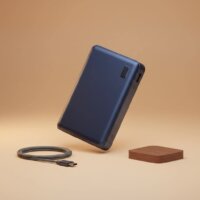
I got a solar panel power bank hoping to rely on it more for daily charging, but the PV panels really do take forever to charge it up. I left it in direct sun all day and it barely moved the needle. It’s fine as an emergency backup, but don’t expect it to be your primary charger. I wish the solar part was a bit more efficient.
This device is a game-changer for multi-day excursions! I used it on a backpacking trip and it was fantastic for keeping my GPS watch and headlamp charged. Knowing it has a lithium-polymer battery gives me confidence in its durability and performance. It’s not for fast charging, but for extending the life of my smaller gadgets, it’s perfect.
I bought one of these for my bug-out bag and it’s exactly what I needed. The convenience of off-grid charging is a huge plus, even if it’s just for topping up. It’s a solid piece of gear to have when you’re away from outlets for extended periods. Definitely recommend it for anyone looking for a reliable emergency power source.
I picked up one of the 20,000mAh models mentioned for a camping trip last month. It was super handy for keeping my phone topped off during the day, especially since we were out for three days. The solar charging was definitely slow, just like it said, but it was perfect for a trickle charge to extend my phone’s battery life between charges from my main power bank. Great for emergencies!