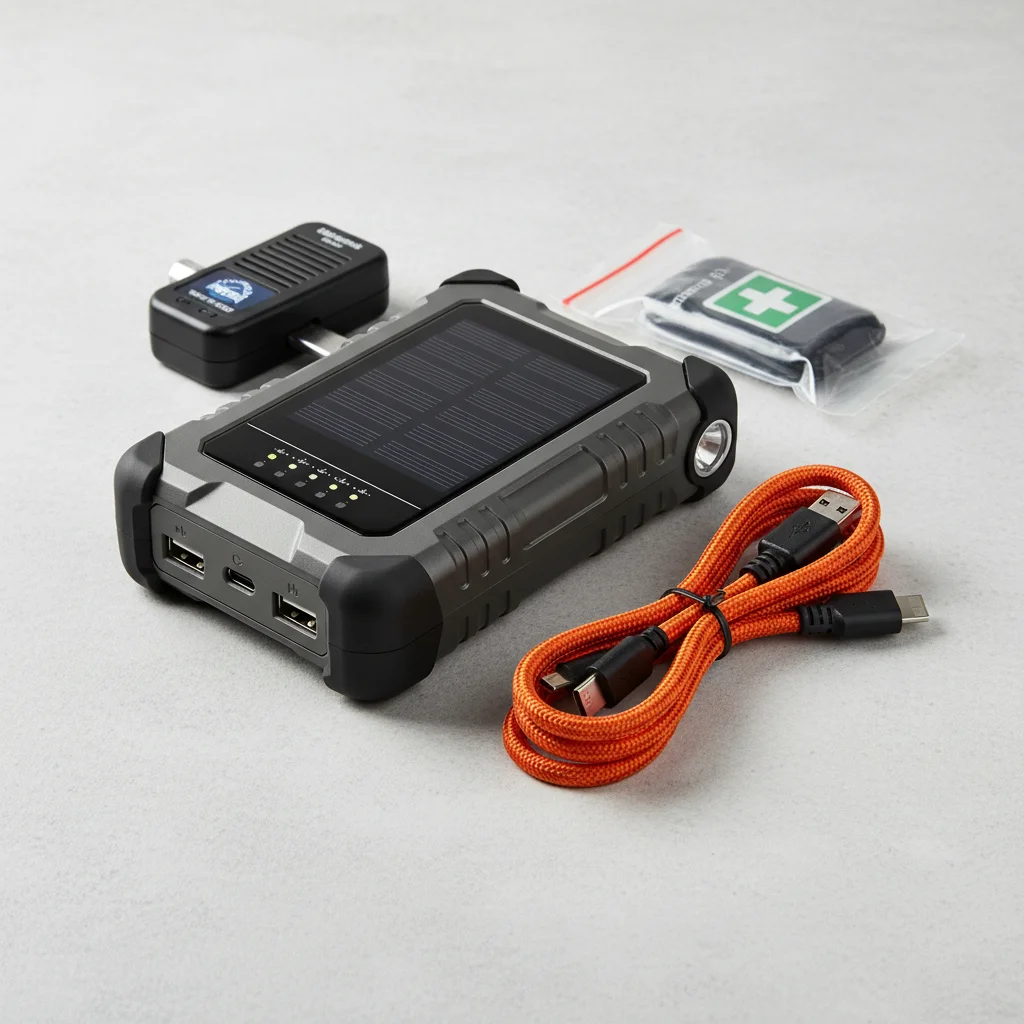
A power bank for emergency preparedness is a crucial tool for maintaining communication and essential device functionality during unexpected outages. When selecting one, prioritize models with at least 20,000mAh capacity and multiple output ports to charge various devices simultaneously. These devices offer peace of mind, ensuring you can stay connected and informed when traditional power sources are unavailable.
Why Emergency Power Banks Are Essential
In today’s interconnected world, a sudden power outage can disrupt daily life and even pose safety risks. An emergency power bank provides a reliable backup, allowing you to charge smartphones, tablets, radios, and even some medical devices. This ensures you can contact loved ones, access emergency services, and stay updated on critical information during natural disasters, blackouts, or other unforeseen events. Consider the duration of potential outages in your area when determining the necessary capacity. For complete portable power library on this site.
Key Features to Look for in an Emergency Power Bank
When choosing a power bank for emergency use, several features are paramount. High capacity (measured in mAh) is crucial for extended use, with 20,000mAh being a good starting point for general preparedness. Multiple USB-A and USB-C ports are essential for charging different devices. Fast charging capabilities can also be a lifesaver, allowing you to quickly power up devices when time is critical. Some models also include built-in flashlights, which can be invaluable during nighttime outages.
- High capacity (20,000mAh or more) for extended use.
- Multiple output ports (USB-A, USB-C) for device versatility.
- Fast charging technology to minimize downtime.
- Durable construction to withstand challenging conditions.
- Integrated flashlight for added utility during outages.
Choosing the Right Capacity for Your Needs
|
Our Picks for the Best Power Bank in 2026
As an Amazon Associate I earn from qualifying purchases.
|
||
| Num | Product | Action |
|---|---|---|
| 1 | INIU Portable Charger, Smallest 22.5W 10000mAh Power Bank, USB C in/Output Fast Charging 3-Output Mini Battery Pack Charger with Phone Holder for iPhone 17 16 15 14 Air Samsung S23 Google iPad Tablet |

|
| 2 | UGREEN Nexode Power Bank 20000mAh 165W with Built-in USB C Cable Laptop Travel Portable Charger, 100W Input, Fast Charging for MacBook Pro/Air/iPhone 17/16/iPad Pro/Galaxy S25 Ultra/Dell/HP and More |
|
| 3 | 90000mAh High Capacity Power Bank, 30W Fast Charging Portable Charger PD&QC 3.0, 5 Output 2 Input Large Powerbank with LED Display USB C Battery Pack Charger Portable for Outdoor Camping Travel |
|
| 4 | Anker Laptop Power Bank, 25,000mAh Portable Charger with Triple 100W USB-C Ports, Built-in Retractable Cables, Flight-Approved for Travel, iPhone 17/16 Series, MacBook, Samsung, and More |
|
| 5 | Anker Laptop Power Bank, 25,000mAh Portable Charger with Triple 100W USB-C Ports, Built-in Retractable Cables, Flight-Approved for Travel, iPhone 17/16 Series, MacBook, Samsung, and More |
|
| 6 | INIU Power Bank, 25000mAh 100W USB C Laptop Portable Charger, PD QC Fast Charging 3-Output Battery Pack, Travel Charger for Laptop MacBook iPad Tablet Steam Deck iPhone 17 16 15 14 Pro Samsung S25 etc |
|
| 7 | INIU Portable Charger, Slimmest Fast Charging 10000mAh USB C in/Out Power Bank, 22.5W PD3.0 QC4+ Battery Pack, Portable Phone Charger for iPhone 16 15 14 13 12 Pro Samsung S22 S21 Google AirPods iPad |
|
| 8 | UGREEN Power Bank 25,000mAh 145W Laptop Portable Charger, Nexode 3-Port USB C PD Battery Pack, for MacBook Pro/Air, Dell XPS, iPhone 17/16/15/14, Galaxy S24, Steam Deck, iPad, and More |
|
| 9 | Emergency Radio&22000mAh Solar Power Bank, FM NOAA Weather Radio, Portable Hand Crank Bluetooth Radio, 20W Fast Charge Wireless Phone Charger, SOS Flashlight for Emergency/Home |
|
| 10 | Energizer Power Bank 20000mAh - USB-C 20W Outputs Fast Charging Battery Pack, USB-A 18W with 4 Outputs & LCD Screen for Android/iPhone 15 16 Plus Pro Max/iPad Tablet and etc_UE20063PQ |
|
The ideal capacity for your emergency power bank depends on your specific needs and the devices you plan to charge. For basic phone charging and short-term outages, a 10,000mAh power bank might suffice. However, for longer durations or if you need to power multiple devices like tablets or small radios, a 20,000mAh to 30,000mAh unit is recommended. For more extensive needs, such as powering laptops or small appliances, consider portable power stations with even higher capacities and AC outlets.
Maintaining Your Emergency Power Bank
Proper maintenance ensures your emergency power bank is ready when you need it most. Store it in a cool, dry place away from direct sunlight and extreme temperatures. Fully charge the power bank every 3-6 months, even if it hasn’t been used, to maintain battery health. Avoid overcharging or completely draining the battery, as this can reduce its lifespan. Regularly check the charging cables for any signs of wear and tear.
Top Picks for Emergency Preparedness
When it comes to reliable power banks for emergencies, certain models stand out for their durability, capacity, and features. Theoffers a robust 25,000mAh capacity with multiple fast-charging ports, making it ideal for extended outages. Its rugged design ensures it can withstand challenging conditions. Another excellent option is the, known for its compact size relative to its 20,000mAh capacity and built-in flashlight, providing both power and illumination in a crisis.
Get our weekly buyer guide
Practical specs, not advice. Unsubscribe anytime.