Are you tired of your devices dying when you’re miles from the nearest outlet? A solar charger power bank might be the ultimate solution for keeping you connected during outdoor adventures, emergencies, or long travel days. This innovative gadget combines the portability of a power bank with the renewable energy of the sun. But how do they work, and are they truly effective? As a power bank specialist with over a decade of experience, I’m here to demystify this technology and help you decide if it’s the right choice for your power needs.
How Does a Solar Charger Power Bank Actually Work?
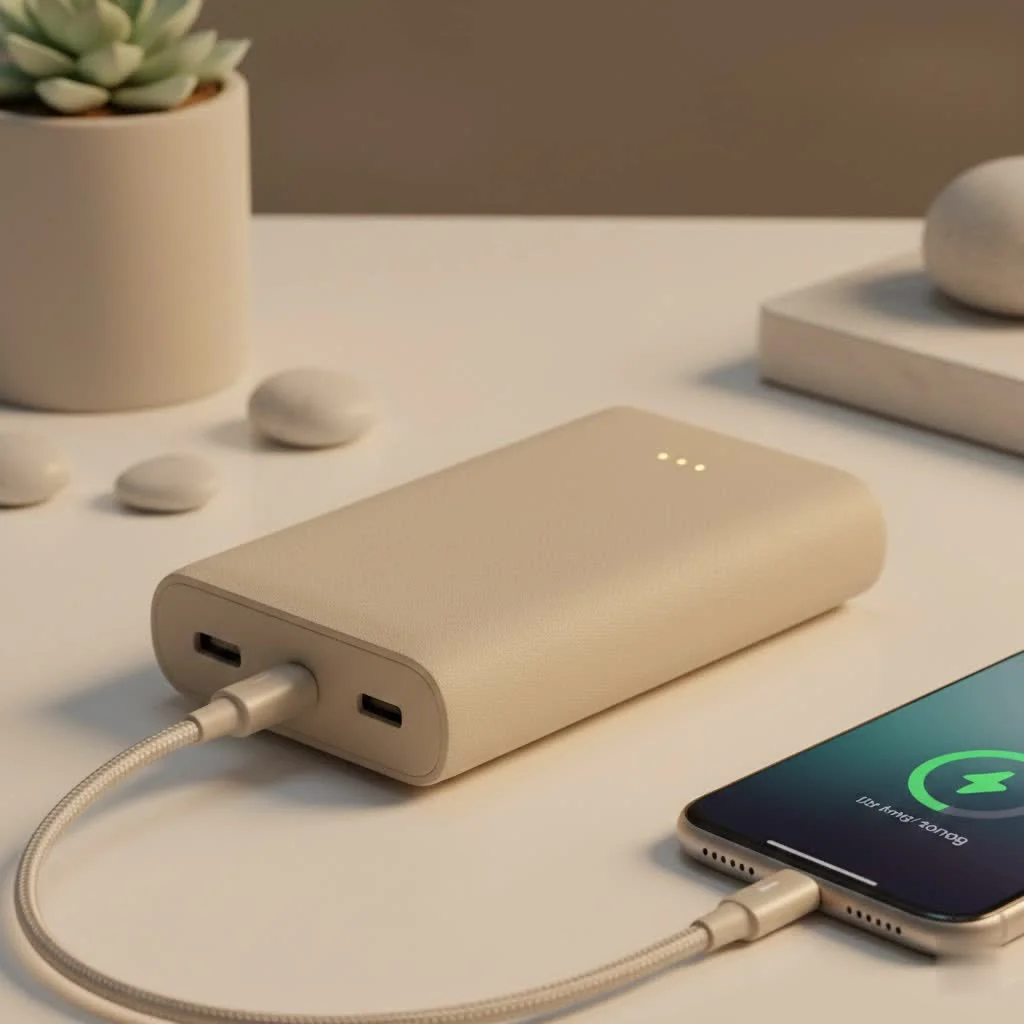
At its core, a solar charger power bank is a portable battery pack with built-in photovoltaic (PV) panels. It’s a self-sufficient little power station you can carry in your backpack. The process seems like magic, but it’s pure science.
The Science in a Nutshell: Photovoltaic Effect
The small solar panels on the device are made of semiconductor materials, usually silicon. When sunlight (which is made of tiny energy particles called photons) strikes these panels, it excites the electrons within the silicon atoms. This process, known as the photovoltaic effect, creates a flow of direct current (DC) electricity. It’s the same fundamental technology used in large-scale solar farms, just miniaturized for portability.
From Sunlight to Stored Energy
This DC electricity is then channeled into the internal lithium-ion or lithium-polymer battery, where it is stored for later use. An integrated charge controller manages this process, preventing the battery from overcharging and ensuring a safe, stable flow of energy. When you need to charge your phone, camera, or GPS, you simply plug it into the power bank’s USB port. The device then converts the stored DC power into the appropriate voltage for your gadget. Most solar power banks can also be charged from a wall outlet, which is the most efficient way to ensure they are full before you head out.
Are Solar Power Banks Truly Worth It? The Honest Pros and Cons
While the idea of infinite power from the sun is appealing, a solar charger power bank has both significant advantages and practical limitations. Understanding these is key to avoiding disappointment.
The Bright Side: Key Advantages
- Eco-Friendly Power: They harness clean, renewable energy from the sun, reducing your carbon footprint.
- Ultimate Portability: Perfect for camping, hiking, fishing, or any off-grid activity where outlets are non-existent.
- Emergency Preparedness: A solar charger is an invaluable tool in a power outage or emergency kit, ensuring you can power communication devices when it matters most.
- Cost-Effective in the Long Run: After the initial purchase, the energy you collect is completely free.
The Shadows: Potential Drawbacks
|
Our Picks for the Best Power Bank in 2026
As an Amazon Associate I earn from qualifying purchases.
|
||
| Num | Product | Action |
|---|---|---|
| 1 | INIU Power Bank, 25000mAh 100W USB C Laptop Portable Charger, PD QC Fast Charging 3-Output Battery Pack, Travel Charger for Laptop MacBook iPad Tablet Steam Deck iPhone 17 16 15 14 Pro Samsung S25 etc |

|
| 2 | Anker Laptop Power Bank, 25,000mAh Portable Charger with Triple 100W USB-C Ports, Built-in Retractable Cables, Flight-Approved for Travel, iPhone 17/16 Series, MacBook, Samsung, and More |
|
| 3 | UGREEN Nexode Power Bank 20000mAh 165W with Built-in USB C Cable Laptop Travel Portable Charger, 100W Input, Fast Charging for MacBook Pro/Air/iPhone 17/16/iPad Pro/Galaxy S25 Ultra/Dell/HP and More |
|
| 4 | Emergency Radio&22000mAh Solar Power Bank, FM NOAA Weather Radio, Portable Hand Crank Bluetooth Radio, 20W Fast Charge Wireless Phone Charger, SOS Flashlight for Emergency/Home |
|
| 5 | INIU Portable Charger, Slimmest Fast Charging 10000mAh USB C in/Out Power Bank, 22.5W PD3.0 QC4+ Battery Pack, Portable Phone Charger for iPhone 16 15 14 13 12 Pro Samsung S22 S21 Google AirPods iPad |
|
| 6 | Energizer Power Bank 20000mAh - USB-C 20W Outputs Fast Charging Battery Pack, USB-A 18W with 4 Outputs & LCD Screen for Android/iPhone 15 16 Plus Pro Max/iPad Tablet and etc_UE20063PQ |
|
| 7 | UGREEN Power Bank 25,000mAh 145W Laptop Portable Charger, Nexode 3-Port USB C PD Battery Pack, for MacBook Pro/Air, Dell XPS, iPhone 17/16/15/14, Galaxy S24, Steam Deck, iPad, and More |
|
| 8 | Anker Laptop Power Bank, 25,000mAh Portable Charger with Triple 100W USB-C Ports, Built-in Retractable Cables, Flight-Approved for Travel, iPhone 17/16 Series, MacBook, Samsung, and More |
|
| 9 | 90000mAh High Capacity Power Bank, 30W Fast Charging Portable Charger PD&QC 3.0, 5 Output 2 Input Large Powerbank with LED Display USB C Battery Pack Charger Portable for Outdoor Camping Travel |
|
| 10 | INIU Portable Charger, Smallest 22.5W 10000mAh Power Bank, USB C in/Output Fast Charging 3-Output Mini Battery Pack Charger with Phone Holder for iPhone 17 16 15 14 Air Samsung S23 Google iPad Tablet |
|
- Slow Solar Charging: This is the most significant limitation. The small panels can take a very long time—often several days of direct, bright sunlight—to fully charge the internal battery.
- Weather Dependency: Performance is entirely dependent on sunlight. Cloudy days, shade, or poor panel orientation will drastically reduce charging efficiency.
- Panel Size vs. Portability: There’s a direct trade-off. Larger, more effective panels make the device bulkier and less portable. Smaller, backpack-friendly models charge much more slowly.
As renewable energy technologist Dr. Alistair Finch puts it, “Think of a solar power bank’s panel as a top-up mechanism, not a primary charging source. Charge it fully from the wall before you leave, and let the sun keep it going.”
Key Features to Look For in a Solar Charger Power Bank
When you’re ready to buy, don’t just grab the first one you see. Pay close attention to these critical specifications to ensure the device meets your needs.
- Battery Capacity (mAh): Measured in milliamp-hours (mAh), this tells you how much energy the battery can store. A 10,000mAh bank can theoretically charge a standard smartphone 2-3 times. For longer trips or multiple devices, look for 20,000mAh or more.
- Solar Panel Efficiency and Wattage: Higher wattage and efficiency mean faster solar charging. Most compact models have panels rated between 1.5W and 5W. Fold-out panel designs offer significantly more surface area and higher wattage, making them more practical for serious off-grid use.
- Durability and Weatherproofing: Look for models with a rugged, shock-absorbent casing. An IP rating (e.g., IP65) indicates its resistance to dust and water, a crucial feature for outdoor gear.
- Number and Type of Ports: Ensure it has the ports you need. Most come with standard USB-A ports, but newer models may include faster USB-C or Power Delivery (PD) ports for charging modern smartphones and even some laptops.
- Size and Weight: Consider the balance between capacity and portability. A massive 30,000mAh power bank is great, but not if it’s too heavy to carry on a long hike.
How Long Does It Really Take to Charge a Solar Power Bank?
This is the million-dollar question. The answer is: it depends entirely on conditions. Under perfect, direct, midday sun, a typical backpack-sized solar power bank might take 30-60 hours to fully charge its own battery from empty. In less-than-ideal light, it could take much longer or may never reach a full charge.
For this reason, the solar feature should be viewed as a way to supplement the charge, not as the main method of filling it. A good strategy is to charge it via a wall outlet before your trip and use the sun to add 10-20% charge each day to extend its life.
Pro Tips for Maximizing Your Solar Charger’s Efficiency
To get the most out of your device, follow these best practices:
- Angle it Perfectly: Always position the panels so they are directly facing the sun. As the sun moves, adjust the angle.
- Keep it Cool: Solar panels lose efficiency when they overheat. Don’t leave your charger on a hot surface like a car dashboard. Prop it up to allow for airflow.
- Clean the Panels: Dust, dirt, and smudges can block sunlight. Wipe the panels clean with a soft cloth regularly.
- Charge While You Walk: Many outdoor enthusiasts attach their solar charger power bank to the outside of their backpack to passively collect energy while they hike.
Frequently Asked Questions (FAQ)
Can a solar power bank charge without direct sunlight?
Yes, it can charge in overcast conditions, but the efficiency will be severely reduced. It will collect a very small amount of energy compared to what it would in direct, bright sunlight.
Can I charge my laptop with a solar power bank?
Most standard solar power banks cannot charge a laptop because they lack the required power output. You would need a larger, specialized model with a high-wattage Power Delivery (PD) port or an AC outlet.
How do I maintain my solar charger power bank?
Keep the panels clean, avoid exposing the unit to extreme temperatures (hot or cold), and try to charge and discharge the battery at least once every few months to maintain its health.
Are solar power banks waterproof?
Many models designed for outdoor use are water-resistant (splash-proof), but very few are fully waterproof (submersible). Always check the IP rating for the specific level of protection.
Can I take a solar power bank on a plane?
Yes, but you must carry it in your cabin luggage, not in checked baggage. Most airlines have a limit on battery capacity, typically 100Wh (Watt-hours), which is around 27,000mAh. Always check with your specific airline before flying.
Conclusion: Powering Your Adventures
A solar charger power bank is a fantastic piece of technology for anyone who loves the outdoors or wants to be prepared for an emergency. While it’s not a source of magical, instant power, it provides invaluable peace of mind and a sustainable way to keep your essential devices running. By understanding its limitations and choosing a model with the right features for your needs, you can successfully harness the power of the sun and stay connected, wherever your journey takes you.
Get our weekly buyer guide
Practical specs, not advice. Unsubscribe anytime.

The idea of a solar charger power bank is great, and it does work for topping off my phone. However, I found that the charging speed from the PV panels is pretty slow. It’s not something you can rely on for a quick full charge, more for a trickle charge over several hours. Still, it’s better than nothing when you’re off-grid, but I wish it was a bit faster.
I got a solar power bank for emergency preparedness after reading about how they combine portability with renewable energy. It’s reassuring to know I have a backup power source that doesn’t rely on an outlet. I’ve tested it out a few times, and it charges my tablet and phone without issues, though I usually charge it via wall outlet before I head out.
This little gadget is perfect for my long travel days. I used to always run out of juice on my phone and e-reader, but now I just clip this to my backpack and let the sun do its thing. It’s amazing how much power it can store, and it’s super lightweight. Definitely a must-have for anyone who spends a lot of time away from traditional power sources.
I picked up one of the 20,000mAh solar banks mentioned for my camping trips, and it’s been a game-changer. Being able to recharge my phone and headlamp just by leaving it on my tent in the sun is incredibly convenient. It really does keep me connected even when I’m way out in the wilderness, just like the post said it would. No more worrying about dead devices!