To fly with a power bank, ensure its capacity is 100 Watt-hours (Wh) or less, and always pack it in your carry-on luggage, never in checked bags. Most standard portable chargers, like a 20,000mAh power bank (approximately 74Wh), meet this limit without special approval. These regulations are set by the Transportation Security Administration (TSA) and the Federal Aviation Administration (FAA) to manage the potential fire risk of lithium-ion batteries within aircraft cabins.
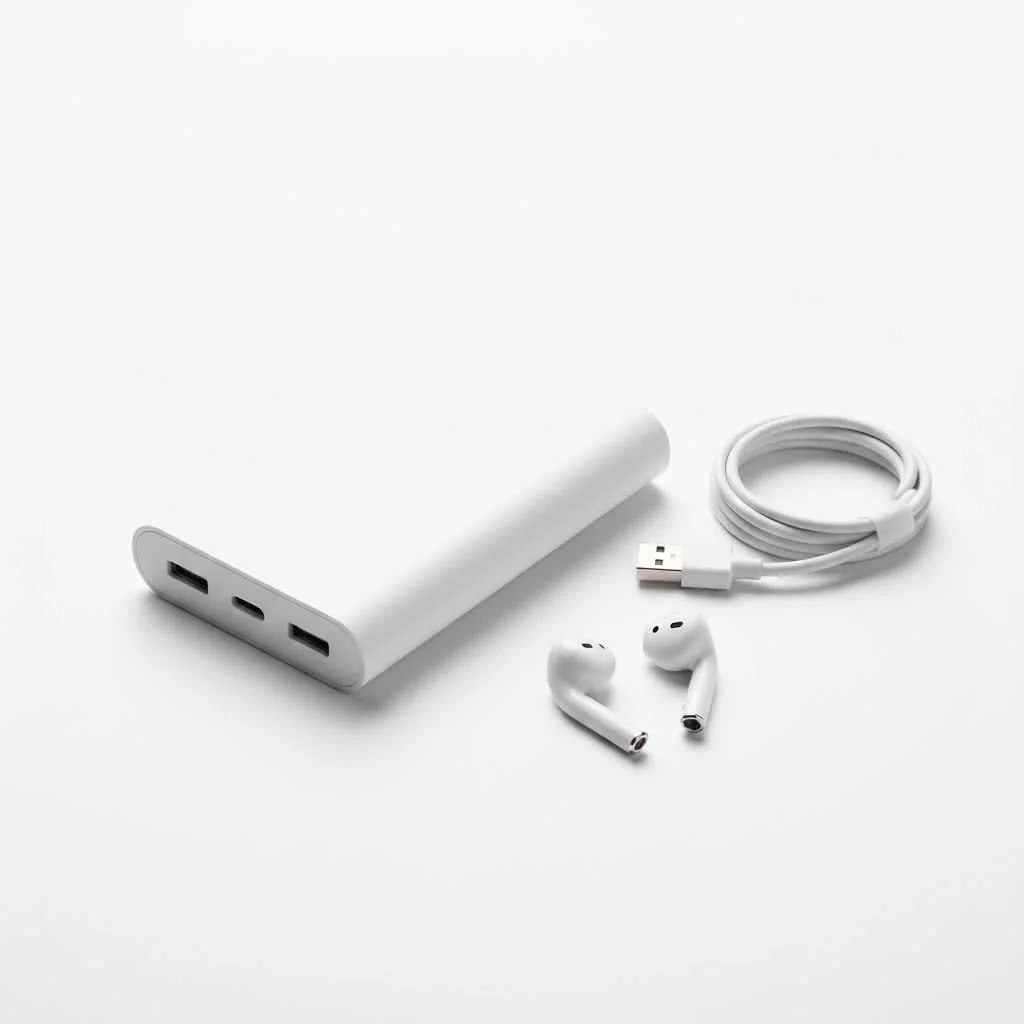
What Exactly Is a “TSA Approved Power Bank”?
First, let’s clear up a common misconception. There isn’t an official “TSA Approved” stamp or certification that a power bank manufacturer can get. When people search for a TSA approved power bank, what they’re really asking is: “Which power banks meet the TSA’s rules for flying?”
The good news is that most power banks on the market are perfectly fine for air travel, as long as you follow a few key regulations set by the Transportation Security Administration (TSA) and the Federal Aviation Administration (FAA). These rules aren’t designed to be inconvenient; they’re in place for a crucial reason: safety. Lithium-ion batteries, the technology inside virtually all power banks, pose a potential fire risk if they are damaged. The regulations ensure that if an issue does occur, it can be managed safely inside the aircraft cabin.
The Core TSA Rule: The 100 Watt-Hour Limit
The single most important factor determining if your power bank can fly is its capacity, measured in Watt-hours (Wh).
The TSA regulation states that you can carry on power banks that are 100Wh or less without needing special approval.
This limit is quite generous and covers the vast majority of portable chargers you’d buy for your phone, tablet, or even some smaller laptops. A typical 20,000mAh power bank, for example, falls well under this 100Wh threshold.
What is a Watt-hour (Wh)?
|
Our Picks for the Best Power Bank in 2026
As an Amazon Associate I earn from qualifying purchases.
|
||
| Num | Product | Action |
|---|---|---|
| 1 | INIU Portable Charger, Smallest 22.5W 10000mAh Power Bank, USB C in/Output Fast Charging 3-Output Mini Battery Pack Charger with Phone Holder for iPhone 17 16 15 14 Air Samsung S23 Google iPad Tablet |

|
| 2 | INIU Power Bank, 25000mAh 100W USB C Laptop Portable Charger, PD QC Fast Charging 3-Output Battery Pack, Travel Charger for Laptop MacBook iPad Tablet Steam Deck iPhone 17 16 15 14 Pro Samsung S25 etc |
|
| 3 | Emergency Radio&22000mAh Solar Power Bank, FM NOAA Weather Radio, Portable Hand Crank Bluetooth Radio, 20W Fast Charge Wireless Phone Charger, SOS Flashlight for Emergency/Home |
|
| 4 | UGREEN Nexode Power Bank 20000mAh 165W with Built-in USB C Cable Laptop Travel Portable Charger, 100W Input, Fast Charging for MacBook Pro/Air/iPhone 17/16/iPad Pro/Galaxy S25 Ultra/Dell/HP and More |
|
| 5 | 90000mAh High Capacity Power Bank, 30W Fast Charging Portable Charger PD&QC 3.0, 5 Output 2 Input Large Powerbank with LED Display USB C Battery Pack Charger Portable for Outdoor Camping Travel |
|
| 6 | Anker Laptop Power Bank, 25,000mAh Portable Charger with Triple 100W USB-C Ports, Built-in Retractable Cables, Flight-Approved for Travel, iPhone 17/16 Series, MacBook, Samsung, and More |
|
| 7 | UGREEN Power Bank 25,000mAh 145W Laptop Portable Charger, Nexode 3-Port USB C PD Battery Pack, for MacBook Pro/Air, Dell XPS, iPhone 17/16/15/14, Galaxy S24, Steam Deck, iPad, and More |
|
| 8 | Anker Laptop Power Bank, 25,000mAh Portable Charger with Triple 100W USB-C Ports, Built-in Retractable Cables, Flight-Approved for Travel, iPhone 17/16 Series, MacBook, Samsung, and More |
|
| 9 | INIU Portable Charger, Slimmest Fast Charging 10000mAh USB C in/Out Power Bank, 22.5W PD3.0 QC4+ Battery Pack, Portable Phone Charger for iPhone 16 15 14 13 12 Pro Samsung S22 S21 Google AirPods iPad |
|
| 10 | Energizer Power Bank 20000mAh - USB-C 20W Outputs Fast Charging Battery Pack, USB-A 18W with 4 Outputs & LCD Screen for Android/iPhone 15 16 Plus Pro Max/iPad Tablet and etc_UE20063PQ |
|
While most of us are familiar with milliamp-hours (mAh), the TSA and airlines use Watt-hours because it’s a more accurate and universal measure of a battery’s total energy capacity. It accounts for both the amperage (current) and voltage. Think of it as the battery’s total fuel tank size.
How to Find or Calculate Your Power Bank’s Watt-hours
Finding your device’s Wh rating is usually straightforward. Most manufacturers print this information directly on the power bank’s casing, often in small text near the serial number or capacity details.
If you can’t find the Wh rating but know the capacity in milliamp-hours (mAh) and the voltage (V), you can calculate it yourself with a simple formula:
(mAh * V) / 1000 = Wh
The standard voltage for most USB-based power banks is 3.7V. So, for a 20,000mAh power bank, the calculation would be:
(20,000 mAh * 3.7V) / 1000 = 74 Wh
As you can see, 74Wh is comfortably below the 100Wh limit, making a 20,000mAh power bank perfectly acceptable for your flight.
Carry-On vs. Checked Luggage: A Rule You Can’t Break
This is the most critical rule of all: Power banks must be in your carry-on luggage. They are strictly forbidden in checked bags.
There is no exception to this rule. The reason is simple and logical. The cargo hold of an airplane is not easily accessible during a flight and is not constantly monitored. If a lithium-ion battery were to overheat and catch fire in a checked bag, it could become a catastrophic event before the crew is even aware of it. By requiring power banks to be in the cabin, any potential issue can be identified and dealt with immediately by the flight crew.
“I always advise readers at Pvhao.com to pack their power banks in an easily accessible pocket of their backpack,” says David Chen, our lead tech expert. “This way, you can present it for inspection without rummaging through your entire bag, making the security process smoother for everyone.”
What About Power Banks Between 101Wh and 160Wh?
The rules do allow for some flexibility if you need more power, but it comes with a condition. You are permitted to bring up to two larger lithium-ion batteries that are between 101Wh and 160Wh, but you must get approval from the airline beforehand.
Do not assume you can just show up at the gate with a 150Wh power bank. Each airline has its own procedure for approving these larger batteries. You should contact your airline directly well before your travel date to understand their specific requirements and get the necessary permission. Power banks over 160Wh are strictly prohibited on commercial aircraft.
Tips for a Smooth Airport Security Experience
Following the rules is the first step. Here are a few extra tips to make your journey through security completely stress-free:
- Ensure Markings are Legible: Make sure the capacity (mAh/Wh) markings on your power bank are clear and readable. If a TSA agent can’t verify the capacity, they may confiscate it as a precaution.
- Keep it Accessible: Pack your power bank in an outer pocket of your carry-on bag. You may be asked to remove it and place it in a separate bin for X-ray screening, just like a laptop.
- Don’t Bring Too Many: While the TSA doesn’t set a hard limit on the number of sub-100Wh power banks you can bring, airlines might. A reasonable number for personal use (two or three) is unlikely to cause any issues.
- Check with Your Airline: If you are unsure about anything, especially with larger power banks or international flights, the safest bet is always to check your airline’s specific dangerous goods policy on their website.
Frequently Asked Questions (FAQ)
Q: Can I bring a 20,000mAh power bank on a plane?
A: Yes, absolutely. A standard 20,000mAh power bank has a rating of approximately 74Wh, which is well under the 100Wh limit set by the TSA. It must be packed in your carry-on luggage.
Q: What happens if my power bank is over the limit?
A: If your power bank is over 100Wh and you do not have airline approval, or if it is over the absolute limit of 160Wh, it will be confiscated by security. You will not be able to check it or mail it; it will be surrendered.
Q: Can I charge my phone using the power bank during the flight?
A: Generally, yes. Once you are in the air and the use of electronic devices is permitted, you can use your power bank to charge your devices. However, some airlines may have specific policies against it, so it is always good to listen to the flight crew’s instructions.
Q: Do these rules apply to international flights?
A: Yes, these regulations are based on international safety standards set by the International Air Transport Association (IATA). While there might be minor variations by country or airline, the 100Wh limit and the “carry-on only” rule are globally recognized.
Q: What if the markings on my power bank have worn off?
A: This can be a problem. If a security officer cannot read the capacity markings to verify compliance, they have the right to confiscate the device. It’s best to travel with a power bank that has clear, legible labels.
Travel Confidently with Your Power Bank
Navigating air travel regulations can seem daunting, but the rules for power banks are straightforward once you understand them. Remember the three key principles: keep it under 100Wh, pack it in your carry-on, and make sure its capacity is clearly marked. By following these guidelines, you ensure not only your compliance but also the safety of everyone on board. So pack your TSA approved power bank, keep your devices charged, and enjoy a stress-free journey from takeoff to landing.
Get our weekly buyer guide
Practical specs, not advice. Unsubscribe anytime.
This information about the TSA and FAA regulations is super helpful. I used to just guess if my power bank was okay, but understanding the lithium-ion battery fire risk makes sense. I’ve been careful to keep my portable charger in my carry-on ever since, and it’s great to have that peace of mind when flying.
I travel a lot for work, and keeping my laptop and phone charged is crucial. I appreciate the clarification that there isn’t an ‘official’ TSA approval, but rather just meeting the rules. My current power bank is around 74Wh, so I’m always good to go. It’s a relief not to stress about it at security anymore.
I always worried about my phone dying on long flights, but after reading about the 100Wh limit, I finally bought a new power bank. My 20,000mAh charger fits perfectly within the guidelines, and it’s been a lifesaver for keeping my devices charged during layovers and even on the plane. Definitely recommend checking your power bank’s specs before you fly!
It’s good to know about the carry-on rule for power banks. I had a scare once where I almost put mine in my checked bag. My only complaint is that some of the larger capacity power banks I’ve looked at are just over the 100Wh, which is a bummer for longer trips where I need more juice. Wish there were more options right at the limit.