In today’s hyper-connected world, a dead battery can feel like being stranded on a deserted island. Our smartphones, tablets, and even laptops are our lifelines for work, communication, and entertainment. This is where the modern hero of mobile accessories steps in: the USB Type-C power bank. But with a sea of options and a wave of technical jargon, choosing the right one can be a daunting task. This guide will demystify the specs and help you find the perfect portable charging companion for your needs.
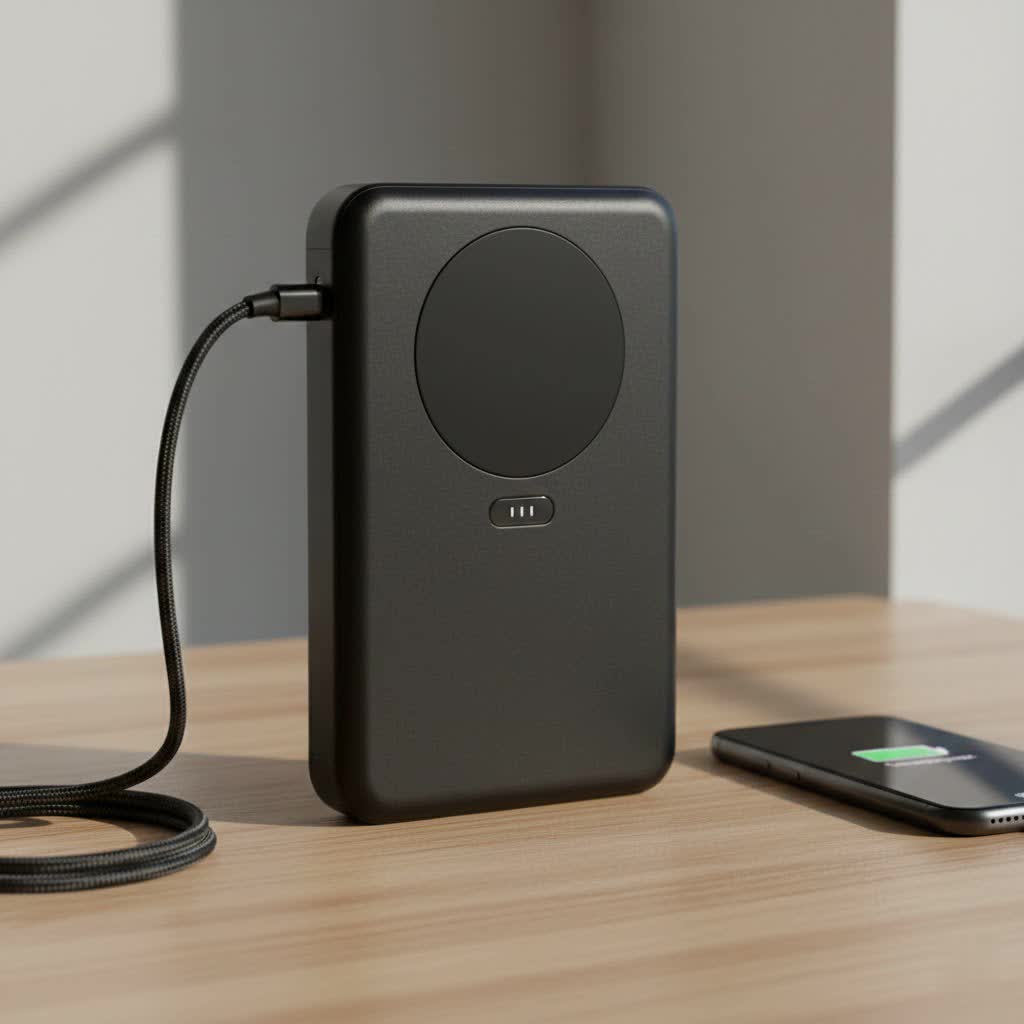
Gone are the days of fumbling with flimsy, non-reversible micro-USB cables. USB-C has emerged as the universal standard, offering a smaller, more robust, and significantly more powerful connection. Its key advantage is not just the convenient reversible design but its support for advanced charging protocols that can power everything from your earbuds to your high-performance laptop.
What Makes a USB Type-C Power Bank Different?
A USB Type-C power bank is more than just a portable battery with a new plug shape. Its superiority lies in its ability to support Power Delivery (PD), a fast-charging technology that revolutionizes how we power our devices. Unlike older USB-A ports that deliver a fixed, low wattage, USB-C with Power Delivery can intelligently communicate with your connected device to negotiate the optimal charging speed. This dynamic process ensures your device gets the fastest, safest charge possible.
“The introduction of USB-C with Power Delivery marked a pivotal shift in personal electronics,” states Dr. Alistair Finch, a leading battery technology specialist. “It unified a fragmented market, allowing a single, robust standard to deliver intelligent, high-speed charging for a vast range of devices, from 18-watt phones to 100-watt laptops.”
This intelligent power negotiation is what allows a single USB-C power bank to safely fast-charge your phone and then provide enough juice to keep your laptop running through an important meeting.
How to Choose the Right USB-C Power Bank
Selecting the ideal power bank involves balancing capacity, charging speed, and portability. Understanding a few key specifications will empower you to make an informed decision that perfectly matches your lifestyle and the devices you depend on.
Capacity (mAh): How Much Juice Do You Need?
Capacity, measured in milliampere-hours (mAh), tells you how much energy the power bank can store. However, the number on the box doesn’t translate directly to how many times it can charge your phone due to energy loss during voltage conversion. A good rule of thumb is to expect about 70-80% of the advertised capacity.
- 5,000-10,000mAh: Ideal for daily use and emergencies. These are typically compact and lightweight, perfect for slipping into a pocket or purse to provide one or two full charges for a standard smartphone.
- 10,000-20,000mAh: The sweet spot for most users. This capacity is great for short trips, offering multiple phone charges or a significant boost to a tablet or small laptop.
- 20,000mAh and Above: Best for travelers, remote workers, and power users. These workhorses can charge a laptop fully, keep multiple devices powered for days, and are a must-have for anyone spending extended time away from a wall outlet. Note that many airlines have a capacity limit, often around 27,000mAh (100Wh), for carry-on luggage.
|
Our Picks for the Best Power Bank in 2026
As an Amazon Associate I earn from qualifying purchases.
|
||
| Num | Product | Action |
|---|---|---|
| 1 | UGREEN Nexode Power Bank 20000mAh 165W with Built-in USB C Cable Laptop Travel Portable Charger, 100W Input, Fast Charging for MacBook Pro/Air/iPhone 17/16/iPad Pro/Galaxy S25 Ultra/Dell/HP and More |

|
| 2 | INIU Portable Charger, Smallest 22.5W 10000mAh Power Bank, USB C in/Output Fast Charging 3-Output Mini Battery Pack Charger with Phone Holder for iPhone 17 16 15 14 Air Samsung S23 Google iPad Tablet |
|
| 3 | INIU Portable Charger, Slimmest Fast Charging 10000mAh USB C in/Out Power Bank, 22.5W PD3.0 QC4+ Battery Pack, Portable Phone Charger for iPhone 16 15 14 13 12 Pro Samsung S22 S21 Google AirPods iPad |
|
| 4 | Energizer Power Bank 20000mAh - USB-C 20W Outputs Fast Charging Battery Pack, USB-A 18W with 4 Outputs & LCD Screen for Android/iPhone 15 16 Plus Pro Max/iPad Tablet and etc_UE20063PQ |
|
| 5 | Emergency Radio&22000mAh Solar Power Bank, FM NOAA Weather Radio, Portable Hand Crank Bluetooth Radio, 20W Fast Charge Wireless Phone Charger, SOS Flashlight for Emergency/Home |
|
| 6 | UGREEN Power Bank 25,000mAh 145W Laptop Portable Charger, Nexode 3-Port USB C PD Battery Pack, for MacBook Pro/Air, Dell XPS, iPhone 17/16/15/14, Galaxy S24, Steam Deck, iPad, and More |
|
| 7 | Anker Laptop Power Bank, 25,000mAh Portable Charger with Triple 100W USB-C Ports, Built-in Retractable Cables, Flight-Approved for Travel, iPhone 17/16 Series, MacBook, Samsung, and More |
|
| 8 | 90000mAh High Capacity Power Bank, 30W Fast Charging Portable Charger PD&QC 3.0, 5 Output 2 Input Large Powerbank with LED Display USB C Battery Pack Charger Portable for Outdoor Camping Travel |
|
| 9 | INIU Power Bank, 25000mAh 100W USB C Laptop Portable Charger, PD QC Fast Charging 3-Output Battery Pack, Travel Charger for Laptop MacBook iPad Tablet Steam Deck iPhone 17 16 15 14 Pro Samsung S25 etc |
|
| 10 | Anker Laptop Power Bank, 25,000mAh Portable Charger with Triple 100W USB-C Ports, Built-in Retractable Cables, Flight-Approved for Travel, iPhone 17/16 Series, MacBook, Samsung, and More |
|
Wattage (W) and Power Delivery (PD): The Speed Factor
Wattage determines how fast a power bank can charge your devices. For a USB-C power bank to be truly effective, it must support Power Delivery (PD). This is the key to unlocking high-speed charging.
- For Smartphones: Look for at least 20W. Most modern smartphones, including the latest iPhones and Android devices, require around 20-30W to fast-charge optimally.
- For Tablets and Small Laptops: A power bank with 30W to 45W output is suitable for most tablets and ultrabooks, allowing them to charge at a reasonable speed.
- For Laptops: To charge a standard laptop, you’ll need at least 60-65W. For more powerful machines like a MacBook Pro, look for 100W or more to ensure efficient charging, even while the device is in use.
Ports and Functionality
Consider how many devices you’ll need to charge simultaneously. Many USB-C power banks also include older USB-A ports for legacy devices.
- Multiple Outputs: If you often travel with a phone, smartwatch, and headphones, a power bank with multiple ports is essential.
- Input Speed: Check the input wattage as well. A high-capacity power bank is less useful if it takes all night to recharge. A model with a high-wattage USB-C PD input can recharge itself in a fraction of the time.
- Pass-Through Charging: This feature allows you to charge the power bank while it is simultaneously charging your devices, which is incredibly convenient for overnight charging.
Frequently Asked Questions (FAQ)
What is the difference between USB-C and USB-A?
USB-A is the traditional rectangular USB port. USB-C is the newer, smaller, oval-shaped reversible connector. USB-C supports much higher power output for fast charging (via Power Delivery) and faster data transfer speeds.
Can I charge my laptop with any USB-C power bank?
No, you must check the power bank’s wattage output. A laptop typically requires a power bank that can deliver at least 45W, with 65W-100W being ideal for most models to charge effectively. A lower-wattage power bank might not charge it at all or only slow the battery drain.
Is it safe to leave my phone charging from a power bank overnight?
Yes, modern power banks and smartphones have built-in safety features that prevent overcharging. Once your device’s battery is full, the power bank will automatically stop delivering power.
Can I take a USB-C power bank on an airplane?
Yes, but there are restrictions. Most airlines require power banks to be in your carry-on luggage, not checked bags. There is also a capacity limit, typically 100 watt-hours (Wh), which is around 27,000mAh. Always check with your specific airline before flying.
What is GaN technology in power banks?
GaN, or Gallium Nitride, is a semiconductor material that is more efficient than traditional silicon. In power banks and chargers, GaN technology allows for smaller, lighter designs that generate less heat while handling high power outputs.
Conclusion
Choosing the right USB Type-C power bank is an investment in convenience and peace of mind. By moving beyond just the capacity number and considering the crucial role of wattage and Power Delivery, you can select a device that truly meets your needs. Whether you’re a daily commuter needing a pocket-sized boost, a student powering a tablet through a long study session, or a globetrotter keeping a laptop alive, there is a USB-C power bank built for you. Armed with this knowledge, you can confidently cut the cord and stay powered up, wherever life takes you.
