A dead phone battery is a modern-day nightmare. Whether you’re navigating a new city, coordinating with friends, or just trying to get through a busy day of work, a reliable power source is essential. This is where the Power Bank 10000mah comes in, hitting the sweet spot of portability and power. It’s the most popular capacity for a reason, but what does that number actually mean for you and your devices?
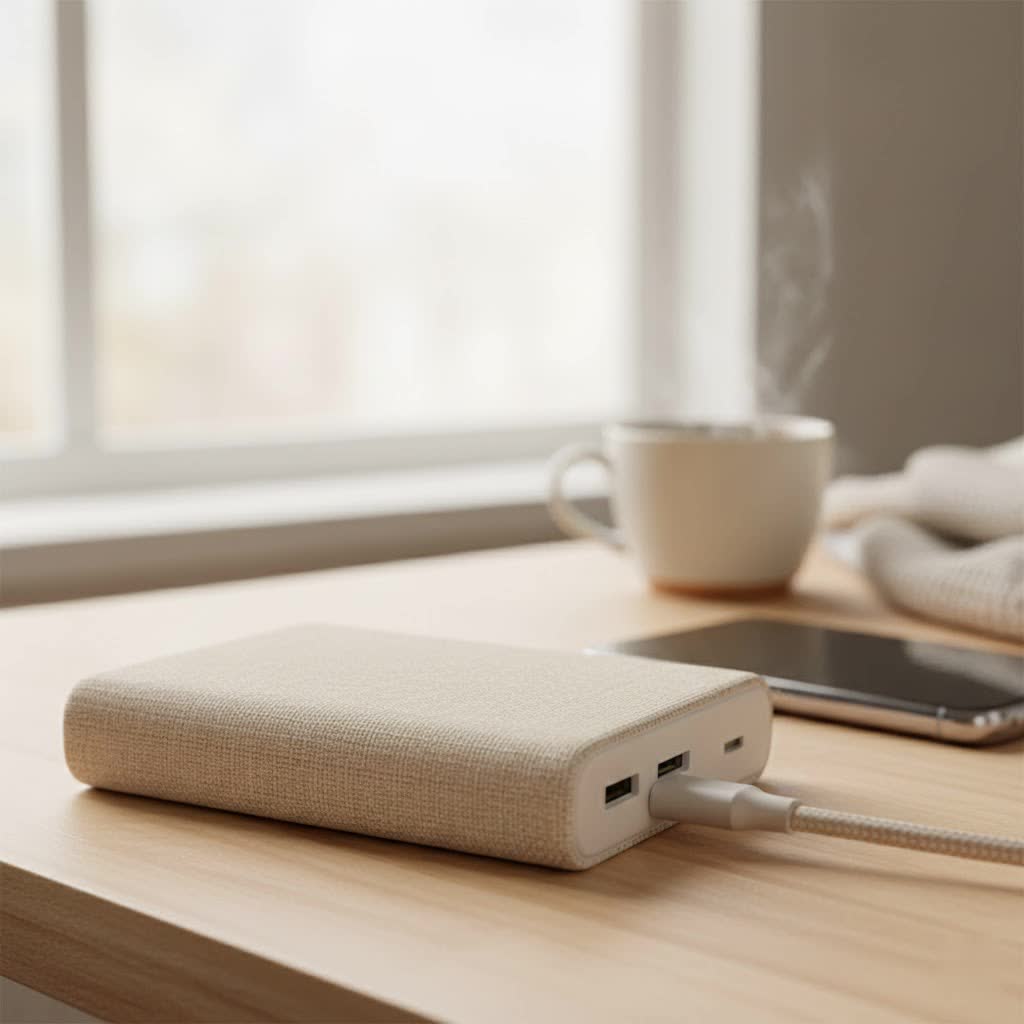
As the lead content creator for pvhao.com, I’ve spent over a decade dissecting, testing, and writing about every type of portable charger imaginable. Let’s cut through the jargon and explore everything you need to know about the 10000mAh power bank, so you can choose and use one with confidence.
What Does 10000mAh Actually Mean?
First, let’s break down the terminology. The “mAh” stands for milliampere-hour, which is a unit that measures electric charge. In simple terms, it represents the capacity of the battery inside the power bank. A higher mAh number means a larger capacity and, generally, more charging power for your devices.
A power bank 10000mAh is often considered the perfect all-rounder. It’s small enough to slip into a pocket or bag without weighing you down, yet it holds enough juice to get most smartphones through one or two full charges, making it ideal for daily use, short trips, and emergencies.
How Many Charges Will a 10000mAh Power Bank Provide?
This is the million-dollar question, but the answer isn’t as simple as dividing 10,000 by your phone’s battery capacity. You have to account for a little thing called energy loss.
No power transfer is 100% efficient. Energy is lost as heat during the voltage conversion process when the power bank’s internal battery (usually 3.7V) steps up its voltage to the 5V standard used by USB. A good quality power bank typically has an efficiency of around 80-90%.
So, the real-world capacity is closer to:
10,000mAh 3.7V (internal voltage) / 5V (USB output voltage) 0.85 (efficiency rate) ≈ 6,290mAh
This means a 10000mAh power bank can realistically deliver about 6,000 to 6,500mAh to your devices.
Here’s a quick estimate of how many charges you can expect for some popular smartphones:
| Device Model | Approximate Battery Size | Estimated Charges from 10000mAh Power Bank |
|---|---|---|
| Apple iPhone 15 Pro | ~3,274 mAh | ~1.9 charges |
| Samsung Galaxy S24 | 4,000 mAh | ~1.5 charges |
| Google Pixel 8 | 4,575 mAh | ~1.3 charges |
| Apple iPhone 15 | ~3,349 mAh | ~1.8 charges |
As you can see, you can comfortably rely on a power bank 10000mAh to fully recharge your smartphone at least once, with some power left to spare.
Key Features to Look for in a 10000mAh Power Bank
Not all 10000mAh power banks are created equal. Beyond capacity, several features determine performance and convenience.
Charging Speed and Technology
|
Our Picks for the Best Power Bank in 2026
As an Amazon Associate I earn from qualifying purchases.
|
||
| Num | Product | Action |
|---|---|---|
| 1 | INIU Portable Charger, Slimmest Fast Charging 10000mAh USB C in/Out Power Bank, 22.5W PD3.0 QC4+ Battery Pack, Portable Phone Charger for iPhone 16 15 14 13 12 Pro Samsung S22 S21 Google AirPods iPad |

|
| 2 | Anker Laptop Power Bank, 25,000mAh Portable Charger with Triple 100W USB-C Ports, Built-in Retractable Cables, Flight-Approved for Travel, iPhone 17/16 Series, MacBook, Samsung, and More |
|
| 3 | Emergency Radio&22000mAh Solar Power Bank, FM NOAA Weather Radio, Portable Hand Crank Bluetooth Radio, 20W Fast Charge Wireless Phone Charger, SOS Flashlight for Emergency/Home |
|
| 4 | UGREEN Power Bank 25,000mAh 145W Laptop Portable Charger, Nexode 3-Port USB C PD Battery Pack, for MacBook Pro/Air, Dell XPS, iPhone 17/16/15/14, Galaxy S24, Steam Deck, iPad, and More |
|
| 5 | 90000mAh High Capacity Power Bank, 30W Fast Charging Portable Charger PD&QC 3.0, 5 Output 2 Input Large Powerbank with LED Display USB C Battery Pack Charger Portable for Outdoor Camping Travel |
|
| 6 | UGREEN Nexode Power Bank 20000mAh 165W with Built-in USB C Cable Laptop Travel Portable Charger, 100W Input, Fast Charging for MacBook Pro/Air/iPhone 17/16/iPad Pro/Galaxy S25 Ultra/Dell/HP and More |
|
| 7 | INIU Power Bank, 25000mAh 100W USB C Laptop Portable Charger, PD QC Fast Charging 3-Output Battery Pack, Travel Charger for Laptop MacBook iPad Tablet Steam Deck iPhone 17 16 15 14 Pro Samsung S25 etc |
|
| 8 | Anker Laptop Power Bank, 25,000mAh Portable Charger with Triple 100W USB-C Ports, Built-in Retractable Cables, Flight-Approved for Travel, iPhone 17/16 Series, MacBook, Samsung, and More |
|
| 9 | Energizer Power Bank 20000mAh - USB-C 20W Outputs Fast Charging Battery Pack, USB-A 18W with 4 Outputs & LCD Screen for Android/iPhone 15 16 Plus Pro Max/iPad Tablet and etc_UE20063PQ |
|
| 10 | INIU Portable Charger, Smallest 22.5W 10000mAh Power Bank, USB C in/Output Fast Charging 3-Output Mini Battery Pack Charger with Phone Holder for iPhone 17 16 15 14 Air Samsung S23 Google iPad Tablet |
|
Look for modern fast-charging standards like Power Delivery (PD), which is common for USB-C devices (including iPhones and Androids), and Quick Charge (QC), developed by Qualcomm for many Android phones. A power bank with at least 18W or 20W output will charge your compatible devices significantly faster than a standard 5W or 10W charger.
Portability and Design
The main appeal of a 10000mAh power bank is its balance of power and size. Look for a slim, lightweight design that feels comfortable in your hand and doesn’t add too much bulk to your pocket or bag. Materials matter, too—some have durable plastic casings, while others feature premium metal finishes.
Input and Output Ports
A versatile power bank should have at least two output ports to charge multiple devices simultaneously. The most common combination today is one USB-A port and one USB-C port. The USB-C port should ideally support both input and output, allowing you to charge the power bank and your devices with the same cable.
Safety Certifications
Your devices are expensive, and safety should be a top priority.
“A quality power bank is an investment in peace of mind. Always choose a model with built-in protections against overcharging, short-circuiting, and excessive temperature. These safety features protect both the power bank and your valuable devices from potential damage.”
— David Chen, Senior Product Engineer at Pvhao
Ensure the product has safety certifications like UL, CE, or FCC listed in its specifications.
Is a 10000mAh Power Bank Right for You?
This capacity is a fantastic choice for a wide range of users. It’s perfect for:
- The Daily Commuter: Provides enough power to ensure your phone, and maybe your headphones, survive a long day of use.
- The Light Traveler: Ideal for an overnight trip or a weekend getaway, keeping you connected without the need for a wall outlet.
- The Emergency Preparer: A fully charged 10000mAh power bank is a crucial part of any home emergency kit for power outages.
However, if you’re a heavy user with multiple large devices (like a tablet and a phone), or you’re going on a longer trip away from power sources, you might consider a larger 20,000mAh model.
Can You Take a 10000mAh Power Bank on a Plane?
Yes, absolutely. Aviation authorities like the FAA and TSA have regulations based on Watt-hours (Wh), not mAh. The limit for carry-on luggage is typically 100Wh per battery.
Here’s the simple calculation for a power bank 10000mAh:
(10,000 mAh / 1,000) x 3.7V = 37Wh
At 37Wh, it’s well below the 100Wh limit, so you can safely pack it in your carry-on bag. Remember, power banks are generally not allowed in checked luggage due to fire safety regulations.
Frequently Asked Questions (FAQ)
How long does it take to charge a 10000mAh power bank?
This depends on the power bank’s input charging speed and the charger you use. With a modern 18W or 20W USB-C PD wall charger, it can take as little as 3-4 hours. Using an older, slower 5W charger could take 8-10 hours or more.
Can a 10000mAh power bank charge a laptop?
Generally, no. While some smaller laptops or Chromebooks with USB-C charging might get a very small boost, most laptops require a higher power output (45W-65W or more) and a larger capacity. For laptop charging, you should look for power banks with at least 20,000mAh capacity and a high-wattage PD output.
What is the lifespan of a power bank?
Most modern power banks use Lithium-ion or Lithium-polymer batteries that are rated for about 300-500 full charge cycles. After this, the battery’s capacity will start to degrade noticeably. For the average user, this translates to about 2-4 years of reliable use.
Is it okay to use my phone while it’s charging from a power bank?
Yes, it is perfectly safe to use your phone while it is connected to a power bank. However, be aware that using the phone (especially for intensive tasks like gaming or streaming) will slow down the charging process, as you are consuming power as it is being supplied.
Can I leave my power bank in a hot car?
You should avoid this at all costs. Exposing a power bank to extreme heat can permanently damage the battery cells, reduce its overall lifespan, and even pose a safety risk. Always store your power bank in a cool, dry place.
The Perfect Balance of Power and Portability
For most people, a power bank 10000mAh is the ultimate portable charging solution. It offers a substantial power boost in a compact form factor, making it a reliable companion for everyday life and travel. By understanding its true capacity and choosing a model with the right features, you can ensure your devices stay powered up whenever and wherever you need them. Go ahead, stay connected, and never let a low battery slow you down again.
