Running out of battery when you’re away from an outlet is a modern-day nightmare. Whether you’re navigating a new city, capturing a perfect photo, or just trying to stay connected, a dead phone can bring your day to a halt. That’s where the magic of a Small Power Bank comes in. This pocket-sized lifesaver ensures your devices stay powered up without weighing you down. But with so many options, how do you pick the right one?
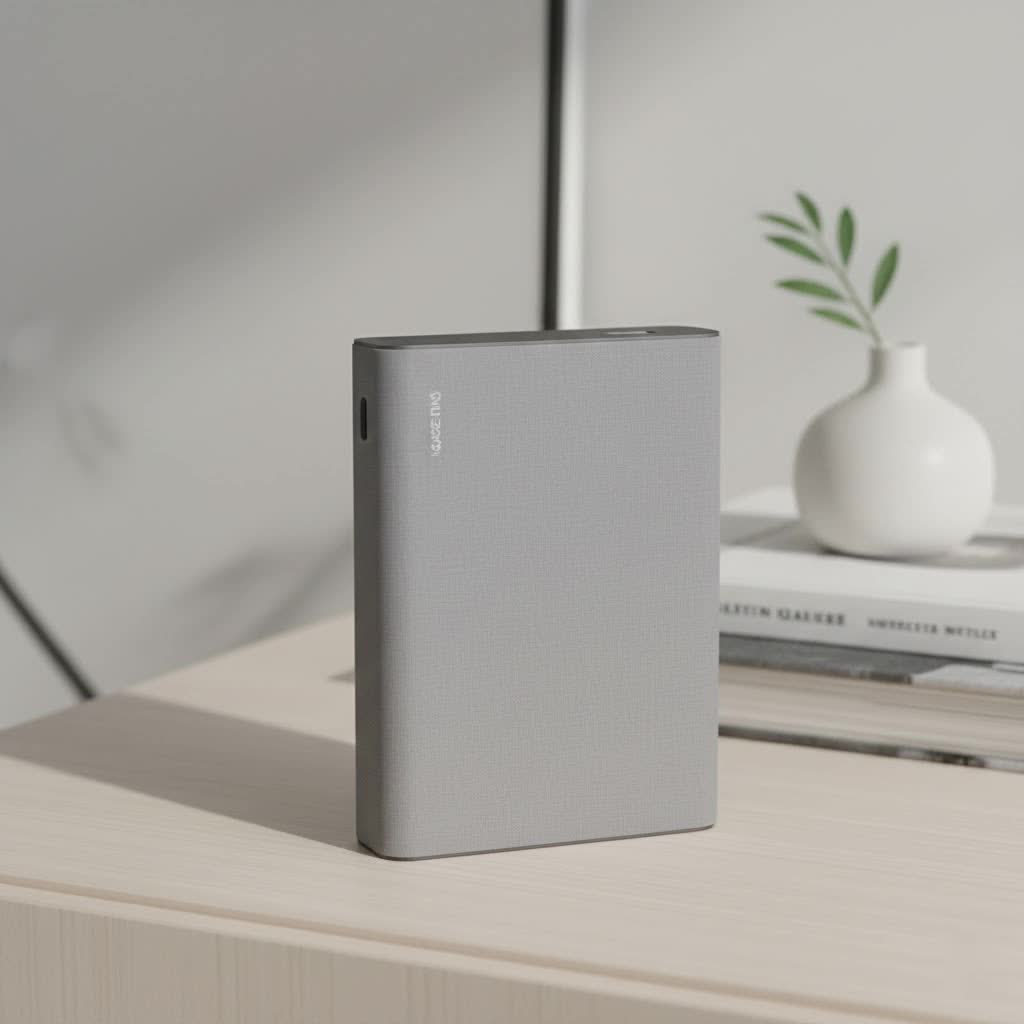
As the lead creator for pvhao.com, I’ve spent over a decade testing and analyzing every type of portable charger imaginable. This guide will walk you through everything you need to know to choose the perfect small power bank for your lifestyle, cutting through the technical jargon to give you clear, practical advice.
What Exactly Makes a Power Bank “Small”?
The term “small” is subjective, but in the world of power banks, it generally refers to two key factors: physical size and battery capacity. A true small power bank is one that you can slip into your pocket, purse, or backpack and barely notice it’s there.
- Physical Size: Think of something the size of a credit card, a thick lipstick tube, or a deck of cards. The goal is ultimate portability.
- Capacity Range: Typically, a small power bank has a capacity between 5,000mAh and 10,000mAh. This range offers the best balance between providing a meaningful amount of charge and remaining lightweight and compact. Anything larger usually starts to become too bulky for everyday carry.
The Core Four: What to Look for in a Small Power Bank
When you’re shopping for a compact charger, it’s easy to get lost in the specs. Let’s focus on the four most important features that will determine its performance and usability.
Capacity (mAh): Your Power “Fuel Tank”
Capacity, measured in milliampere-hours (mAh), tells you how much energy the power bank can store. Think of it as the size of its fuel tank. The higher the mAh, the more charge it can deliver to your devices.
- 5,000mAh: This is the entry-level for small power banks. It’s typically enough to provide one full charge for most modern smartphones. This size is perfect for emergencies or topping up your battery at the end of the day.
- 10,000mAh: This is often considered the sweet spot for a small power bank. It can charge a typical smartphone about two to two-and-a-half times, offering a reliable power source for a full day or a weekend trip without being overly bulky.
|
Our Picks for the Best Power Bank in 2026
As an Amazon Associate I earn from qualifying purchases.
|
||
| Num | Product | Action |
|---|---|---|
| 1 | INIU Portable Charger, Smallest 22.5W 10000mAh Power Bank, USB C in/Output Fast Charging 3-Output Mini Battery Pack Charger with Phone Holder for iPhone 17 16 15 14 Air Samsung S23 Google iPad Tablet |

|
| 2 | 90000mAh High Capacity Power Bank, 30W Fast Charging Portable Charger PD&QC 3.0, 5 Output 2 Input Large Powerbank with LED Display USB C Battery Pack Charger Portable for Outdoor Camping Travel |
|
| 3 | INIU Portable Charger, Slimmest Fast Charging 10000mAh USB C in/Out Power Bank, 22.5W PD3.0 QC4+ Battery Pack, Portable Phone Charger for iPhone 16 15 14 13 12 Pro Samsung S22 S21 Google AirPods iPad |
|
| 4 | Anker Laptop Power Bank, 25,000mAh Portable Charger with Triple 100W USB-C Ports, Built-in Retractable Cables, Flight-Approved for Travel, iPhone 17/16 Series, MacBook, Samsung, and More |
|
| 5 | Anker Laptop Power Bank, 25,000mAh Portable Charger with Triple 100W USB-C Ports, Built-in Retractable Cables, Flight-Approved for Travel, iPhone 17/16 Series, MacBook, Samsung, and More |
|
| 6 | INIU Power Bank, 25000mAh 100W USB C Laptop Portable Charger, PD QC Fast Charging 3-Output Battery Pack, Travel Charger for Laptop MacBook iPad Tablet Steam Deck iPhone 17 16 15 14 Pro Samsung S25 etc |
|
| 7 | UGREEN Power Bank 25,000mAh 145W Laptop Portable Charger, Nexode 3-Port USB C PD Battery Pack, for MacBook Pro/Air, Dell XPS, iPhone 17/16/15/14, Galaxy S24, Steam Deck, iPad, and More |
|
| 8 | UGREEN Nexode Power Bank 20000mAh 165W with Built-in USB C Cable Laptop Travel Portable Charger, 100W Input, Fast Charging for MacBook Pro/Air/iPhone 17/16/iPad Pro/Galaxy S25 Ultra/Dell/HP and More |
|
| 9 | Energizer Power Bank 20000mAh - USB-C 20W Outputs Fast Charging Battery Pack, USB-A 18W with 4 Outputs & LCD Screen for Android/iPhone 15 16 Plus Pro Max/iPad Tablet and etc_UE20063PQ |
|
| 10 | Emergency Radio&22000mAh Solar Power Bank, FM NOAA Weather Radio, Portable Hand Crank Bluetooth Radio, 20W Fast Charge Wireless Phone Charger, SOS Flashlight for Emergency/Home |
|
It’s important to know that no power bank is 100% efficient. Some energy is always lost as heat during the power transfer process. As a rule of thumb, expect to get about 70-80% of the advertised capacity as usable charge for your device.
Charging Speed (Watts): The Race to Full Battery
A large capacity doesn’t mean much if it takes forever to charge your phone. Charging speed is measured in watts (W), and it makes a huge difference in your experience.
- Standard Charging (5W-12W): This is the basic charging speed. It’s fine if you’re plugging your phone in overnight, but it can feel slow when you’re in a hurry.
- Fast Charging (18W or higher): This is where modern power banks shine. Look for support for USB Power Delivery (PD), which is the universal fast-charging standard used by iPhones, Google Pixels, and many other devices. An 18W or 20W PD power bank can charge a compatible smartphone from 0% to 50% in about 30 minutes.
Ports and Connectivity: The Ins and Outs
The ports on a power bank determine what you can charge and how you charge the power bank itself.
- USB-C: This is the most important port to look for. A modern small power bank should have a USB-C port that supports both input (charging the power bank) and output (charging your devices). The best ones use USB-C PD for fast charging in both directions.
- USB-A: Many power banks still include the traditional rectangular USB-A port for broader compatibility with older cables and devices. Having both a USB-C and a USB-A port offers maximum flexibility.
- Built-in Cables: Some ultra-convenient models feature integrated Lightning or USB-C cables, so you don’t have to remember to carry a separate one.
Size and Weight: The Portability Promise
The primary reason to buy a small power bank is for portability. Always check the dimensions and weight. A 10,000mAh model can be incredibly slim and light, while another with the same capacity might be short and chunky. Choose a form factor that fits how you plan to carry it—whether that’s a slim design for your back pocket or a compact block for a small purse.
“People often get fixated on the highest mAh number, but for a small power bank, the magic is in the balance. A 10,000mAh unit with 20W Power Delivery is vastly more useful in daily life than a bulky 20,000mAh brick that you leave at home. Focus on the power you’ll actually carry with you.”
— David Chen, Lead Engineer at pvhao.com
How Do I Choose the Right Small Power Bank for Me?
The best power bank is the one that fits your specific needs. Here’s a quick guide based on common user profiles:
- For the Daily Commuter or Light User: If you just need a safety net to get you through the evening, a super-compact 5,000mAh power bank is perfect. Look for “lipstick” or credit-card-sized models that are easy to forget about until you need them.
- For the All-Day Power User: If you’re constantly on your phone for work or travel and often find your battery draining by midday, a slim 10,000mAh model with at least 18W PD fast charging is your ideal companion. It offers enough power for multiple recharges without adding significant bulk.
- For the Gadget Enthusiast: If you need to charge your phone, wireless earbuds, and maybe a friend’s device, choose a 10,000mAh power bank with multiple output ports (at least one USB-C and one USB-A). This gives you the versatility to keep all your essential gadgets running.
Frequently Asked Questions (FAQ)
Is 5,000mAh enough for a small power bank?
Yes, for many people it is. A 5,000mAh power bank is typically enough to provide nearly one full charge to most smartphones. It’s an excellent choice for emergency power or for users who just need a small boost to get through the rest of the day.
Can a small power bank charge my laptop?
Generally, no. Laptops require much higher power output (typically 45W or more) and larger capacities. While some high-end, larger power banks can charge laptops, a small power bank in the 5,000-10,000mAh range is designed for smaller devices like phones, earbuds, and smartwatches.
How long does it take to charge a small power bank?
This depends on the power bank’s capacity and its input charging speed. A 10,000mAh power bank using a fast-charging 18W wall adapter can typically be fully recharged in about 3-4 hours. If using a slower 5W charger, it could take over 8 hours.
Are small power banks allowed on airplanes?
Yes, they are. According to FAA and TSA regulations, power banks must be carried in your carry-on luggage, not in checked bags. Most airlines have a limit of 100 watt-hours (Wh) per battery pack, and virtually all small power banks fall well below this limit. A 10,000mAh power bank is approximately 37Wh.
What’s the difference between a small power bank and a battery case?
A battery case is a phone case with a built-in battery. While convenient because it’s always attached to your phone, it adds permanent bulk and weight, and it’s specific to one phone model. A small power bank is more versatile, as it can charge any of your devices and you only need to carry it when you think you’ll need extra power.
Conclusion: Power Up Your Freedom
Choosing the right small power bank is about finding the perfect harmony between power, speed, and portability for your daily routine. Don’t just look at the capacity; consider how fast it charges, what ports it has, and how it will feel to carry it with you every day. A well-chosen compact charger doesn’t just keep your devices alive—it gives you the freedom and peace of mind to navigate your day without being tethered to a wall outlet. Now go out and explore, confident that you have the power to stay connected.
