Ever found yourself working remotely from a beautiful park, only to see your laptop’s battery icon turn red? Or perhaps you’ve been on a camping trip, wishing you could plug in a small fan or your camera charger. We’ve all been there. While standard USB power banks are great for phones, they can’t handle devices that need a wall socket. This is where the game-changing portable power bank with an AC outlet comes in, offering you a wall outlet right in your backpack.
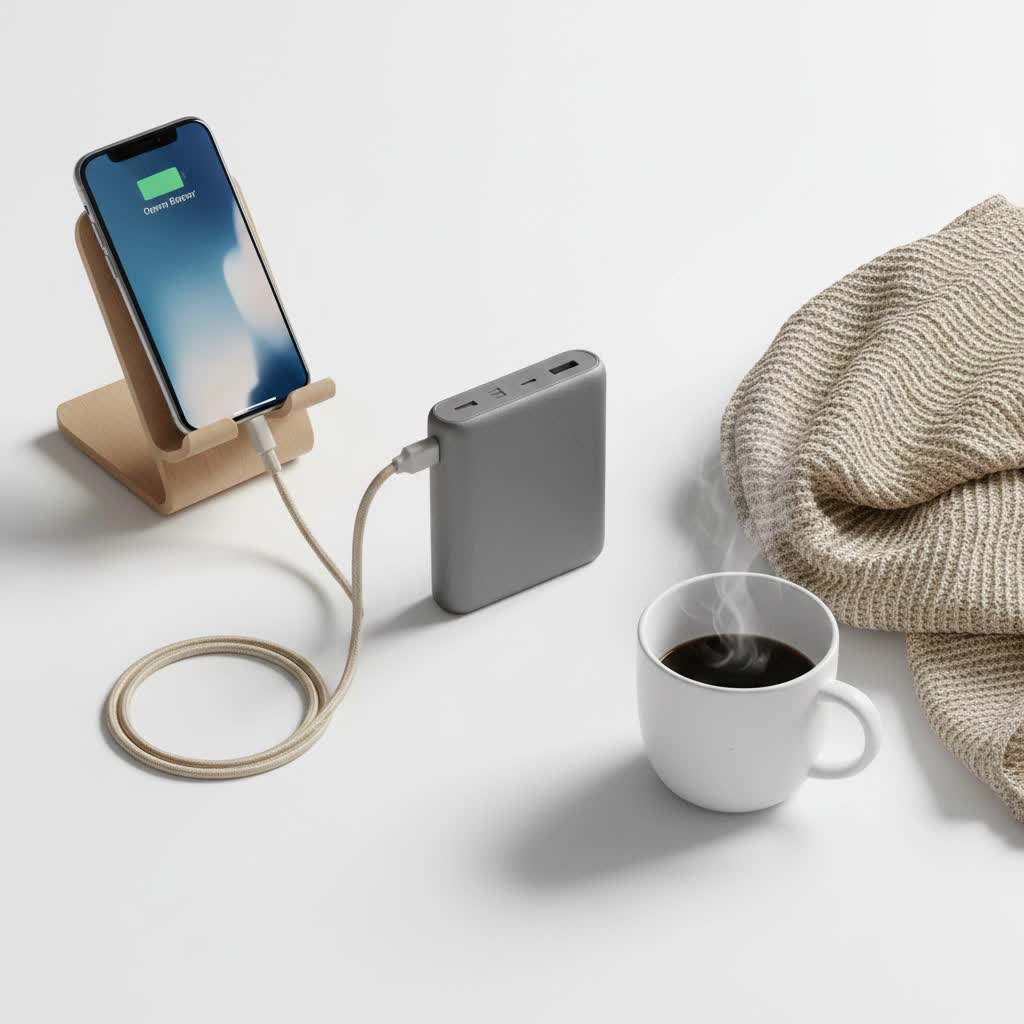
As a power bank specialist with over a decade of experience at Pvhao, I’ve seen these devices evolve from bulky, niche gadgets to streamlined essentials for modern life. They bridge the gap between simple phone chargers and heavy-duty power stations, giving you unparalleled flexibility for work, travel, and emergencies.
What Exactly Is a Portable Power Bank with an AC Outlet?
Think of a standard power bank, but supercharged. A portable power bank with an AC outlet is a high-capacity battery pack that includes a built-in inverter. This inverter is the key component; it converts the direct current (DC) power stored in the battery into alternating current (AC) power—the same type of electricity that comes from the wall outlets in your home. This means you can plug in and power devices that don’t use a USB connection, such as laptops, camera battery chargers, drones, and even small appliances.
Key Features to Consider Before You Buy
Choosing the right AC power bank can feel complex, but it boils down to a few critical factors. Getting this right ensures you buy a device that meets your specific needs without overpaying for features you won’t use.
Capacity: Watt-Hours (Wh) are King
For power banks with AC outlets, capacity is often measured in Watt-hours (Wh) instead of milliamp-hours (mAh). Watt-hours give you a much clearer picture of how long you can power a specific device.
- How to Calculate: A 100Wh power bank can power a 100-watt device for about one hour, or a 25-watt device for roughly four hours. Simply divide the power bank’s Wh rating by the wattage of your device to get an estimate of the runtime.
|
Our Picks for the Best Power Bank in 2026
As an Amazon Associate I earn from qualifying purchases.
|
||
| Num | Product | Action |
|---|---|---|
| 1 | Anker Laptop Power Bank, 25,000mAh Portable Charger with Triple 100W USB-C Ports, Built-in Retractable Cables, Flight-Approved for Travel, iPhone 17/16 Series, MacBook, Samsung, and More |

|
| 2 | Emergency Radio&22000mAh Solar Power Bank, FM NOAA Weather Radio, Portable Hand Crank Bluetooth Radio, 20W Fast Charge Wireless Phone Charger, SOS Flashlight for Emergency/Home |
|
| 3 | 90000mAh High Capacity Power Bank, 30W Fast Charging Portable Charger PD&QC 3.0, 5 Output 2 Input Large Powerbank with LED Display USB C Battery Pack Charger Portable for Outdoor Camping Travel |
|
| 4 | INIU Portable Charger, Smallest 22.5W 10000mAh Power Bank, USB C in/Output Fast Charging 3-Output Mini Battery Pack Charger with Phone Holder for iPhone 17 16 15 14 Air Samsung S23 Google iPad Tablet |
|
| 5 | Energizer Power Bank 20000mAh - USB-C 20W Outputs Fast Charging Battery Pack, USB-A 18W with 4 Outputs & LCD Screen for Android/iPhone 15 16 Plus Pro Max/iPad Tablet and etc_UE20063PQ |
|
| 6 | INIU Portable Charger, Slimmest Fast Charging 10000mAh USB C in/Out Power Bank, 22.5W PD3.0 QC4+ Battery Pack, Portable Phone Charger for iPhone 16 15 14 13 12 Pro Samsung S22 S21 Google AirPods iPad |
|
| 7 | UGREEN Power Bank 25,000mAh 145W Laptop Portable Charger, Nexode 3-Port USB C PD Battery Pack, for MacBook Pro/Air, Dell XPS, iPhone 17/16/15/14, Galaxy S24, Steam Deck, iPad, and More |
|
| 8 | INIU Power Bank, 25000mAh 100W USB C Laptop Portable Charger, PD QC Fast Charging 3-Output Battery Pack, Travel Charger for Laptop MacBook iPad Tablet Steam Deck iPhone 17 16 15 14 Pro Samsung S25 etc |
|
| 9 | UGREEN Nexode Power Bank 20000mAh 165W with Built-in USB C Cable Laptop Travel Portable Charger, 100W Input, Fast Charging for MacBook Pro/Air/iPhone 17/16/iPad Pro/Galaxy S25 Ultra/Dell/HP and More |
|
| 10 | Anker Laptop Power Bank, 25,000mAh Portable Charger with Triple 100W USB-C Ports, Built-in Retractable Cables, Flight-Approved for Travel, iPhone 17/16 Series, MacBook, Samsung, and More |
|
Power Output (Wattage)
This is the maximum amount of power the AC outlet can deliver at any given moment. It’s crucial that the power bank’s output wattage is higher than the wattage your device requires to run. You can usually find the wattage printed on your device’s power adapter. A laptop might require 65W, while a portable fan might only need 20W. Always check for both continuous and peak (or surge) wattage, as some devices need an extra burst of power to start up.
As my colleague David Chen, a senior electronics engineer, often says, “Matching wattage is non-negotiable. An underpowered bank won’t just fail to charge your device; it could damage both units by trying to draw more power than the inverter can safely provide.”
Port Selection and Charging Speed
A great AC power bank is also a versatile charging hub. Look for a model that includes:
- One or more AC outlets: The main event.
- USB-C Power Delivery (PD) ports: Essential for fast-charging modern laptops, tablets, and smartphones. Look for high-wattage ports (65W to 100W) for the best performance.
- USB-A ports: Still useful for legacy devices and smaller accessories.
- Fast Recharging: How quickly does the power bank itself recharge? A model that can be recharged in a few hours via a high-wattage USB-C input or a dedicated AC adapter is far more convenient than one that takes all night.
Size, Weight, and Portability
AC outlets and high-capacity batteries add bulk. While these devices are “portable,” their size and weight can vary significantly. Consider your primary use case:
- For air travel: Look for models under 100Wh, as this is the typical limit set by the FAA and other aviation authorities for carry-on luggage.
- For camping or road trips: A larger, heavier model with more capacity might be a better choice, since you won’t be carrying it on your back all day.
Who Needs a Portable Power Bank with an AC Outlet?
These versatile gadgets are perfect for a wide range of people and situations:
- Digital Nomads and Remote Workers: Work from anywhere without being tethered to a coffee shop wall. Power your laptop, portable monitor, and more from a park bench or a beach.
- Photographers and Videographers: Keep your camera batteries, drone, and lighting equipment charged on location, ensuring you never miss the perfect shot.
- Outdoor Enthusiasts: Elevate your camping experience by powering a small fan, inflating an air mattress, or keeping your gear charged.
- Emergency Preparedness: During a power outage, it can be a lifeline for charging phones, running a small light, or even powering certain medical devices.
- Students: Study anywhere on campus without fighting for a free outlet in the library.
Getting the Most Out of Your AC Power Bank
To ensure your investment lasts, follow these simple tips:
- Avoid Extreme Temperatures: Don’t leave your power bank in a hot car or in freezing conditions, as this can degrade the battery health.
- Don’t Drain it Completely: Lithium-ion batteries are healthiest when kept between 20% and 80% charge. Avoid letting it die completely before recharging.
- Use the Right Charger: Always use the recommended charger and cable to recharge the power bank itself to ensure safety and optimal charging speed.
- Turn Off the AC Inverter: When you’re not using the AC outlet, make sure the inverter is turned off. It consumes a small amount of power even when no device is plugged in.
Frequently Asked Questions (FAQ)
What can I actually power with a portable AC outlet?
You can power most small electronics that you’d plug into a wall, as long as their power requirement is below the power bank’s maximum output wattage. This includes laptops, camera chargers, drones, small fans, desk lamps, and gaming consoles like the Nintendo Switch. You generally cannot power high-draw appliances like hair dryers, microwaves, or refrigerators.
Can I take a power bank with an AC outlet on an airplane?
Yes, but with restrictions. Most airlines limit batteries to 100Wh for carry-on luggage. Some allow up to 160Wh with prior approval. Always check with your specific airline before flying. Power banks are not allowed in checked baggage.
How is this different from a portable power station?
The line can be blurry, but generally, power banks with AC outlets are more compact and designed for personal electronics, typically ranging from 80Wh to 200Wh. Power stations are larger, heavier, have much higher capacities (200Wh to over 2000Wh), and are designed to run more demanding appliances during camping or power outages.
What is a “Pure Sine Wave” inverter?
This refers to the quality of the AC power produced. A pure sine wave inverter produces clean, stable electricity just like your home outlets and is safe for sensitive electronics. A “Modified Sine Wave” inverter is less expensive but can cause issues with certain devices. For laptops and delicate equipment, pure sine wave is highly recommended.
Conclusion
A portable power bank with an AC outlet is more than just a convenience; it’s a tool that provides freedom and security. It empowers you to work, create, and explore without being limited by the location of the nearest wall socket. By carefully considering your needs for capacity (Wh), power output (W), and portability, you can choose the perfect model to keep all your essential devices running, no matter where your adventures take you.
