Welcome to pvhao.com, your trusted resource for all things related to portable power. As someone who has spent over a decade in this industry, I’ve seen a lot of confusion around what makes a good power bank. Let’s start with a common term: the Battery Powered Power Bank. While this might sound a bit redundant—because all power banks are powered by batteries—it actually gets to the very heart of what you need to know. The secret to a great power bank isn’t just its size or color; it’s the specific battery technology humming away inside. Understanding this core component is the key to choosing a device that’s safe, efficient, and perfectly suited to your lifestyle.
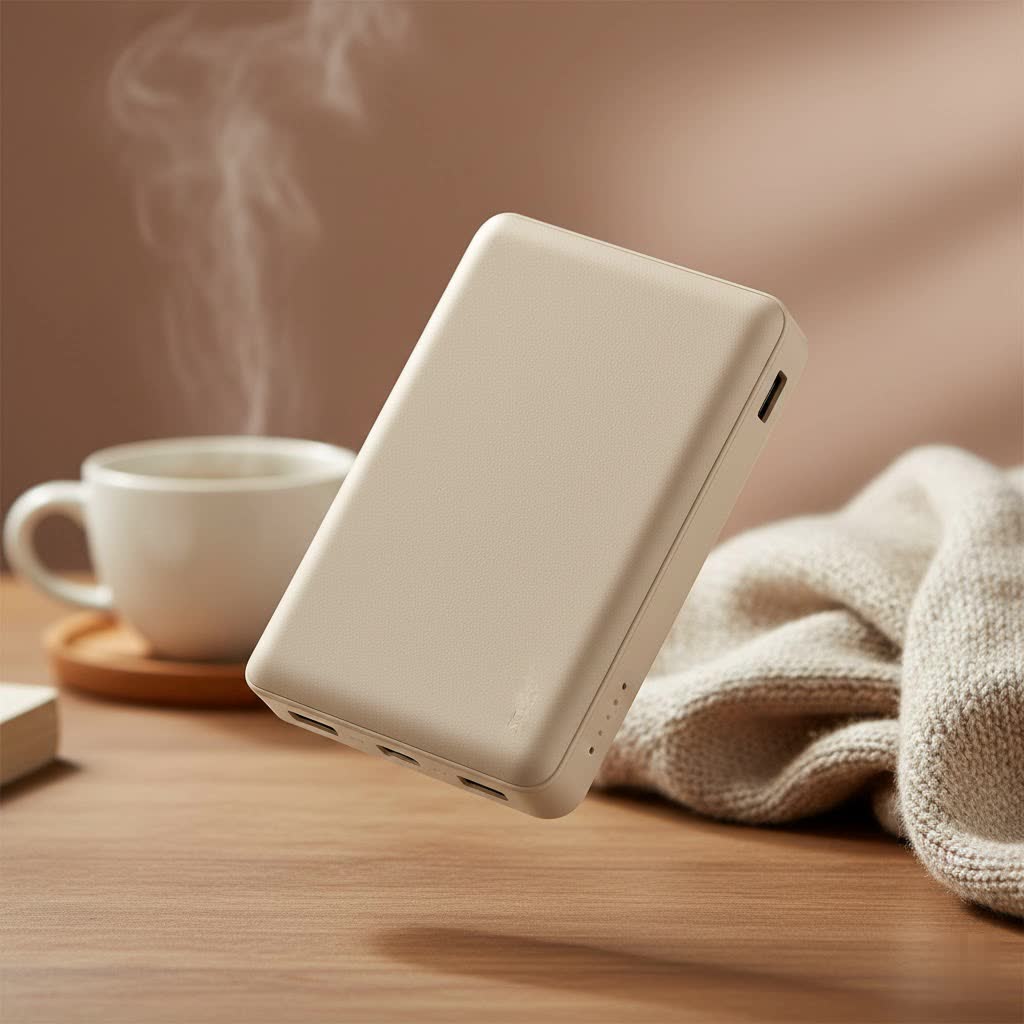
The Heart of the Matter: What’s Inside Your Power Bank?
At its simplest, a power bank is a portable, rechargeable battery encased in a protective shell, equipped with circuitry to control power flow. When you hear “battery powered power bank,” it’s like saying “a water-filled water bottle.” The term itself highlights the central element. The real question isn’t if it has a battery, but what kind of battery it has. This single detail influences its weight, shape, price, and overall performance. The vast majority of modern power banks rely on one of two technologies: Lithium-Ion or Lithium-Polymer.
The Great Debate: Lithium-Ion vs. Lithium-Polymer
Choosing between a power bank with a Lithium-Ion (Li-ion) battery and one with a Lithium-Polymer (Li-Po) battery is one of the most significant decisions you’ll make. They both do the same job, but they are built very differently.
Understanding Lithium-Ion (Li-ion) Batteries
When you think of a traditional rechargeable battery, you’re likely picturing a Li-ion cell. Inside many power banks, you’ll find a series of cylindrical cells, typically in a format known as “18650.” These are workhorses of the battery world, prized for their high energy density, meaning they can store a lot of power in a relatively small space.
- Pros:
- Cost-Effective: Li-ion technology is mature and widely produced, making it cheaper to manufacture.
- High Energy Density: They pack a serious punch for their size.
- Durability: Their rigid metal casing makes them very resilient to physical stress.
- Cons:
- Fixed Shape: The cylindrical shape restricts the design of the power bank, often leading to bulkier products.
- Heavier: The metal casing adds to the overall weight.
|
Our Picks for the Best Power Bank in 2026
As an Amazon Associate I earn from qualifying purchases.
|
||
| Num | Product | Action |
|---|---|---|
| 1 | Anker Laptop Power Bank, 25,000mAh Portable Charger with Triple 100W USB-C Ports, Built-in Retractable Cables, Flight-Approved for Travel, iPhone 17/16 Series, MacBook, Samsung, and More |

|
| 2 | Anker Laptop Power Bank, 25,000mAh Portable Charger with Triple 100W USB-C Ports, Built-in Retractable Cables, Flight-Approved for Travel, iPhone 17/16 Series, MacBook, Samsung, and More |
|
| 3 | INIU Portable Charger, Slimmest Fast Charging 10000mAh USB C in/Out Power Bank, 22.5W PD3.0 QC4+ Battery Pack, Portable Phone Charger for iPhone 16 15 14 13 12 Pro Samsung S22 S21 Google AirPods iPad |
|
| 4 | INIU Power Bank, 25000mAh 100W USB C Laptop Portable Charger, PD QC Fast Charging 3-Output Battery Pack, Travel Charger for Laptop MacBook iPad Tablet Steam Deck iPhone 17 16 15 14 Pro Samsung S25 etc |
|
| 5 | Emergency Radio&22000mAh Solar Power Bank, FM NOAA Weather Radio, Portable Hand Crank Bluetooth Radio, 20W Fast Charge Wireless Phone Charger, SOS Flashlight for Emergency/Home |
|
| 6 | 90000mAh High Capacity Power Bank, 30W Fast Charging Portable Charger PD&QC 3.0, 5 Output 2 Input Large Powerbank with LED Display USB C Battery Pack Charger Portable for Outdoor Camping Travel |
|
| 7 | UGREEN Nexode Power Bank 20000mAh 165W with Built-in USB C Cable Laptop Travel Portable Charger, 100W Input, Fast Charging for MacBook Pro/Air/iPhone 17/16/iPad Pro/Galaxy S25 Ultra/Dell/HP and More |
|
| 8 | Energizer Power Bank 20000mAh - USB-C 20W Outputs Fast Charging Battery Pack, USB-A 18W with 4 Outputs & LCD Screen for Android/iPhone 15 16 Plus Pro Max/iPad Tablet and etc_UE20063PQ |
|
| 9 | UGREEN Power Bank 25,000mAh 145W Laptop Portable Charger, Nexode 3-Port USB C PD Battery Pack, for MacBook Pro/Air, Dell XPS, iPhone 17/16/15/14, Galaxy S24, Steam Deck, iPad, and More |
|
| 10 | INIU Portable Charger, Smallest 22.5W 10000mAh Power Bank, USB C in/Output Fast Charging 3-Output Mini Battery Pack Charger with Phone Holder for iPhone 17 16 15 14 Air Samsung S23 Google iPad Tablet |
|
Li-ion power banks are excellent choices for users who prioritize raw power and affordability over a sleek design.
Exploring Lithium-Polymer (Li-Po) Batteries
Lithium-Polymer batteries are a more recent evolution. Instead of a liquid electrolyte, they use a gel-like polymer, and instead of a rigid metal case, they are enclosed in a flexible foil-like pouch. This fundamental difference in construction gives them a unique set of advantages.
- Pros:
- Flexible and Slim: Manufacturers can shape Li-Po batteries to fit into ultra-thin and custom-designed power banks.
- Lightweight: The lack of a heavy metal casing makes them significantly lighter.
- Safer: They are less prone to leaking electrolyte if punctured.
- Cons:
- More Expensive: The manufacturing process is more complex, leading to a higher price tag.
- Shorter Lifespan: They typically endure fewer charge-discharge cycles compared to Li-ion cells.
If you’re looking for a slim, lightweight power bank that can slide into your pocket, a Li-Po model is almost certainly the right choice.
| Feature | Lithium-Ion (Li-ion) | Lithium-Polymer (Li-Po) |
|---|---|---|
| Shape | Cylindrical, Rigid | Rectangular, Flexible |
| Weight | Heavier | Lighter |
| Cost | Less Expensive | More Expensive |
| Energy Density | Very High | High |
| Best For | High capacity, budget-conscious users | Slim designs, portability |
How Do You Measure a Power Bank’s Capacity?
The capacity of a battery powered power bank is measured in milliamp-hours (mAh). You’ll see numbers like 5,000mAh, 10,000mAh, or 20,000mAh printed on the case. However, there’s a crucial detail most people miss: the advertised capacity is not the actual amount of power your phone will receive.
Energy is always lost during the transfer process due to voltage conversion and heat. A good rule of thumb is to expect about 60-70% efficiency.
Here’s a simple formula to calculate real-world charges:
(Power Bank Capacity in mAh * 0.65) / Your Phone’s Battery Capacity in mAh = Approximate Number of Full Charges
For example, a 10,000mAh power bank won’t charge a 4,000mAh phone 2.5 times. A more realistic calculation would be: (10,000 * 0.65) / 4,000 = 1.625 charges.
Key Safety Features Every Power Bank Should Have
A power bank is more than just a battery; it’s a sophisticated device with a built-in “brain” called a Power Management IC (PMIC). This circuit is vital for safety.
“A power bank without robust safety circuits is a disaster waiting to happen,” notes Dr. Alistair Finch, a battery technology specialist. “Always prioritize certified products over cheap, unbranded alternatives that cut corners on safety.”
Look for these essential protections:
- Overcharge Protection: Stops charging the power bank once it’s full, preserving battery health.
- Over-Discharge Protection: Prevents the battery from draining too low, which can cause permanent damage.
- Short Circuit Protection: Instantly cuts power if it detects a short circuit, preventing fire or explosion.
- Temperature Control: Monitors the battery’s temperature and throttles or stops charging if it gets too hot.
How to Choose the Right Battery Powered Power Bank
The best power bank is the one that fits your daily life.
For the Daily Commuter
You need something light and compact. A slim, 5,000mAh to 10,000mAh Li-Po power bank is perfect. It provides one or two full charges for your smartphone without weighing down your pocket or bag.
For the Frequent Traveler
You’re juggling multiple devices and long layovers. A robust 20,000mAh Li-ion power bank is your best bet. It will have enough juice to charge your phone, tablet, and headphones, and often comes with multiple output ports.
For the Outdoor Adventurer
You need durability and reliability. Look for a ruggedized power bank with an IP rating for water and dust resistance. Many outdoor models offer features like a built-in flashlight or even a small solar panel for emergency trickle charging.
Frequently Asked Questions (FAQ)
Q1: Can I take a battery powered power bank on a plane?
Yes, but with restrictions. Most airlines require you to keep power banks in your carry-on luggage. There’s usually a capacity limit of 100Wh (Watt-hours), which is around 27,000mAh. Always check with your specific airline before flying.
Q2: How long does a power bank battery last?
The lifespan of a power bank is measured in charge cycles. Most quality power banks are rated for 300 to 500 full charge cycles before the battery capacity begins to degrade noticeably. With average use, this translates to about 2-3 years.
Q3: Is it safe to use my phone while it’s charging from a power bank?
Yes, it is perfectly safe. A quality power bank with the proper safety circuits will manage the power flow correctly, so you can use your device without any risk.
Q4: Why does my power bank get warm when charging?
It’s normal for a power bank to get slightly warm during charging or discharging. This is due to energy loss in the form of heat. However, if it becomes uncomfortably hot to the touch, you should stop using it immediately as it may indicate a fault.
Q5: What’s the difference between a power bank and a battery case?
A power bank is a separate, universal device that connects to your phone via a cable. A battery case is a phone case with a built-in battery designed for a specific phone model. Power banks are more versatile, while battery cases offer more integrated convenience.
Your Power, Your Choice
In the end, the term battery powered power bank is a reminder to look past the marketing and focus on the technology within. By understanding the difference between Li-ion and Li-Po, calculating real-world capacity, and prioritizing safety features, you can confidently choose a portable charger that will reliably power your life. It’s not just about buying a battery; it’s about investing in peace of mind.
